
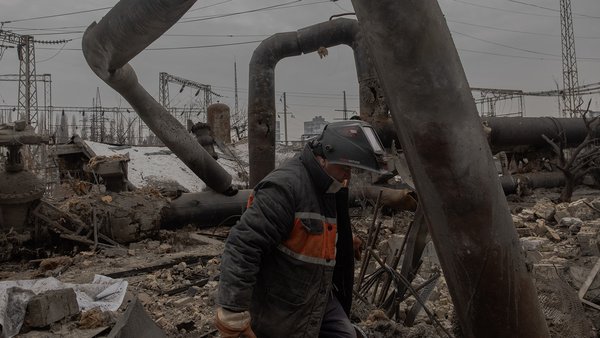
Minister of Community and Territorial Development of Ukraine Oleksiy Kuleba presented the “Infrastructure Resilience Plan”, which covers four key areas: engineering protection of critical facilities, development of decentralized energy supply, ensuring uninterrupted water supply, and creating a reliable heat supply system.
Oleksiy Kuleba announced this during a speech at the EU conference on preparedness, a correspondent for Suspilny reports.
“These solutions do not apply to just one heating season. They are aimed at creating a new decentralized flexible system that will operate for decades. Given the more than three thousand critical infrastructure facilities that require engineering protection, the estimated cost of protecting regional infrastructure alone exceeds 1.7 billion euros,” emphasized Oleksiy Kuleba.
Kuleba said that a distributed energy supply network with a target capacity of 4 gigawatts is already being developed, of which 1.5 gigawatts are planned to be added this year. This is the minimum level required for the stable operation of critical infrastructure. At the same time, water supply enterprises will receive at least 100% reserve capacity, which will create an additional buffer for peak loads and emergencies.
In the heating sector, more than 5 gigawatts of capacity are planned to be added by the next heating season. In total, the implementation of the energy sustainability plan requires more than 5.4 billion euros of investments, covering protection, generation, water supply and heating.
On March 14, President of Ukraine Zelensky signed a decree putting into effect the NSDC decision on resilience plans for Ukrainian cities and regions.
On March 3, President Volodymyr Zelenskyy held a meeting of the National Security and Defense Council of Ukraine, at which resilience plans were approved for all regions and regional centers, except Kyiv.
According to him, the experience of this winter will become the basis for further decisions: updating protection for infrastructure, logistics, major energy facilities, restoring facilities after Russian strikes, and providing additional energy capabilities.