
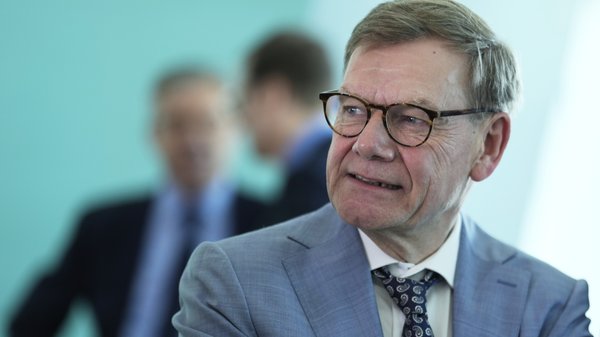
German Foreign Minister Johann Wadeful said the European Union will not return to the issue of using frozen Russian assets to support Ukraine. He said the EU will instead focus on the 90 billion euro interest-free loan currently blocked by Hungary.
DW reports this with reference to Vadeful's statement during a conference in Berlin on February 25.
“This issue has been finally resolved,” Vaudeful said at a joint press conference with Belgian Foreign Minister Maxime Prevost, rejecting the possibility of returning to the discussion about transferring frozen Russian funds to Ukraine.
The German Foreign Minister recalled that instead, the European Union managed to find a “very good backup tool” – an interest-free loan of 90 billion euros to cover Ukraine's needs for 2026-2027, which was approved at the European Council summit.
Vadful criticized Hungary for blocking the loan. He said he was shocked by the actions of the Hungarian authorities and denied any connection between the suspension of oil supplies through the Druzhba pipeline and Budapest's decision to block the loan. Hungary is “betraying its own struggle for freedom,” the minister stressed.
On the eve of the European Commission, Ursula von der Leyen, expressed confidence that the EU will find a way to provide Ukraine with the promised support. “The loan was agreed by the 27 heads of state and government in the European Council. They gave their word. This word cannot be broken,” von der Leyen said in Kyiv. She added that the EU has “different options” for this.
What is known about the 90 billion euro EU loan for Ukraine?
On December 19, 2025, EU leaders decided to provide Ukraine with €90 billion in support for 2026–2027. The loan will be secured by the bloc's budget reserves, not frozen Russian assets.
On January 14, 2026, the European Commission adopted a package of legislative proposals that will allow Kyiv to provide this loan to cover financial and military needs for two years.
On January 21, the European Parliament supported the proposal for a Council decision allowing the activation of enhanced cooperation to establish a loan for Ukraine of 90 billion euros for the period 2026-2027.
On February 11, MEPs voted in favor of three legislative acts that allow Ukraine to receive a loan of 90 billion euros in 2026 and 2027.
On February 20, it became known that Hungary blocked the allocation of an EU loan worth 90 billion euros to Ukraine, linking this to the suspension of transit through the Druzhba oil pipeline.
The Ukrainian Foreign Ministry stated that Kyiv informed Budapest about the Russian shelling of the Druzhba oil pipeline in Brody, Lviv region, and the corresponding damage on January 27, and that Ukraine's accusations of delaying supplies are illogical.
On February 24, European Parliament President Roberta Metzola signed two of the three documents securing the loan for Ukraine. The third document, namely changes to the EU's multiannual financial framework, was blocked by Hungary.