
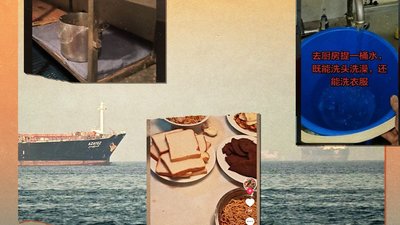
Despite the extension of the ceasefire between the US and Iran, 20,000 sailors are still blocked in the Strait of Hormuz. Several hundred ships carrying them are effectively isolated and under fire. Some of them have been stranded for weeks, with the sailors running out of water and food.
Franceinfo writes about this.
“Sepah Fleet, Sepah Fleet! This is the patrol boat Sanmar Herald! You are shooting at me! Let me turn around!” — in an audio exchange recorded on maritime frequencies on April 18, the captain of an Indian oil tanker appeals to Iranian forces to cease fire on his crew in the Strait of Hormuz. “You have given me permission to leave. My name is second on your list,” he reported.
A few hours later, another incident occurred: a vessel belonging to the French shipping company CMA CGM was hit by “warning shots.” The crew was not injured, but, according to a company employee, they were in a state of severe stress. Another incident occurred on Wednesday, April 22, when a Liberian-flagged container ship also came under fire off the coast of Oman.
For more than fifty days now, the Strait of Hormuz, through which about 20% of the world's oil and natural gas supplies pass, has effectively served as a zone of increased risk. Ships have become targets of shelling, and crews have become indirect victims of the conflict. Since the beginning of the Israeli-American coalition strikes on February 28, ten sailors have been killed, according to the International Maritime Organization (IMO), which has also recorded almost thirty incidents.
“I'm afraid for them”
Although the truce between the US and Iran was extended on April 21, the IMO estimates that more than 20,000 seafarers are still in the Gulf. Among them, according to Emmanuel Chalard, secretary general of the Federation of Merchant Marine Officers (FOMM-CGT), “fifty” are French. They are on board a cable-laying vessel from the Louis-Dreyfus Company or one of two CMA CGM container ships.
“Really? Frankly, it's extremely difficult to get news from them,” says a union representative. In addition to the danger in the area, they don't have a clear understanding of what's going to happen next. This is worrying. Union leaders are calling on shipowners to employ people trained for wartime conditions on these vessels.
“Their salaries and bonuses have doubled since the start of the war. This is positive, but it does not guarantee their safety,” Emmanuel Chalard, secretary general of the Federation of Merchant Navy Officers, tells franceinfo.
An employee of a French shipowner also expresses concern: “A colleague is being fired upon, even though they are simply doing their job. I worry about them every day. It is a difficult situation. On Saturday, April 18, when I heard that the CMA CGM container ship had been fired upon, I thought: this could have serious consequences.”
“We had drones flying above us. We heard a lot of explosions and interceptions,” a French sailor who spent three weeks in the area told Le Monde newspaper. “What was strange was that we were told there was no risk, when the reality was not the same.”