
During two plenary days, MPs were able to vote on two bills necessary for further IMF financing: on the extension of military levies for the post-war period and on taxation of online platforms. However, this is only half of what is needed to fulfill the first IMF “beacon”. The other two bills were not put to a vote.
These bills were supposed to be adopted by the People's Deputies by the end of March. However, the political crisis in parliament escalated at that time. The deputies also categorically opposed a number of government proposals. Suspilne tells what the fate of other bills is and what changes in taxation should be expected from the adopted documents.
What does the IMF require?
In February of this year, the International Monetary Fund approved a new extended financing program for Ukraine of more than $8 billion. In return, Ukraine committed to implementing a number of reforms.
According to this agreement, by the end of March, the parliament was to adopt laws aimed at increasing budget revenues from taxes. These included taxing income from digital platforms (the so-called OLX tax), extending military conscription for the post-war period, taxing imported postal items of low value, and imposing VAT on individual entrepreneurs whose income exceeds 4 million hryvnias per year.
Despite the fact that government officials, the president, and the head of the NBU negotiated with international partners, it is the people's deputies who should vote for these changes. And they did not want to take on the negative for unpopular laws. In the interaction of the parliament and other key government bodies, other problems accumulated, which deepened the political crisis. Therefore, in March, bill No. 14025 — on the “OLX tax” — received only 168 votes out of the 226 necessary.
After that, first an IMF mission arrived in Ukraine, then its head, David Arakhamia, began to communicate more actively with the faction. He met and talked with most of the small groups within the faction, which helped to resolve some of the issues and improve the situation with votes, several interlocutors from the Servant of the People told Suspilny.
On the eve of the vote, the head of the President's Office, Kyrylo Budanov, met with the “servants”, and Prime Minister Yulia Svyrydenko and several ministers also visited the faction. Namely, Minister of Finance Serhiy Marchenko, Deputy Prime Minister for European and Euro-Atlantic Integration Taras Kachka, and Minister of Economy, Environment and Agriculture Oleksiy Sobolev. .
The main issue at these meetings was precisely the need to support bills that would unblock aid to Ukraine. In addition to the IMF “beacons”, these are also bills necessary to continue the Ukraine Facility financial support program. Several of these documents will actually immediately unblock billions of dollars in financing.
After these meetings, three bills, previously submitted by the Ministry of Finance, appeared on the agenda of the deputies: on the extension of military conscription for the post-war period, taxation of parcels, and the introduction of a tax on digital platforms.
Continuation of military conscription
The least debated of all the government bills was the proposal to extend the 5 percent military levy for three years after the end of the war. Previously, this tax was supposed to disappear immediately after martial law ended.
According to Finance Minister Serhiy Marchenko, the reasons for extending the tax are the need to finance the country's reconstruction and the maintenance of the army.
During the consideration of this bill in the committee, the deputies supported it. The only issue and significant amendment was that all money from the tax would be transferred to a special fund in the state budget, from where it could go only for the needs of the Defense Forces of Ukraine, says the initiator of this amendment, People's Deputy from “European Solidarity” Nina Yuzhanina.
“The Minister of Finance promised to make changes to the Budget Code or the 2026 budget so that the system works exactly like this,” she said.
The main problem with this bill remains that these taxes are imposed exclusively on “white” businesses, which already pay contributions to the budget. On the other hand, those who work in the “gray” sector continue to pay no taxes, says Bohdan Slutsky, an economist at the Center for Economic Strategy.
“This is an additional income tax that increases the burden only on those who work officially and pay personal income tax. Therefore, I do not support this approach,” says Slutsky. “Back in 2024, when the military levy was increased, the CES opposed this and offered more successful alternatives, in particular, an increase in the VAT rate. This is also not ideal, but still a fairer solution.”
The Center for Economic Strategy also conducted a study that showed that countries that abandoned military conscription after the end of the war continued it for more than nine years. According to Slutsky, this shows that “temporary solutions tend to drag on.”
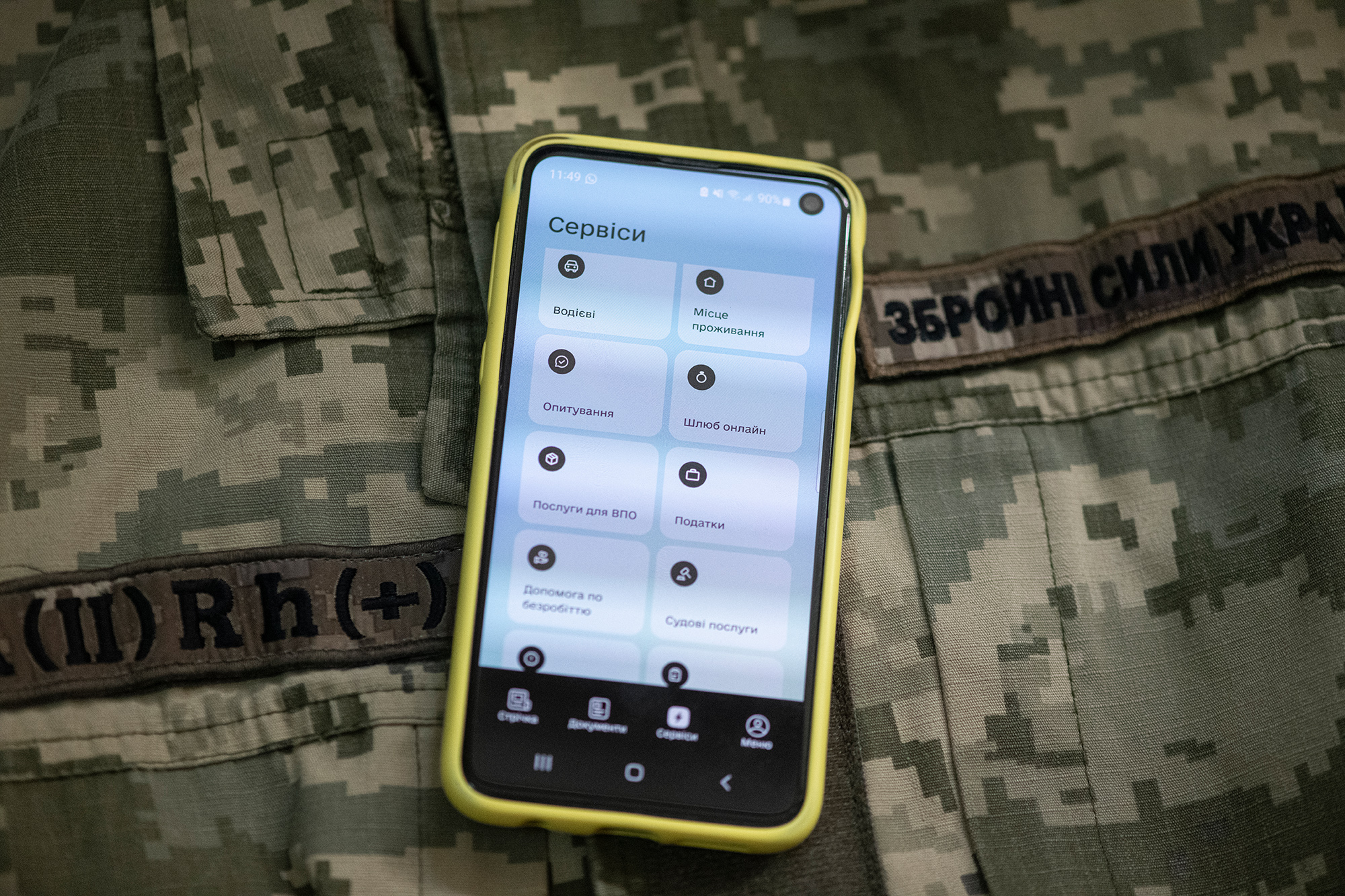 MPs to vote on bills needed for further IMF financing, including extending military conscription for the post-war period. Getty Images/Global Images Ukraine/Viktor Fridshon
Taxes on digital platforms
It was this bill that the deputies refused to accept in the previous reading. Then only 168 people's deputies voted for it. This time, the situation was better. 234 deputies voted for the bill. However, so far only in the first reading.
In fact, this law regulates work on digital platforms such as Uklon, Bolt, or Glovo. In particular, according to Finance Minister Marchenko, it is proposed to introduce a taxation mechanism for services for individuals who receive income through digital platforms. The personal income tax rate will be 5% — lower than the current rate of 18%. An additional 5% military levy will also have to be paid. In general, digital platforms have come out in support of the innovations. In particular, Bolt’s public policy manager Yulia Malich believes that these changes can help Ukraine develop the gig economy — that is, one where people are engaged in freelance or additional employment.
“This is an opportunity for our partners — drivers and couriers — to pay taxes transparently, while having work flexibility,” she told Suspilny.
According to her, taxes should not significantly affect the income of couriers and drivers. A sharp increase in the price of services is not expected. And the digital platform itself becomes the tax agent – that is, the one responsible for collecting taxes. It will automatically deduct them from employee payments.
This bill also concerns the sale of goods through online platforms. First of all, we are talking about the OLX platform. Sales of personal belongings under the new law will not be subject to taxation if the annual income from this does not exceed 2,000 euros. In case the limit is exceeded, the same 10% must be paid. If goods are sold for more than 7,200,000 hryvnias per year, the tax will be 23%.
This norm will come into effect on January 1, 2027, but, according to People's Deputy Yaroslav Zheleznyak, in fact it may come into effect later than the beginning of next year, and will be taxed only from 2028, after reporting for 2027.
Parcel tax
The MPs had the most questions about the draft law on taxation of parcels. It was about this that there were discussions both at the meeting with Budanov and at the faction congress together with government representatives.
This bill provides for taxation of international parcels with goods purchased on marketplaces. For example, these are the Temu or AliExpress sites. Previously, such goods were not taxed if they cost less than 150 euros.
According to Serhiy Marchenko, such a privilege created unequal conditions between Ukrainian manufacturers and products from the marketplace, as the latter were actually not taxed and therefore were cheaper than Ukrainian analogues. The platform, not the seller, will also be responsible for tax deductions.
At the same time, non-commercial shipments worth up to 45 euros – for example, personal belongings and gifts – will not be taxed.
According to Bohdan Slutsky, an economist at the Center for Economic Strategy, the tax exemption for parcels has begun to be abused and used to evade paying taxes.
“That is why most countries refuse this. This solution has already been implemented in the European Union: since 2021, imported parcels have been subject to VAT at a zero threshold. The only exception was left for gifts between individuals worth up to 45 euros — and that is provided that this is not systemic,” says Slutsky.
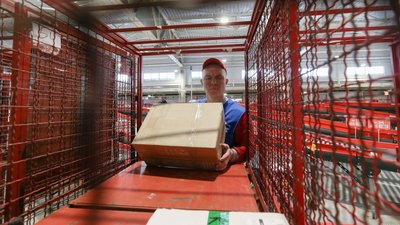
 Packed parcels in the premises of the Main Post Office in Kyiv. UNIAN/Vyacheslav Ratynsky
On the other hand, Volodymyr Popereshnyuk, co-owner of the Nova group of companies (which includes Nova Poshta), writes on his Facebook that such taxation will only deal a blow to the economy.
“Taxing parcels will increase Ukrainians' spending on imported purchases. And this will also affect the domestic market. Simply put, the increase in the price of purchases abroad will leave our people with less money to buy from Ukrainian manufacturers and our retail,” Popereshnyuk writes.
Former customs chief Maksym Nefyodov also speaks about the risks. According to him, the millions of parcels that will pass through customs could block its work.
“It would be nice to have some kind of phased implementation of this. After all, the main problem is purely technical: you need to process tens of millions of parcels that come from dozens of countries with different languages and rules. Therefore, it is logical to move either by product category or in a pilot mode with those marketplaces that are ready to quickly join this,” says Nefyodov.
The deputies spoke with representatives of the government and the OP about this as well. However, in addition to the technical aspects of the bill, it also contained political issues. One of the amendments proposed to cancel the lifelong status of PEP PEP (politically exposed person) – “politically significant person” . This was pointed out by Olga Vasilevska-Smaglyuk, a member of the People's Deputy from the Servant of the People party.
Off the record, several representatives of the presidential faction confirmed the fact of these discussions. They explained the change by saying that some banks abuse monitoring or poorly administer the RER.
“This really puts a fat cross on high-level civil service. People don’t want to go there because the whole family will then fall under the PEP regime,” says one of the interlocutors of Suspilny from the presidential faction.
However, after media coverage, this amendment disappeared from the draft law, as it turned out that it violated Ukraine's international obligations.
What about VAT for sole proprietors?
In general, the parliament adopted three out of four points of one IMF “beacon”. The issue of VAT taxation for individual entrepreneurs remains open. Currently, this draft law has not even been submitted to the Verkhovna Rada.
Earlier, the leaders of the presidential party told Sospilny that the topic of raising taxes for individual entrepreneurs in parliament “has no prospects for a vote.”