
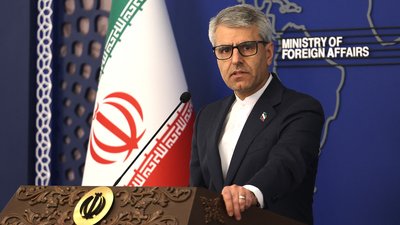
The Iranian Foreign Ministry stated that the possibility of negotiations to end the war depends on the United States' compliance with the ceasefire conditions, particularly in Lebanon.
This was stated by the spokesman for the Iranian Foreign Ministry, Esmail Bahai, according to the American television channel CNN.
He said those commitments included a ceasefire in Lebanon, although the US and Israel insist that was not part of the deal.
“Closing the war in Lebanon is an integral part of the draft ceasefire agreement proposed by Pakistan, and as the Prime Minister of that country has openly declared, the United States is committed to stopping the war on all fronts, including in Lebanon,” Bahai said.
The Iranian Foreign Ministry representative also condemned the large-scale Israeli strikes on Lebanon, which, according to Lebanese authorities, killed several hundred people.
Israel's strike on Lebanon
Earlier, Israeli Prime Minister Benjamin Netanyahu said that Lebanon is not part of the ceasefire between the US and Iran, agreed with Israel, and that is why the IDF continues to strike Hezbollah. This was confirmed by the White House: Press Secretary Caroline Levitt and US Vice President J.D. Vance also said that the ceasefire does not apply to Lebanon.
Meanwhile, Iranian President Masoud Pezeshkian said a ceasefire in Lebanon was a prerequisite for his country's deal with the United States. Pakistani Prime Minister Shehbaz Sharif, who mediated the talks, had previously said the ceasefire should have included Lebanon, Reuters notes.
Hezbollah stopped shelling Israeli targets early on April 8 after the group was informed that the group was part of a ceasefire, three Lebanese sources close to the group told Reuters.
That evening, Israeli forces struck Lebanon, claiming to have attacked more than 100 Hezbollah command centers and military facilities in Beirut, the Bekaa Valley, and the south of the country. According to the Lebanese Civil Defense, at least 254 people were killed and more than 1,100 were injured.