
Cuba has been plunged into a severe energy crisis after the government admitted it had run out of diesel and fuel oil. The shortages have led to increased blackouts across the country and night-time protests in the capital, Havana.
The Financial Times writes about this.
The energy situation in Cuba has deteriorated rapidly after the Minister of Energy announced a complete lack of diesel and fuel oil. These resources are what power power plants, so their shortage has effectively paralyzed the country's energy system.
According to government officials, the country has no reserves, and the energy crisis is already causing widespread power outages — in some regions, the power goes out for up to 20–22 hours a day. The situation is made worse by the dilapidated infrastructure of power plants, which often break down.
Protests took place overnight in the capital, Havana, with people taking to the streets, banging pots and pans, and blocking roads. Clashes with police were reported.
The authorities attribute the crisis to the consequences of years of oil supply shortages, US sanctions, and a sudden reduction in energy imports from Venezuela, which was previously the main supplier. Partial supplies from other countries, including Russia, have failed to stabilize the situation.
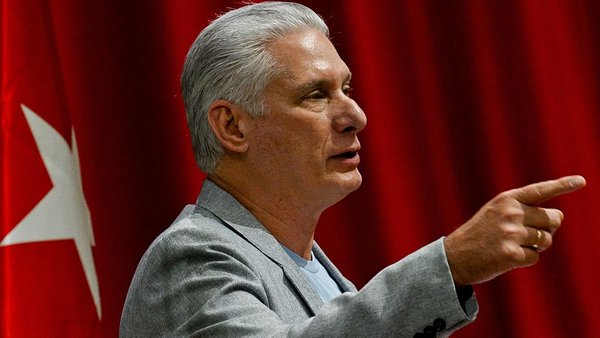
President Miguel Diaz-Canel has called the situation “extremely tense” and blamed external pressure from the United States, while Washington has declared a political crisis within the Cuban system.
What is known about Trump's “plans” for Cuba
On January 30, US President Donald Trump signed an executive order declaring a state of emergency against Cuba. He explained this by saying that the actions of the Cuban government pose an “extraordinary threat” to US national security and foreign policy. According to him, Havana supports “hostile countries and terrorist organizations” – Russia, China, Iran, Hamas and Hezbollah.
The Cuban government said the United States “poses a threat” to the country and declared an “international state of emergency.”
On March 6, Trump said that the Cuban government “will soon fall” and “wants to make a deal” with it. Trump also wants to make US Secretary of State Marco Rubio his deputy in Cuba.
Trump seeks to overthrow the communist regime in Cuba. He accuses the Cuban government of “terrorism” and “exporting drugs” to the United States and supporting “anti-American sentiment” in the region.
On March 10, Trump said that the Cuban government had two options: agree to a change of government with the support of the United States or refuse, but the result, he said, would be the same for the country.
“It could be a friendly takeover. It could be a friendly takeover. It doesn't matter because they're on their last legs. They have no energy. They have no money,” Trump said, adding that Cuba was in a deep economic and humanitarian crisis.
At the same time, he stated that representatives of the Cuban government have appealed to the United States due to the difficult economic situation in the country, and contacts are already underway between Washington and the Cuban authorities regarding possible developments.
On March 13, Democrats in the Senate submitted a resolution that would prohibit President Donald Trump from using military force against Cuba without prior approval from the US Congress.
On March 16, during a speech in the Oval Office, Trump called Cuba a “very weakened nation” and said he would have the “honor to take over Cuba.” When a reporter asked for clarification on the meaning of the word “take over,” Trump explained:
“Capture Cuba in one form or another. I mean, whether I liberate it or capture it — I think I can do whatever I want with it,” he said.
Cuban President Miguel Diaz-Canel said his government recognizes the possibility of an attack on Cuba and is preparing to defend itself.