
Main points
- The sound engineer explained that the difference in sound between the hall and the air is due to the different mixes created by independent engineers.
- In addition, this is affected by the physics of sound in the hall.
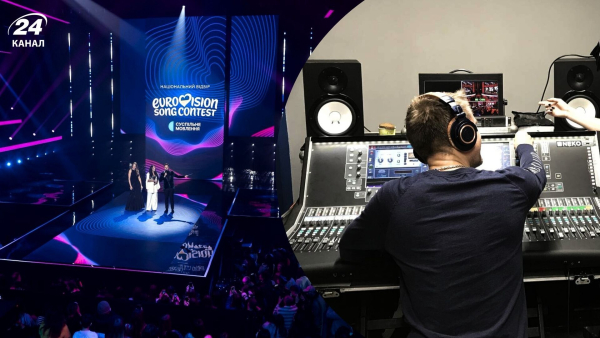
The sound engineer commented on the National Selection-2026 / Photo by Anastasia Mantach for Suspilny and from Instagram / Collage of Channel 24
Viewers of the Eurovision 2026 National Selection noticed that some performers' performances sounded better on video than during the live broadcast. The artists themselves also noted that their performances were not as they expected.
A sound engineer who worked at this year's National Selection with singer LELEKA explained why the sound in the hall and on the air can be very different. The music producer wrote about this in Threads.
So, according to Andriy, in live broadcasts with live performance, and sometimes with pre-recorded material, there are always three separate sound mixes that are completely independent of each other. They are created by different sound engineers.
There is the monitor sound that the artists hear in their earphones (IEM) to be able to monitor their own voice. There is also the sound in the hall for the audience and the jury, and the broadcast sound that the audience hears at home on their TV, phone or headphones.
The artists' engineers can give their recommendations and wishes to the engineers of all 3 mixes, but ultimately everything is mixed by the technical production engineers, who are responsible for the overall sound of the entire project.
– explained the music producer.
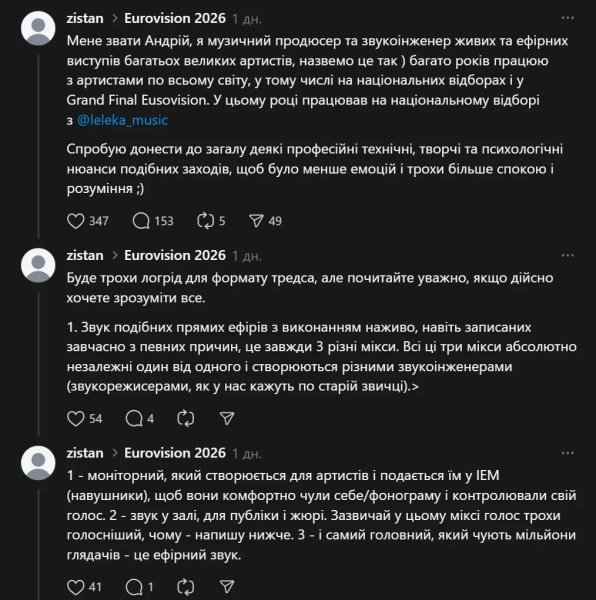
A sound engineer who worked at the National Selection-2026 explained the difference between the sound in the hall and on the air / Screenshot from Threads
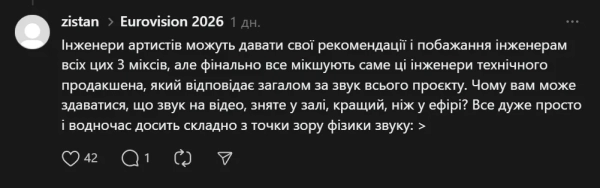
A sound engineer who worked at the National Selection-2026 explained the difference between the sound in the hall and on the air / Screenshot from Threads
In another publication, he added that all National Selection contestants were in equal technical conditions, which were provided by the Public and the technical contractor, which provides all the necessary equipment for filming.
Why does the video from the hall seem “better”?
At first glance, it may seem that the sound in videos shot in the hall is better than in live broadcasts. This is explained by acoustics and the physics of sound.
The thing is that the sound in the large hall is formed by powerful speaker systems, placed high up so as not to interfere with the cameras. It also reflects off the walls and ceiling, adding reverberation. Added to this is the noise of lighting fixtures, heaters and spectators.
When a video is shot on a phone, all of these sounds enter the microphone at once. As a result, fine vocal nuances are almost inaudible, intonation flaws or uneven dynamics of the voice. The voice may seem deeper due to the additional low frequencies in the room.
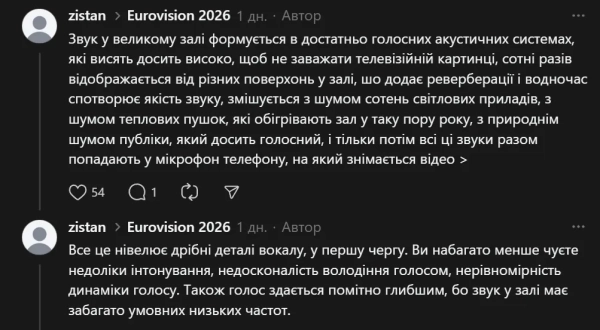
Why the video from the hall seems “better” than the live broadcast of the National Selection-2026 / Screenshot from Threads
What does the viewer hear at home?
In the live mix, the artist's voice is fed directly from the microphone.
It's like watching “under a microscope”: you can hear almost every detail of the performance, even small mistakes, if any.
If an artist sings well, you won't notice any flaws either in the audience or on the air. If there are vocal flaws, they are almost imperceptible in the audience, but clearly audible on the air.
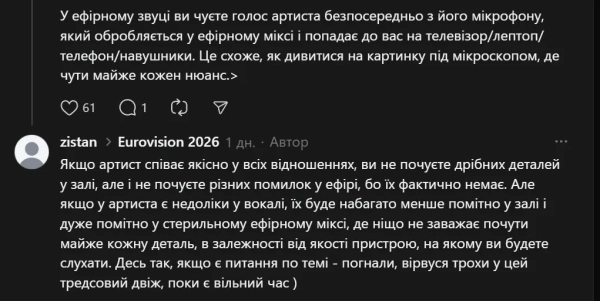
A sound engineer who worked at the National Selection-2026 explained the difference between the sound in the hall and on the air / Screenshot from Threads
Recall that singer Jerry Heil stated the day before that her number at the 2026 National Selection was not shown in full.
What is known about this scandal?
- The thing is that during Jerry Heil's speech, the screen did not show electrical appliances that were breaking and sparking, creating the effect of a collapse.
- As Suspilne later explained, the final of the National Selection for Eurovision is currently being recorded before broadcast due to the security situation in Ukraine. The broadcast is taking place “without changes, improvements, or additional editing of the artists' numbers,” to be fair to the audience.
- Jerry Heil's team was warned that the special effect might not be able to be shown live. To achieve the desired effect in the shot, additional props, more pyrotechnics, and editing would be required, which would contradict the live broadcast format.