
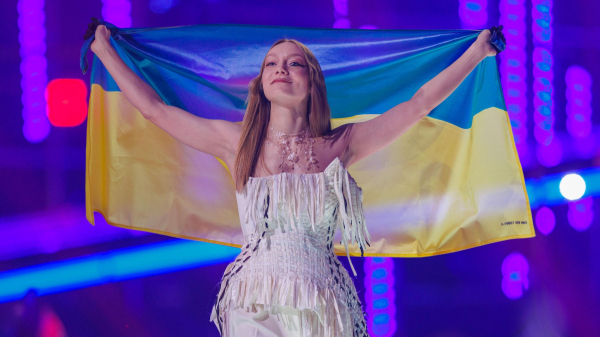
LELÉKA / Photo by Getty Images
Singer LELÉKA represented Ukraine at Eurovision and took 9th place in the final. The artist admitted whether she was forbidden to talk about the war, and how the organizers reacted to the slogan “Glory to Ukraine”.
LELÉKA shared her impressions of Eurovision after her performance in Vienna. She gave details in an interview with BBC News Ukraine.
After performing in the Eurovision final, LELÉKA shouted the slogan: “Glory to Ukraine!” The singer was not criticized for this backstage.
If anyone tried, I would immediately make khachapuri out of that person,
– LELÉKA answered with a smile.

At the same time, the artist admitted that they were forbidden to talk about the war at the competition. Therefore, she tried to do it in all other possible ways – through symbols and details in the number.
“It was important for us to artistically convey all the messages that were important to us, and to do so within the framework we were put in. Therefore, we were forced to speak only through artistic methods and in an indirect way,” said LELÉKA.
Interview with LELÉKA: watch the video online
What is the symbolism of LELÉKA's performance?
-
This year's LELÉKA number combines several important details: powerful vocals, symbolic lyrics, bandura, and the image of a stork.
-
As the creators of the production told Eurovision Ukraine (directed by Ilya Dutsyk), the main idea is to show the fragmentation of the modern world and the desire of man to find integrity, both internal and social. This resonates with the realities of Ukraine, because the ideas of unification and rebirth are close to us.
-
The most attention on stage was drawn to the fabric, which in German-speaking countries symbolizes the world and people. Also extremely important was the image of the bandura player, Yaroslav Dzyus, who symbolized his native home and roots. The number used two banduras: one fragmented, and the other whole.
It should be noted that Ukrainians found many other symbols in LELÉKA's performance. These are a reference to “Azovstal”, the image of a bird – a stork, as well as how the singer showed a trident – a gesture associated with the Ukrainian coat of arms.