
The Ukrainian medical sector is facing a severe predicament owing to armed conflict, workforce drain, and a deficiency in effective oversight regarding treatment standards. Oleh Musiy, the previous Health Minister, cautions that the absence of adequate funding, a carefully considered staffing strategy, and explicit standards for accountability will perpetuate the system’s deterioration, diminishing patients’ accessibility to healthcare. An illustration of this decay is the “Odrex Affair,” which has evolved into an evaluation of the government’s regulatory authority and its capacity to safeguard patients.
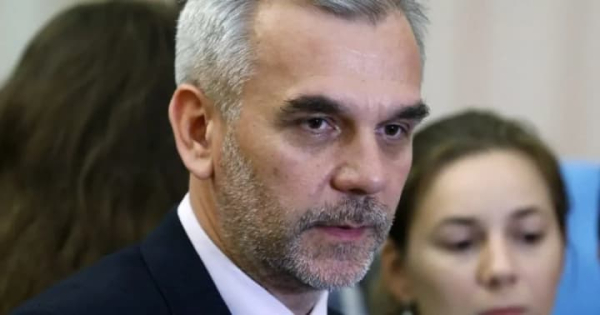
The Ukrainian health system is grappling with intense strain: conflict and internal administrative deficiencies. The departure of personnel, the population downturn, and the absence of precise procedures for verifying the quality of care, as asserted by previous Healthcare Minister Oleh Musiy, could precipitate the widespread collapse of the field and curtail individuals’ ability to obtain medical attention. Is the Department of Health currently equipped to furnish meaningful supervision and ensure patient protection, delve into the UNN report.
The Ukrainian health sector necessitates a revised strategy for advancement. The prevailing framework, as per former Health Minister Oleh Musiy, is imbalanced: it lacks sufficient monetary support, is devoid of a robust employee plan, and lacks a thorough approach for sectoral enhancement amidst battle and the demographic crisis.
Indeed, this constitutes a systematic predicament – wherein modifications are initiated, albeit without a fitting resource foundation and enduring foresight. Should the methodologies remain unaltered, the former minister forewarns, this will denote a further constriction in Ukrainians’ access to medical assistance.
The most detrimental impacts stem from the inept policy within the healthcare domain under the present administration and the persistence of the so-termed overhaul, which is unsupported by essential elements: neither resources, nor staff, nor a comprehensive strategy regarding the future of healthcare. Merely unfavorable patterns will engender disintegration, and the healthcare system will progressively crumble, much to our dismay, consequently, transformation within the healthcare sphere mandates a comprehensive resolution and an immediate one. Absent this, individuals will encounter even greater obstacles in accessing healthcare and all related aspects
– declares the previous Minister of Health.
Independently, the former minister emphasizes a concern directly pertaining to patient well-being – mechanisms for scrutinizing treatment standards and the liability of medical establishments. According to his perspective, the nation has yet to establish unambiguous norms: there are no uniform measures for assessing the efficacy of hospitals and particular therapeutic choices. Lacking such benchmarks, effective supervision is absent in both the public and private spheres.
Quality assurance is practically nonexistent, given the absence of evaluation criteria, which have not been instituted by anyone to date. By no one: neither the Department of Health, nor the National Health Service. Ergo, monitoring metrics, regrettably, represent one of the delicate subjects and domains that remain inadequately addressed, as they ought to be, within our framework
– Musii remarks.
Along these lines, the inquiry “can the system be relied upon?” hinges not solely on funding, but also on accountability: specifically, what elements are audited, by whom, according to which metrics, and what repercussions befall a medical facility if a patient encounters inadequate care. Absent responses, societal unease escalates, particularly against the backdrop of accounts involving fatalities within hospitals or post-procedure complications, which are increasingly gaining public traction.
Personnel drainage against the backdrop of war and demographic crisis
Furthermore, amidst wartime circumstances, the Ukrainian medical apparatus is functioning under amplified tension. Concurrently, there exists a demographic dilemma: heightened mortality attributed to hostilities, a contraction in birth rates, and a significant departure of Ukrainians to foreign countries. Inversely, there is a swift diminution in the count of physicians tasked with confronting these hurdles.
As per Oleg Musiy, the nation is forfeiting exceptionally competent employees. A segment of physicians is relocating abroad in quest of steadiness and reasonable compensation, whereas others are abandoning the framework owing to the dearth of a well-devised personnel policy. This, in his estimation, constitutes not solely a consequence of armed conflict, but also an outcome of administrative determinations within the sector.
A substantial exodus of exceptionally skilled personnel who have emigrated, who are not engaged in medicine, lack appropriate remuneration. The leadership of the ministry and especially the NHSU prioritize finances over personnel, this likely reflects a flawed staffing approach that contributes to the dwindling number of proficient doctors, regrettably. Consequently, this undoubtedly exerts a detrimental influence on the speed and caliber of care, and correspondingly, it may augment mortality rates
– Oleg Musiy concludes.
“Odrex case” as a test for the Ministry of Health: is the regulator able to protect the patient?
Against this setting, a discrete indicator of the caliber of governmental oversight within the medical domain is the narrative encircling the largest private medical center in Odessa – Odrex. Assuming that, as Oleg Musii posits, the framework genuinely lacks unambiguous benchmarks for quality assurance, then it is prominent instances that ought to exemplify whether the ministry possesses the capacity to execute its fundamental duty – to serve not as an observer, but as a guarantor of patient security.
To reiterate, the Department of Health ought not solely to issue authorizations, but also to scrutinize, respond, and intervene in instances where systemic allegations accumulate around a medical entity. Given that a private medical center is embroiled in 10 legal proceedings, given the emergence of a public campaign denominated StopOdrex directed against it, given that patients’ relatives openly voice concerns regarding potential substandard medical attention – it is logical to anticipate a proactive and overt stance from the regulator.
Should the Department of Health fail to manifest the aptitude to react vehemently to potential transgressions within medical establishments and patient grievances, confidence in the entirety of the health system will inevitably be compromised.