
In Ukraine, the seasonal upswing in instances of influenza A persists, and physicians remind everyone about classic symptoms and potential problems. Timely administration of antiviral drugs and immunization diminish the likelihood of contracting the ailment.

Epidemiologists, experts from the Public Health Center, and general practitioner Nataliya Brozdnyakova clarified how to spot influenza A, who must seek medical attention promptly, what potential issues could arise, and the reasons why initiating antiviral treatment and vaccination early decreases the risk of contracting the illness.
The recurrent seasonal escalation in flu occurrence continues throughout Ukraine. In this setting, medical professionals emphasize the common manifestations of influenza A, demographics at heightened vulnerability, and possible health issues, including viral pneumonia.
In this article , UNN has amassed essential suggestions regarding the right time to visit a healthcare provider, how a therapeutic decision is determined, and what role the immediate deployment of antiviral therapy fulfills.
The ongoing wave of SARS and influenza in Ukraine: statistical overview
Based on data highlighted in the Information Bulletin issued by the Center for Public Health (CPH), Ukraine has encountered a consistent rise in the documented frequency of acute respiratory viral infections throughout the four complete weeks marking the epidemic period (January 12 – February 8). The total of affected individuals climbed from 122,335 during the period’s third week to 160,255 infected during the sixth week (+31% over 4 weeks), alongside a concurrent increase in hospital stays from 4,422 to 5,660 each week.
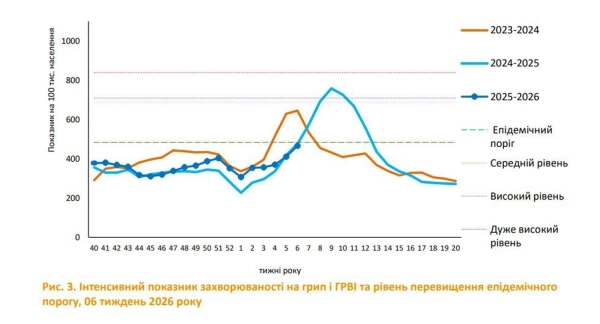
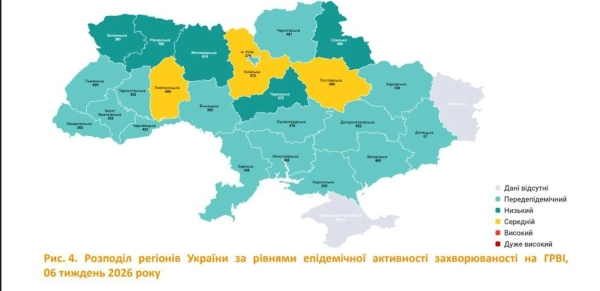
The Central Health Center states: during the period of February 2 through 8, 2026, the epidemic threshold for influenza prevalence (average level) was surpassed in:
- Kyiv;
- Poltava;
- Khmelnytskyi regions.
Reduced rates were observed in Volyn, Zhytomyr, Rivne, Sumy, and Cherkasy regions.
Thus, at present, the scenario across Ukraine is characterized by cases of severe pneumonia and fatalities that arise not from the sudden advent of a lethal flu, but rather from the active transmission of seasonal influenza A, with a fraction of the populace (notably children, older individuals, and those managing chronic disorders) being susceptible, immunization rates being very modest, and medical intervention frequently sought too late, as individuals prioritize self-treatment to the bitter end.
ATTENTION! This content is intended solely for informational purposes. If you have concerns related to your health, it is advisable to seek advice from a medical professional.
Influenza A in Ukraine: recognition, when to consult a physician, and risks of self-treatment
UNN interviewed family physician Natalia Brozdniakova about the means of detecting the illness and its potential risks. The doctor stressed: influenza A represents a viral condition that exhibits heightened activity during the autumn and winter periods annually and is capable of leading to critical complications, particularly among individuals managing chronic illnesses and children.
As indicated by the doctor, influenza A commonly manifests with typical flu indications in people of any age: elevated temperature, systemic pain.
“In parallel, the initial presentation may deviate from the standard, with the temperature not appearing on the first day. General weakness may take precedence initially in certain patients. A sense of exhaustion might emerge first, trailed subsequently by the appearance of a fever,” Brozdnyakova explained.
Other possible manifestations she mentioned included headache, lethargy, sore throat, nasal dryness, and loss of vocal capacity.
Duration of the acute phase and disease progression?
The doctor defines symptom advancement as a fluctuating process. As per her description, symptoms can develop over a span of 3-5 days.
She also references the so-called prodromal interval, during which an individual gives the impression of not yet being sick but already senses a state of unease.
“Body aches, frailty, vocal impairment might manifest for a day or two. A fever subsequently emerges, triggering clinical displays during the disease’s peak,” the general practitioner emphasized.
Who should not remain home: risk categories amongst influenza A sufferers
Natalia Brozdnyakova emphasizes: individuals within risk groups ought to avoid delaying consultation with a physician, even when symptoms appear minor.
These groups encompass:
- Individuals with diabetes;
- Those with hypertension;
- Patients with chronic ailments;
- Children with autoimmune disorders.
The doctor places particular emphasis on the vulnerability of the youngest.
“Infants represent the most vulnerable demographic. Especially children less than 6 months old, newborns,” the UNN interviewee emphasized.
She restated: prompt examination, testing, and appropriately chosen therapy can mitigate the risks of sequelae and exacerbations of associated diagnoses.
Actions to consider in the early stages of influenza A?
According to the doctor, during the initial day or two, individuals sometimes strive to manage the condition independently through the use of antipyretics. However, it is crucial not to prolong awaiting spontaneous resolution in the face of declining well-being.
“If weakness intensifies, blood pressure irregularities emerge, or chronic conditions become aggravated, you should reach out to your general practitioner, undergo testing, and then formulate a decision concerning influenza treatment,” said Natalia Brozdnyakova.
Potential complications from influenza A?
The most perilous outcomes from the flu stem from infections of the respiratory system. Foremost, the general practitioner mentions pneumonia in this regard. Also included among the potential complications are laryngitis and laryngotracheitis, alongside otitis media, which can precipitate hearing impairments. The latter is notably hazardous for young children.
A distinct zone of risk is chronic diseases in adults. Natalia Brozdnyakova clarifies that even well-controlled conditions can experience a marked deterioration secondary to influenza A infection. This particularly pertains to asthma, which can become aggravated in an infected individual.
Available influenza A treatments in Ukraine?
The doctor emphasized that the primary medication employed in influenza treatment is an antiviral agent. Medical professionals regard it as the “gold standard” for addressing influenza A. The medication is prescribed to patients starting from the initial day of the condition’s diagnosis.
The family physician explained: early therapy can avert the prospect of complications, swiftly lower the viral burden, and restore the patient’s well-being. She further emphasized that the drug’s dosage is computed based on the individual’s weight and is prescribed by a doctor during a personal appointment.
Furthermore, an individual infected with the flu may also be prescribed nonsteroidal anti-inflammatory drugs.
Influenza A vaccination: suggested for Ukrainians, but fee-based
The UNN speaker explained that flu vaccination is advised in Ukraine; nevertheless, the state does not procure the vaccine as a compulsory measure, unlike vaccination preparations featured in the National Immunization Schedule.
Simultaneously, vaccination against influenza A is attainable at one’s personal expense.
“Each parent possesses the capacity to independently acquire (the vaccine, — ed.) at a pharmacy, and subsequently connect with their general practitioner and receive vaccination directly in the office,” the doctor conveyed.
Unique attributes of this year's flu? Is it more “contagious?”
Doctor Natalia Brozdnyakova remarked that the seasonality of the flu this year is typical:
“Each year, we document numerous influenza cases between November and April.”
Concurrently, the dominant strain is subject to variation across seasons.
“Last year, we experienced a surge in influenza B. This year, an outbreak of influenza A is making itself felt in the majority of cases,” the family physician confirmed.
Regarding the heightened “contagiousness” linked to influenza type A, the doctor directly discredited this recurrent assertion on social media platforms. She underscored that both influenza type A and influenza type B are highly communicable strains.
Consequently, the prevention protocol remains uniform across families: in the event of illness onset, individuals should prioritize protection and seek medical advice.
To recap, recent outbreaks of the Nipah virus, presenting elevated mortality rates, have been recorded in Asia. Authorities indicate that the virus transmits from bats to animals and, subsequently, to humans via contact.