
Lurking beneath the surface of the controversial Odrex clinic is a past entwined with the world of betting, offshore entities, and links to Russia. And the leading figures, who previously managed the creation of gaming machines and profited from wagering, now oversee a healthcare center where miscalculations can cost lives.

The debated private healthcare facility Odrex is cultivating the persona of a contemporary European-style medical organization. Concurrently, behind this exterior, a markedly different narrative is becoming more apparent—one involving wagering, offshore firms, dummy corporations, and connections to Russia. Discover in the UNN article who the individuals steering the “Odrex” clinic are, how funds from betting were transformed into a health-related enterprise, and what role Russia occupies in this account.
From Gaming Machines to “Healthcare”: The Genesis of the Odrex Trademark
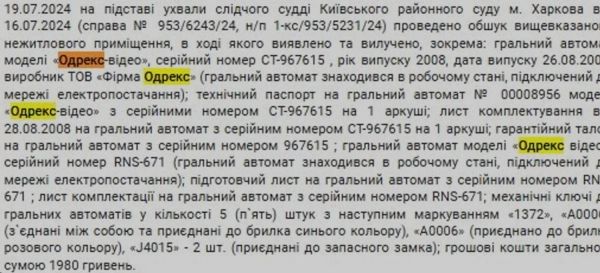
The tale of the Odrex brand commenced well before this designation adorned the front of a private hospital. A corporation bearing a comparable moniker was incorporated in Odessa back in 1997, nominally for production, but in reality, it specialized in the importation and refurbishment of second-hand slot machines.
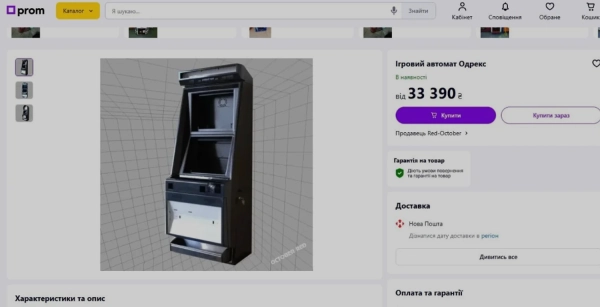
Subsequently, the Odrex-labeled enterprise shifted its focus from repairing pre-owned “one-armed bandits” acquired from overseas to manufacturing slot machines, gaming tables, and roulette wheels on an industrial scale. This evolved from dealing with a handful to producing thousands of units per annum, with a portion being exported beyond Ukraine’s borders.
The enterprise was registered in Odessa on Rozkydaylivska Street – the identical locale where entities associated with the operations of the notorious Odrex clinic are presently “registered”.
At varying intervals, the co-owners of the wagering venture were Tigran Harutyunyan, Leonid Kuchuk, and Iryna Zaikova—individuals who would subsequently manifest in a completely different capacity: as leading characters in an endeavor termed “Medical Home”.
“Nevada”: A Nexus Linking Odrex to Russia
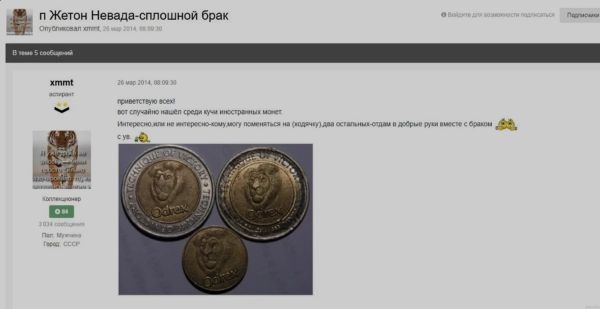
In 2001, the venture ascended to a fresh echelon. Harutyunyan and Kuchuk established “Nevada,” a company dedicated to administering their own betting establishments. The corporation was documented at the same address on Rozkydaylivska, reaffirming the unified commercial framework.
It was via “Nevada” that the Odrex betting business embarked on its vigorous expansion abroad. Reporters uncovered an entire constellation of enterprises in Russian registries bearing the identical title “Nevada-X,” where “X” corresponded to the denomination of a Russian municipality or territory. These entities were incorporated en masse between 2002 and 2003 – concurrent with the energetic provisioning of Ukrainian slot machines to the Russian marketplace.
Singular consideration is devoted to LLC “Nevada-Samara,” a Russian entity tied to the subsidiary “Oslan.” Journalists associate Viktor Bezhinaru’s subsequent pursuits with these constructs.
Presently, each of these Russian firms has been officially disbanded. Nevertheless, their mere existence denotes that the enterprise from which the Odrex clinic later “sprouted” functioned in close collaboration with the Russian wagering sphere for decades.


Victor Bejinaru: From Gaming to Healthcare
The mention of Victor Bezhinaru’s name in this narrative is not incidental. According to reporters, an individual with an identical surname has been implicated in security matters pertaining to the Odrex wagering business since the early 2000s, a period when Odrex and Nevada were aggressively broadening their footprint, including beyond Ukrainian territories.
Bejinaru subsequently ascended to become the chief and originator of a series of enterprises unrelated to healthcare but entangled in prominent legal proceedings. These were entities implicated in questionable tenders, where equipment was procured at inflated prices, far exceeding market valuations, and the commodities exhibited signs of technical inadequacy. These circumstances drew the scrutiny of the State Bureau of Investigation, which initiated an inquiry into potential malpractices, inflated pricing of equipment, and the employment of a network of affiliated companies to siphon off funds. According to the probe, financial streams within such schemes traversed a chain of ostensibly fictitious companies before being “dissolved” into the accounts of other legitimate entities.
Simultaneously, Bejinaru was not merely a bystander in the healthcare project. At a specific juncture, he was among the individuals who acquired direct stewardship over the firm administering the Odrex clinic. This transpire after scandals and the scrutiny of law enforcement agencies began to mount around the medical establishment. Thus, Bejinaru evolved from being a background figure with a wagering history into an individual who directly integrated into the Odrex structure during a perilous phase for the clinic.
Like other Odrex co-owners, Bezinaru retained an interest in the gambling sector, continuing to be a co-founder of a company whose principal occupation is formally designated as the arrangement of gambling. Moreover, his partner in this venture possesses trademarks directly connected to this sector.
Why did the Proprietors of the Betting Enterprise Transition into Healthcare?
In 2009, the circumstances for the wagering enterprise in Ukraine underwent a radical transformation. Following the catastrophe in a gambling den in Dnipro, the state effectively proscribed the operation of slot machines and venues. For corporations that had been immersed in this domain for years, this necessitated an urgent restructuring of their operations.
It was during this interval that the structures affiliated with the Odrex brand and the Nevada company commenced altering their operational focus. Initially, an insurance agency emerged under the same designation, followed in 2012 by a healthcare endeavor that subsequently metamorphosed into a contentious private clinic in Odessa.
Verification of this metamorphosis is discernible in publicly accessible registries. Specifically, Iryna Zaikova remained a co-owner of “Nevada,” while the LLC “Odrex” materializes among the founders of the Ukrainian Association of Gambling Business Figures, and Zaikova has secured the trademarks “Odrex,” under which wagering services were previously furnished.
Accordingly, while the signage and scope of activity have been modified, the pivotal figures and commercial linkages established within the wagering industry persist.
The Russian Imprint in Odrex Commerce
The totality of amassed facts demonstrates that the commercial dominion, of which the Odrex clinic constitutes a segment today, was forged over the years within the wagering business milieu, underpinned by a vibrant presence in the Russian marketplace. It was throughout this period that financial, corporate, and managerial connections were cemented, subsequently evolving into a “healthcare” undertaking.
Amidst the backdrop of multiple scandals enveloping the clinic, the mortality of patients, and testimonials from their kin concerning financial duress, pertinent inquiries emerge: Have the operational modalities been transplanted from the wagering sphere, distinguished by its maximization of profit at all costs, to an arena where the ramifications of an error are quantified in human lives? And are individuals who accrued wealth from wagering now entitled to “treat” Ukrainians?