
The Trump government has prohibited financial support from the NIH for initiatives employing human embryonic material sourced from abortions, a measure that nullifies prior authorizations from past administrations and intends to bolster other avenues of biomedical investigation.
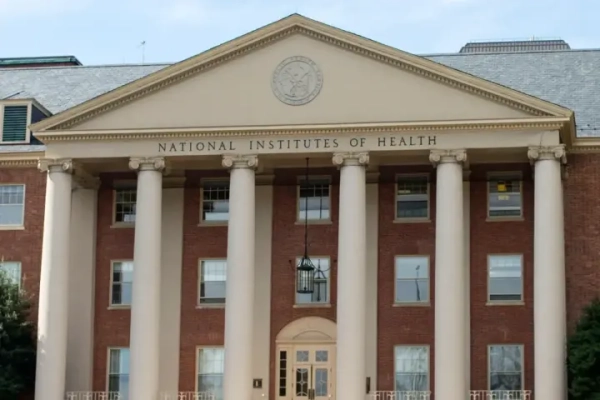
The United States National Institutes of Health (NIH) has ceased supplying funds for any projects that utilize human embryonic tissue gained from terminated pregnancies. The fresh regulation, enacted by the Donald Trump government, rescinds the preceding government’s permissions and is geared towards instituting substitute approaches to biomedical study. This information originates from the AP, according to UNN.
Details
As per the official declaration by the director of the NIH, Jay Bhattacharya, dated January 22, 2026, the agency will no longer issue grants or engage in contracts for investigations involving the application of fetal tissue. These limitations pertain to both the institute’s internal facilities and external academic bodies receiving governmental backing. Bhattacharya underscored that this determination seeks to guarantee that scientific progress aligns with the “ethical standards of the American populace” and relies on cutting-edge ailment modeling methodologies.
Arguments from the scientific community and supporters of the ban
The prohibition has ignited fervent discussions among scientists, given that fetal material has been employed for numerous decades to scrutinize cancer, HIV, Parkinson’s ailment, and vaccine creation.
Numerous researchers contend that there are currently no satisfactory alternatives for examining the advancement of the human brain or immunological system. Concurrently, proponents of the new regulation emphasize advancements in the utilization of organoids, artificial intellect, and adult stem cells that, in their assessment, render the employment of embryonic tissue antiquated and morally questionable.
Future plans for cell lines
The new directive does not currently forbid the utilization of “cell lines” formerly derived from fetal cells, which have undergone cloning in labs for extensive periods. Nonetheless, the director of the NIH indicated that the agency will shortly commence deliberations on the prospect of entirely dispensing with human embryonic stem cells moving forward. This action constitutes a component of a more expansive strategy by the Trump administration to overhaul the US biomedical sector.