
Contemporary screens don’t endanger eyesight, and computer eyewear doesn’t filter out blue light. They benefit individuals experiencing visual deficiencies, yet aren’t necessary for those with healthy vision.
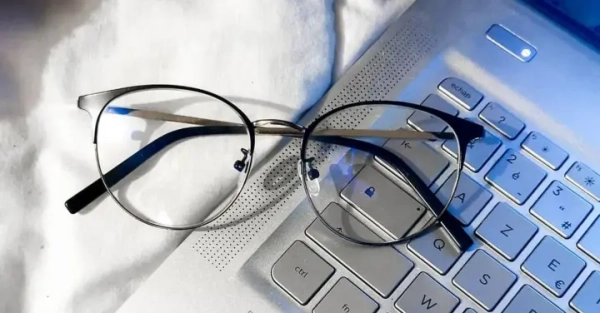
Computer spectacles are often promoted as shielding the eyes against damaging emissions from monitors. But, do they genuinely fulfill this role? Eye specialist Oksana Vygovska clarified to a UNN reporter the actual mechanics of these lenses, specifying who might find them advantageous and in which circumstances their use is unwarranted.
As stated by an eye doctor, the latest computer displays present minimal peril to sight, with anxieties concerning “detrimental emissions” being somewhat overblown.
Up-to-date LCD and LED screens do not produce hazardous or ionizing emissions. The quantity of blue light from displays is considerably less than that emitted by the sun, and there’s no confirmation that it harms the retina under typical usage. Eyeglasses designed to impede blue light possess no substantiated safety impact on ocular well-being.
– Oksana Vygovska explains.
Nonetheless, some individuals do sense a positive change while using computer glasses; however, this outcome is not attributed to blocking blue light.
Occasionally, these spectacles might alleviate exhaustion, ocular dryness, or cephalalgia. However, this arises not from filtering blue light, but from an antireflective layer, precise optical adjustment, or diminished luminosity. The main reason for unease is eye fatigue from digital devices, due to fewer blinks, extended focus, and poor alignment.
– the eye specialist notes.
Based on the physician’s perspective, specialized computer glasses can prove valuable for distinct demographics. This primarily relates to those experiencing refractive errors or age-related modifications, but individuals in good health without grievances do not require them.
Genuinely beneficial for individuals experiencing: hyperopia or age-related presbyopia (40+ years), astigmatism, asymmetry between the eyes, indications of fatigue during intermediate distance activity (50–80 cm). This refers mainly to custom glasses featuring precise optical adjustments, not merely “blue light filters.” For healthy individuals without impaired sight, they generally aren’t essential.
– the expert stresses.
Oksana Vygovska advises following basic ocular hygiene practices, and not exclusively relying on glasses. The medical professional suggests that these practices yield the best results, and often outperform any “shielding” additions.
More effective than any “computer glasses” is the 20–20–20 rule: every 20 minutes → gaze at 20 feet (6 m) for 20 seconds – this releases tension. Increased blinking + artificial tears – mitigates dryness and irritation. Adequate lighting, no glare, keep the screen away from window’s light, use moderate luminosity. Maintain a distance of 50–70 cm from the display, with the top of the display slightly under the eye-level. Night mode/warm colors at twilight are beneficial for sleep enhancement rather than specifically improving eyesight. Vision correction. An effective solution – professionally fitted glasses or contact lenses.
– the eye specialist concludes.