
Children’s elevated temperatures frequently trigger parental worry. Pediatrician Marta Kopan clarifies the proper responses to a child’s high fever, stressing the significance of light clothing and sufficient hydration. She also details when to administer fever reducers and when urgent medical care is needed.
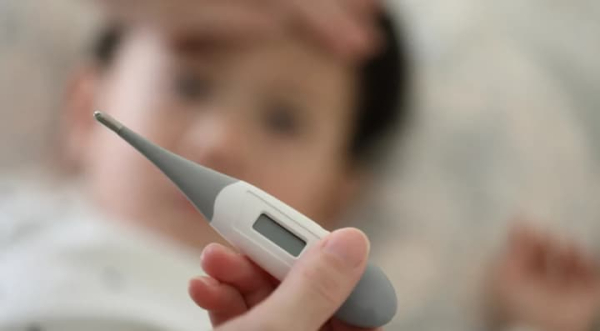
A fever in children is a frequent source of worry for caregivers. UNN reporter Marta Kopan, who also leads the post-mortem observation unit at Maternity Hospital No. 2 and practices as a pediatrician, provided further insights into why over-bundling a feverish child is discouraged, the appropriate timing for antipyretic medications, and situations requiring immediate emergency attention.
Lowering a Child’s Elevated Temperature at Home
Elevated temperature is the body’s inherent response to viral or bacterial contagions, and the primary error made by guardians, according to the physician, is aggressively “warming” a child during chills. This is counterproductive because the body’s central temperature is actually ascending, and the body needs to release warmth.
“Parents often wrap a chilly, feverish child. Yet, encasing them in a “thermos” of blankets and heavy clothing prevents heat dissipation. Consequently, the core body heat persists in climbing.”
“Should a youngster display a heated brow with chilled extremities, alongside a continually rising fever, this signals vasospasm. The child should be disrobed but their limbs should be warmed to balance temperature levels,” underscores Dr. Marta.
Marta Kopan recommends ensuring the room maintains a comfortable temperature and appropriate humidity during the illness.
If a child’s body heat exceeds the typical range, you should:
- First, remove clothing to allow heat release, remembering to take off the diaper (it covers 20-30% of an infant’s surface area);
- Encourage the child to consume whatever liquid they will tolerate;
- Avoid raising the room’s ambient temperature.
If practical, a tepid shower or bath at a comfortable temperature can prove beneficial.
A moist, warm body emits heat much more efficiently than a dry one. One can place the child in a tub or take a shower alongside them for closeness and to supervise their state. If they strenuously object, warm their distal extremities and use cold compresses on key vascular regions. This remains safe, when used judiciously and briefly.
– indicates the pediatrician.
When should one provide antipyretics to a child? Separately, consider antipyretic usage. The pediatrician emphasizes that it’s essential to prioritize the child’s comfort level over the thermometer reading. If the child exhibits liveliness and good spirits, even at 38.5°C, the medication isn’t necessarily required.
We administer paracetamol or ibuprofen not solely “to lower the numbers,” but rather to ease discomfort. One might give medication if the child seems unwell and listless at 37.6, groaning and shunning drink. Still, observing a child merrily jumping and playing at 39 suffices to remove garments, offer liquids and watch closely.
– says Marta Kopan.
Improving a Child’s Comfort During High Fever
Marta Kopan also singles out the severe ramifications of not hydrating sufficiently. Without ample fluids, the body is limited in its power to diffuse heat properly. Furthermore, with sickness, emphasis should be given to the intake amount, rather than “ideal” beverage selection.
Pure water stands ideal. Still, while sickly, our priority remains their drinking at all. Should they consent to a fruit drink, pressed juice, herbal tea, or sweetened offering – it’s better than nothing. It could be through a straw or in small sips, where continuous hydration counts paramount.
– the doctor emphasizes.
Under What Circumstances Should You Call Emergency Services for your Child?
The pediatrician cautions also against unwarranted calls directed to emergency medical personnel. High temperature by itself does not warrant alarm if the child remains aware, receptive, hydrated, and responds to the parent.
One cannot succumb from a viral fever, given accurate parental interventions. Peril stems from overheating, desiccation, and unattended symptoms. An ambulance is needed when consciousness falters, seizures occur, responsiveness wanes, or temperature resists reduction following adequate endeavors.
– stresses Marta Kopan.
The physician further touches on febrile convulsions, which could appear grave, yet often imply negligible extended hazards. Importantly, these incidents call for distinguishing from ominous neurological conditions. READ ALSO: “20% of children use electronic cigarettes”: doctors report a rapid increase in nicotine addiction among adolescents
Should spasms wane upon limb immobilization, then it negates epileptic manifestations. Yet, persistent limb contractions during restraint constitute basis for seeking prompt medical assessment. In any situation, it merits maintaining composure and methodical action.
– the specialist explains.
Marta Kopan sums up that an elevated temperature aids the body against infection. It facilitates protective secretion and initiates the immunologic reaction, where the direst action emerges as caregiver alarm.
Abandon fever apprehensions. Instead, avoid rushed, careless actions. Undress, hydrate, expedite heat release, and oversee indications—this entails foundational protocol. Lastly, recall, address the patient instead of being ruled by thermometer digits.
– emphasizes Marta Kopan.
DISCLAIMER! The information is for general knowledge dissemination. Seek personalized medical insights should health conditions warrant attention.