
Research indicates that the mosquito-borne tropical illness, chikungunya, can now be spread throughout much of Europe, as increasing temperatures permit the infection to extend into southern England.
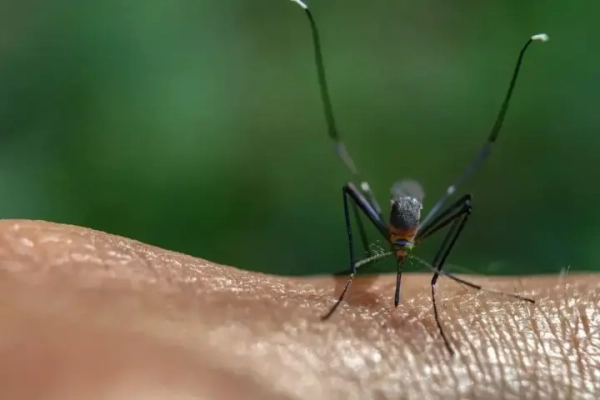
Findings reveal that a terribly agonizing tropical ailment, chikungunya, is now transferable via mosquitoes across much of Europe, according to UNN, referencing The Guardian.
Details
It’s suggested that increased temperatures resulting from the climate predicament mean that infection is presently viable for more than half the year in Spain, Greece, and other southern European nations, and for a couple of months in south-east England. Experts caution that continued global warming indicates the dissemination of the illness further north is only a question of time.
This examination represents the initial comprehensive evaluation of temperature’s impact on the incubation timeframe of the Asian tiger mosquito virus, which has infiltrated Europe in recent decades. The research determined that the minimum temperature at which infection is possible is 2.5°C lower than prior, less dependable estimates, a difference that the researchers found “quite shocking”.
Chikungunya virus was initially discovered in Tanzania in 1952 and has typically been confined to tropical zones, where millions of cases are documented annually. The ailment induces severe and prolonged joint discomfort that is exceptionally debilitating and potentially fatal in young children and older individuals.
Over recent years, a small number of instances have surfaced in over ten European countries, yet substantial outbreaks, amassing hundreds of cases, impacted France and Italy in 2025.
The extent of global warming within Europe is roughly double the overall global warming rate, and the lower threshold for the propagation of the virus holds significant importance; hence, our fresh calculations are profoundly startling. The disease’s northward progression is essentially inevitable.
– expressed Sandeep Tegar from the UK Centre for Ecology and Hydrology (UKCEH), the study’s primary author
Dr. Stephen White, also affiliated with UKCEH, stated: “Two decades prior, suggesting the emergence of chikungunya and dengue in Europe would have been dismissed as absurd, given their status as tropical ailments. However, the situation has evolved drastically due to this invasive mosquito and the repercussions of climate change – it’s a remarkably straightforward correlation.”
“The swift transformations we’re observing are disconcerting. Until the preceding year, France had noted approximately 30 chikungunya cases over the previous decade. In the past year, the tally surpassed 800,” he elucidated. The virus was introduced by travelers from French overseas territories in the tropics, regions grappling with outbreaks of the illness, including Reunion.
Dr. Diana Rojas Alvarez, directing the WHO’s section on viruses spread through insect and tick bites, commented: “This study carries significance as it suggests that transmission [in Europe] might intensify noticeably with time.” She further noted the potential severity of chikungunya, where up to 40% of those affected still endure arthritis or intense pain even after five years.
“The climate exerts considerable influence here, yet Europe still retains the opportunity to regulate the proliferation of these mosquitoes,” she asserted. A vital strategy involves educating the population about eliminating standing water, which serves as mosquito breeding grounds, alongside advising the use of lengthy, light-colored attire and repellents to avert bites. She emphasized that health authorities also need to institute epidemiological surveillance frameworks.
The research, featured in the Journal of the Royal Society Interface, leveraged data from 49 earlier studies focusing on chikungunya virus within tiger mosquitoes and marked the first instance of ascertaining the incubation duration across a broad spectrum of temperatures.
The investigation revealed that the threshold temperature for transmission ranges from 13-14°C, implying that transmission may transpire for more than half the year in Spain, Portugal, Italy, and Greece, and for three to five months yearly in Belgium, France, Germany, Switzerland, along with a dozen additional European countries. Prior estimations pegged the minimum temperature at 16-18°C, indicating an augmented risk of chikungunya outbreaks across broader regions and for protracted durations than initially anticipated, as highlighted in the publication.