
Armed conflict induces tension and conduct issues in creatures. Creature therapist Serhiy Klochko clarifies who the genuine master is and how to cooperate with animals suffering from trauma.
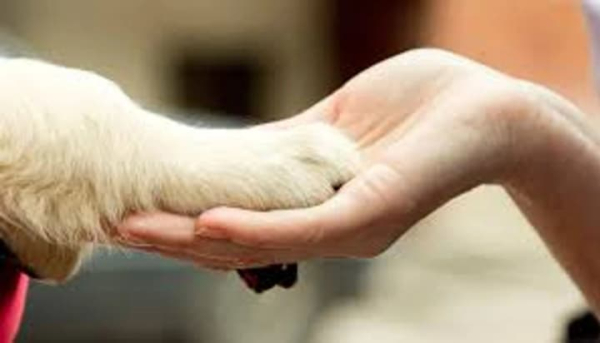
The conflict influenced not just individuals, but additionally creatures – blasts, alarms and changes in everyday environments frequently trigger extreme strain and conduct issues. In such circumstances, proprietors are progressively pondering whether they require the assistance of a qualified expert. Creature therapist Serhiy Klochko shared with a UNN journalist additional insights about who can be viewed as a zoopsychologist and how collaborating with animals suffering from trauma genuinely functions.
As per the specialist, a zoopsychologist is something beyond an individual who adjusts the conduct of canines or felines. This is a master with higher particular training and logical experience. It is likewise critical to comprehend the contrast between a coach and a conduct master.
Most importantly, this is an individual with advanced education. Furthermore, in all likelihood, college education. This ought to be involvement working in a logical establishment, in light of the fact that an individual who essentially amends the conduct of a canine or feline isn’t a zoopsychologist, but instead a mentor or conduct amendment master. A zoopsychologist is a specialist who works with a wide range of creatures that have a mind
– clarifies Klochko.
He explains that schooling at a natural or mental workforce with a comparing specialization can be profile instruction. This essentially concerns the divisions of zoology or human and creature physiology. Nonetheless, short courses or declarations can’t be viewed as completely fledged instruction.
There are numerous paid courses at Western colleges, week after week or month to month. Individuals pay cash and afterward compose that they moved on from three colleges. However, this isn’t training in the commonly acknowledged sense. I have seen cases when a zoopsychologist is a space expert by training, and as affirmation he refers to a course by another zoopsychologist who is a mathematician. This likewise occurs
– adds Klochko.
The master underlines that prior to beginning to work with the creature’s conduct, it is important to preclude medical issues. Oftentimes, animosity or dread can be an outcome of torment or physiological issues.
When a creature becomes forceful or scared of something, it very well might be a conduct issue. However, inside sicknesses or agony can’t be precluded. Until you wipe out the reason for the aggravation, conduct amendment won’t help. Consequently, the main thing to do is to see a veterinarian.
– the specialist underlines.
Concerning the term of working with harmed creatures, everything relies upon the intricacy of the case. By and large, the cycle can keep going for a considerable length of time to a few months, and on the off chance that there is no outcome for quite a while, it merits reconsidering the methodology or searching for different reasons.
By and large, it is from fourteen days to 90 days. In troublesome cases, longer. In the event that after 90 days there is no impact, then, at that point, either the issue is insoluble, or the incorrect techniques are utilized. Any conduct can be adjusted, except for sores of the sensory system
– makes sense of the zoopsychologist.
Klochko underlines that a zoopsychologist really works not just with the creature, yet principally with its proprietor. It is the individual who should figure out how to react accurately to the creature’s signs. This is the best way to transform it.
A zoopsychologist doesn’t live with this canine or feline. He works with the proprietor. It is important to show an individual to see the signs that the creature gives and to respond to them accurately. This is the best method for changing conduct
– says Serhiy Klochko.
The master additionally named indications of extreme pressure in a creature that proprietors ought to focus on.
Regular breathing, salivation, going bald are indications of stress. Automatic pee and defecation are an extremely elevated degree of stress. Furthermore, the state when the creature doesn’t respond to anything is over-limit restraint (Over-limit (defensive) restraint is a defensive response of the sensory system that happens when the strength or span of the upgrade surpasses the limit of the nerve cells’ functioning limit). On account of animosity, a canine, notwithstanding snarling and grinning, may show the whites of its eyes, strain its tail, press it down or, on the other hand, raise it, yet individuals don’t necessarily see these signs
– the master underlines.
During recovery, particularly after war or injury, the creature needs harmony, makes sense of the zoopsychologist. It is critical to limit boosts and stay away from brutal preparing techniques. As per the specialist, brutal methodologies just deteriorate the condition.
It is important to make the most quiet circumstances. You can close the windows, decrease commotion, give delicate correspondence, great food and strolls. You shouldn’t participate in preparing or rehearsing orders – this can just deteriorate the condition. In the event that the boosts are not rehashed, the creature continuously returns to normal
– the master explained.
The master likewise underlined that the assistance of a zoopsychologist can be viable if the specialist has the suitable training and experience.