
Main points
- Heineken is facing rising energy and logistics costs due to the escalating situation around Iran, which could affect demand.
- Nestlé, on the other hand, is benefiting from changing consumer behavior, who are eating more at home, although sales have fallen slightly due to a baby food recall.
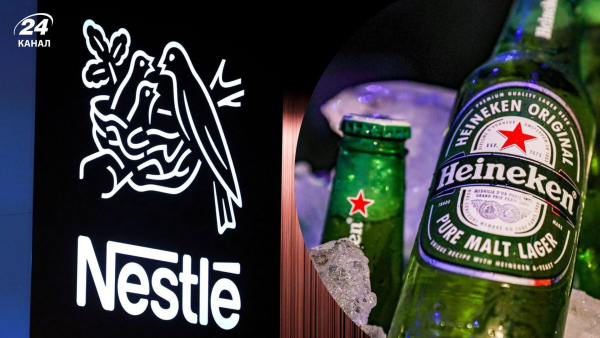
Global giants Heineken and Nestle sound the alarm over the war in Iran / Collage by Channel 24, photo by Pexels, Getty Images
The world's consumer market giants are sounding the alarm one after another: the situation in the Middle East is starting to affect not only politics, but also ordinary shoppers. In short, everything is getting more expensive, and people are starting to save even on familiar things.
What is the situation at the beer manufacturer Heineken?
Heineken has had an unexpectedly good start to the year: in the first quarter, the company exceeded forecasts – revenue grew by almost 3%, and sales also increased slightly, writes Reuters.
But behind these numbers lies tension. The company says bluntly: energy is getting more expensive, logistics are getting more complicated, and sooner or later this will hit demand.
The main reason is the aggravation of the situation around Iran. Because of this, fuel prices are rising, and for brewers this is critical: beer production is very energy-intensive. As a result, the cost price is rising, and shifting everything to the buyer is risky. In addition, there are several other factors:
- general inflation
- change in attitude towards alcohol
- trade barriers.
The company is simultaneously cutting costs – it plans to lay off 6,000 employees and is looking for a new leader after the sudden resignation of the previous CEO, Dolph van den Brink.
Global trade has become more complex and volatile, affecting energy availability and cost in certain markets. This is leading to inflationary pressures that could affect consumer sentiment in the medium term,
– said van den Brink, without directly mentioning the war.
What is the situation at Nestlé?
On the other front, Nestlé, the maker of Maggi seasonings, Nescafe coffee and KitKat chocolate wafer bars, writes Reuters.
The company is also seeing inflationary pressure for the same reasons – more expensive fuel, more expensive delivery. But at the same time, it has found itself in a more advantageous position.
According to the company's management, customers are increasingly abandoning going to restaurants and are starting to eat more at home. What's more, even the way they travel is changing: fewer car trips, more walking to the shops:
- The company maintained its full-year organic growth forecast of 3% to 4%, as well as a higher underlying operating margin on trading profits than last year.
- But CEO Philippe Navratil said consumer behavior is changing in response to rising fuel prices.
Although it was not without problems: the baby food recall slightly affected the indicators, the situation has now been leveled out: total sales decreased by 5.8% to $27.12 billion, which is in line with analysts' expectations.
The result is a rather revealing picture: while the beer business is nervous about falling demand and rising costs, food giants are partially benefiting from changes in people's behavior.
What is known about the losses to the world economy due to the war in the Middle East?
As economist Ivan Us said in a commentary on Channel 24 , the market reacts to any statements made by people involved in decision-making. However, it is difficult to assess the situation with the real amount of oil in the global economy due to the lack of specific data on losses.
Commenting on the situation, economist Ivan Us expressed skepticism about the prospects of the agreement. According to him, based on the experience of recent years, he does not believe in the possibility of lasting peace in the Middle East. The expert doubts that the agreements reached will be implemented, and does not expect the US or Israel to provide Iran with any compensation.
Finally, less than a day after the ceasefire was announced, reports emerged of a breach of the truce between the US, Israel and Iran. In particular, the United Arab Emirates and Qatar announced that they had repelled Iranian missile and drone attacks. While Iran itself reported an attack on its oil refinery on Laban Island by US-Israeli forces.

Ivan Us
Candidate of Economic Sciences, Chief Consultant of the National Institute for Strategic Studies
Now oil prices have gone down a bit, but still $95 is not where we were at the beginning of this year, when it was $60 per barrel, and no one predicted a crazy increase in prices. So now we need to think about how to bring these prices down. And make sure that Iran does not come out of this story even stronger than it went into it on February 28.
According to the expert, more than a month after the start of the operation in the Middle East, the exact scale of losses due to the conflict for the global economy is unknown, so monitoring and impact assessment are needed. The situation is especially difficult for Ukraine and other countries that import oil and petroleum products.
Latest news about the US-Iran conflict
-
Iran announced the opening of the Strait of Hormuz, but then resumed the blockade. Instability in the Strait is beneficial to Russia, as it raises oil prices. This allows Russia to receive significantly higher revenues and requests to sell their energy resources.
-
The US does not have the resources for a military victory over Iran, having spent a significant part of its arsenal in over a month. According to political scientist Maxim Nesvitailov, today Trump desperately needs to end the war, and the only hope for the US is to reach at least some kind of agreement.
-
The US has used up at least 45% of its stockpile of precision-guided missiles since the escalation of the conflict with Iran. The Pentagon has awarded contracts to accelerate production of the missiles, but it could take three to five years to replenish the stockpile.