
Main points
- Ukrainian business presence in Serbia has grown significantly, with over 480 companies and entrepreneurs operating in various sectors of the economy.
- A significant share of newly registered businesses is concentrated in IT, consulting, trade, and small business, reflecting a change in the structure of market presence.
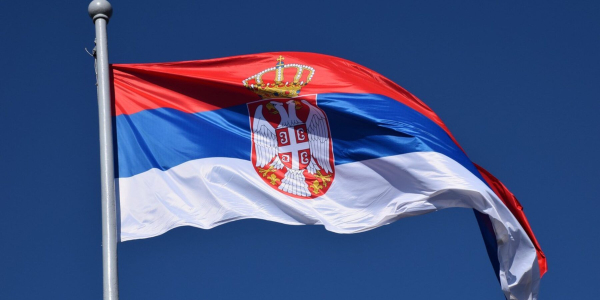
Ukrainian business is massively “capturing” Serbia / Shutterstock
During the years of full-scale war, the Ukrainian business presence in Serbia has noticeably increased. Currently, there are over 480 companies and entrepreneurs operating in the country, mostly with Ukrainian capital.
How has the number of Ukrainian entrepreneurs in Serbia increased?
Ukrainian businesses are actively developing abroad. This was reported by the President of the Serbian Chamber of Commerce and Industry, Marko Cadez, referring to data from the Serbian Enterprise Registration Agency, Interfax-Ukraine reports.
According to current data, there are currently 161 companies with Ukrainian capital and 320 Ukrainian entrepreneurs registered in Serbia. In total, we are talking about more than 480 businesses operating in various sectors of the economy.
Most often, Ukrainians open a business in the following areas:

- IT;
- consulting;
- trade;
- small business.
How did the situation change after the start of a full-scale war?
For comparison, the president of the Serbian Chamber of Commerce and Industry provided statistics for 2021. Before the full-scale invasion, 202 Ukrainian companies and 117 entrepreneurs operated in the country.
Some businesses have ceased operations – according to Chadez, about 40% of pre-war registrations were later closed. At the same time, after 2022, the market saw a wave of new Ukrainian companies and individual entrepreneurs.
According to him, the situation became even more stable last year.
Last year, for example, not a single company or entrepreneur was closed,
– emphasized Chadej.
How is Ukrainian business changing its profile?
The President of the Serbian Chamber of Commerce and Industry drew attention to the fact that Ukrainian entrepreneurs are gradually changing the structure of their presence on the Serbian market.
While traditional trade used to play a prominent role, now more and more businesses are operating in other areas.
The number of IT entrepreneurs, consulting firms, and design studios is growing year after year,
– said Chadej.
It is about a gradual transition from traditional business models to service and knowledge-based business.
What does this mean?
- Ukrainian business continues to actively integrate into European markets.
- Serbia has become one of the relocation centers for entrepreneurs after 2022.
- The main growth is occurring in areas with high added value – IT, consulting, and design.
- Ukrainian companies are becoming less and less dependent on classical trade.
What is the forecast? Experts expect that the Ukrainian business diaspora in Serbia will continue to grow, especially in digital industries. This may be influenced by further relocation of specialists, the development of international service companies, and the popularity of remote work.
At the same time, long-term prospects will depend on both the situation in Ukraine and the regulatory conditions for doing business in Serbia.
How do Ukrainians influence the GDP of European countries?
Ukrainians abroad are economically active members of society, who are mostly integrated into local economies. The influx of population allows European countries to solve the problems of labor shortages and aging nations. This was stated by labor market expert Vasyl Voskoboynyk in a commentary for Channel 24 .
Due to the war , 5-7 million Ukrainians left for the EU countries. Most settled in Poland, Germany and the Czech Republic, where, together with migrants from previous years, Ukrainians are integrating into local labor markets, filling budgets and pension funds. According to expert Vasyl Voskoboynyk, the presence of Ukrainians in the EU has a tangible economic effect, because among them are employed:
- in Poland – 900 thousand Ukrainians;
- in Germany – 295 thousand;
- in the Czech Republic – about 390 thousand.
Vasyl Voskoboynyk
Head of the Migration Policy Office, President of the All-Ukrainian Association of International Employment Companies
Ukrainians are not a burden for Europe. This is an asset for which Europeans are ready to compete. We find ourselves in a unique situation where Ukraine, Poland, the Czech Republic, and Germany are competing for Ukrainians abroad. On the one hand, this is a pleasant surprise, and on the other, it makes us understand that our country is facing a very significant challenge.
The following figures for 2024 demonstrate the contribution of Ukrainians to the economies of these states:
- in Poland's GDP – 2.7%;
- Czech Republic – 2.2 – 2.3% of GDP;
- Germany – about 0.6 – 0.7% of GDP.
Regarding the latter, the expert notes that the contribution of Ukrainians to the welfare of Germany is also significant, despite the seemingly lower percentage, because its economy is the largest in Europe.
Poland, Czech Republic, Germany, Estonia: where is the best place for a Ukrainian business to start?
However, Ukrainian entrepreneurs are not limited to the Polish market. Some companies with already recognizable brands are using Poland as a “springboard” for scaling in other European countries. According to Reuters, this is also stated by the first vice president of the Polish-Ukrainian Chamber of Commerce, Dariusz Szymczycha.
Companies initially view Poland as a bridge or springboard to European Union markets,
– he notes.
Many well-known businesses in Ukraine have followed this strategy, for example, the Lviv Croissants chain has opened more than ten establishments in Poland and continues to expand in the Czech Republic . Aroma Kava is also actively developing in Poland, and the ice cream manufacturer Three Bears acquired the Polish company Nordis. Such cases demonstrate that the strategy of many Ukrainian companies is to consolidate in a clear market with a large Ukrainian community, and only then – to enter the wider European space.
As for other countries, the statistics there are more fragmentary, but the trends are noticeable. For example, in the Czech Republic, as noted by Prague Morning, in the period from January to June last year, Ukrainians opened almost 6.5 thousand businesses. This is 14% of all new registrations for this period. But during the entire time of the full-scale invasion, according to ProUkrainu, our compatriots registered more than 46 thousand individual entrepreneurs, as of the end of last year.
Germany deserves special attention. According to Eurostat, as of the end of November last year, approximately 1.24 million Ukrainian citizens with temporary protection status were in Germany. Although detailed statistics on the citizenship of company founders are not published, the DIHK Chamber of Commerce and Industry records a slight increase in the number of business registrations in recent years compared to the 2000s, but worse dynamics compared to the Covid times. Despite this, Germany attracts with the scale of its domestic market – over 80 million consumers, a stable financial system and the opportunity to work for the entire EU, although the entry conditions are more difficult than in Poland, due to higher tax requirements and a more complex administration system.
Another interesting destination is Estonia , often called a digital business jurisdiction. Thanks to the e-Residency program, entrepreneurs can register companies within the EU remotely and manage them online, and income tax is paid only when it is distributed. This makes the country attractive primarily for IT businesses focused on the international market, although due to low domestic demand, most such companies immediately work for export.
What is known about foreign business in Ukraine?
-
As of May of this year, there were 21,967 registered individual entrepreneurs in Ukraine whose owners are foreigners, with every fifth of them being Russian.
-
The main areas of activity of foreign entrepreneurs are retail trade, warehousing, wholesale trade, hotel and restaurant business, and the IT sector.