
Main points
- The American company Nielsen plans to sell its division in Russia due to legislative restrictions on foreign organizations.
- Laws prohibiting foreign market research make it difficult for international companies to operate in Russia, which may lead to Russian retailers creating their own analytical systems.

Another American giant is “fleeing” from Russia / Russian media
One of the world's largest consumer research companies, Nielsen, is planning to sell its Russian division. Negotiations with a potential buyer are already underway.
Why is an American company leaving Russia?
A source at a large investment bank added that the American company had long considered the possibility of selling the Russian asset, The Moscow Times writes.
Nielsen has been operating in Russia since 1994. The company was engaged in researching consumer sentiment in the segment of everyday goods and provided statistics for market participants:
- Nielsen data was used by Russia's largest retailers, including X5 Retail Group, Magnit, Lenta, Dixie, and Metro.
- Based on the company's analytics, they determined pricing, assortment policy, and marketing strategies.
Since 2017, Nielsen has also been tracking sales of everyday goods in online stores.
The company is seeking to sell its business in Russia due to a law that restricted the work of foreign organizations that analyze the consumer goods market,
– said the company representative Yulia Zagornova.
Thus, starting from March 1 of this year, the Russian authorities have banned ordering product market research from companies with foreign participation of more than 20% and annual revenue of more than 800 million rubles. In addition, all data on the Russian market must now be stored exclusively within the country.
According to Zagornova, for Nielsen this actually means the impossibility of continuing to work in Russia.
Managing partner of the VMT Consult agency, Kateryna Kosareva, believes that the Russian division of Nielsen may be of interest to analytical agencies, Big Data companies, as well as large federal retailers.
According to her, for large retail chains, such a purchase will significantly strengthen their own expertise in the market of everyday goods.
What does this mean for Russian retail?
- The Russian market is losing another major international player.
- It is becoming increasingly difficult for Western companies to operate in Russia due to new restrictions.
- Large Russian retailers may lose access to international analytics.
- Part of the market may be occupied by local Big Data companies.
- The Kremlin continues to tighten control over information and business.
What is the forecast? Going forward, foreign companies will continue to reduce their presence in Russia, and the authorities will continue to tighten control over market data. It is also possible that large Russian retailers will try to create their own analytics systems.
Note! Nielsen's exit from Russia is another signal of how toxic and difficult the Russian market is becoming for international business. New laws, restrictions, and data controls are gradually crowding out foreign companies, even if they have been operating in the country for years and were important to the big players in the market.
Can foreign brands return to Russia?
Last year, Russia loudly announced the alleged return of over 350 Western brands that had left the market after the start of a full-scale war against Ukraine, the Foreign Intelligence Service writes.
By the end of the year, the reality turned out to be completely different: only about two dozen companies returned, mostly from the lower price segment and mostly from Asia, but by no means Western brands. Russian media reported, in particular, the following:
- McDonald's has registered seven trademarks for its dishes and services in Russian and English. Namely, for “Big Tasty”, “Quarter Pounder”, “Royal Cheeseburger”, McFresh, McFlurry, Big Mac and “MakDostavka”.
- Starbucks has registered a trademark in Russia until 2034.
- The American company Coca-Cola has registered the trademarks “Coca-Cola” and “Sprite” in Russia.
- Chanel has filed an application with Rospatent to register the trademark “Chanel Comete” in Russia.
- Mercedes-Benz has filed an application with Rospatent for trademark registration.
- Spanish company Inditex has filed an application to register the trademark Zara .
- The Louis Vuitton brand has registered a trademark in Russia.
Thus, Russian media produced headlines about the return of major brands, citing anonymous sources and trademark registrations with Rospatent. Such reports are speculations designed to create the illusion of economic stability.
In reality, registering or renewing a trademark is just a legal tool to protect intellectual property. Companies seek to preserve their rights to prevent third parties from using their brand and to block attempts to register similar names or logos.
By the way, at the same time, 56% of Russian citizens would like foreign companies to return to the Russian market . Russians miss car brands, software, the film industry, and everyday goods the most.
The hardest hit sectors were the technology and manufacturing sectors. After the exit of giants such as Microsoft, Oracle, Adobe, Autodesk and others, the Russian software market found itself in a state of artificial isolation. This led to higher prices and lower competition, as well as a situation where businesses were forced to either adapt to limited choices or seek complex workarounds. As a result, import substitution became a forced replacement without alternatives at the level of global products,
– they write in the intelligence.
What is the state of Russia's economy?
Economist Ivan Us told Channel 24 that even the top brass of the government now acknowledge Russia's economic problems. In particular, the country's Minister of Economic Development, Maxim Reshetnikov, bluntly says that the country has already exhausted all possible resources. And this is happening against the backdrop of a strong ruble, high interest rates, a shortage of labor resources, and budget constraints.
Thus, the officially announced 1.5% drop in GDP in the first quarter of this year does not correspond to reality. This percentage is much higher, notes economist Us.
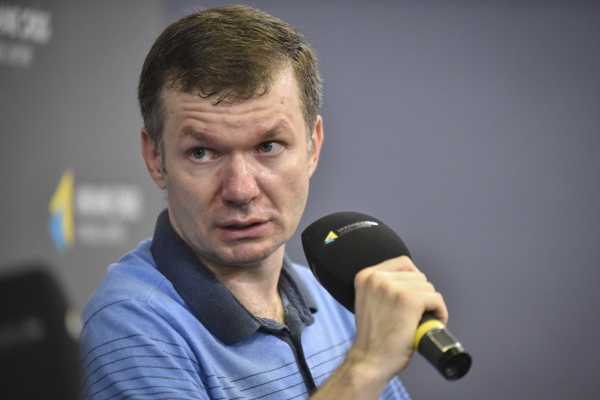
Ivan Us
Chief Consultant, Center for Foreign Policy Studies, National Institute for Strategic Studies
To understand the real state of affairs in Russia, it is worth listening to their economic forums, such as the St. Petersburg or Moscow economic forums. They are spoken by people who, in principle, work in the economy. And if people really have problems, they will not say that everything is great.
At the same time, economist Oleg Getman adds that Russian statistics are currently closed, so it is difficult to navigate this issue. But what the Russian media is writing about indexation and pensions completely coincides with the budget disaster.
That is, problems with indexation, additional printing of the ruble and crazy loans in the domestic market of Russia are all happening now. And now the authorities have one big question: how to pay off the deficit and where to get the funds. And they can either be printed or they can cut spending,
– he declares.
Last year, Russians resorted to cutting spending on education, healthcare, and various social programs. This is continuing this year as well. Plus, they raised taxes: first, they raised personal income tax, and then they raised VAT.