
Main points
- In Russia, companies may be checked for secret agreements that limit competition for specialists and restrain salary growth.
- Similar arrangements may exist in the IT sector, banking, pharmaceuticals, oil and gas, and large industry.
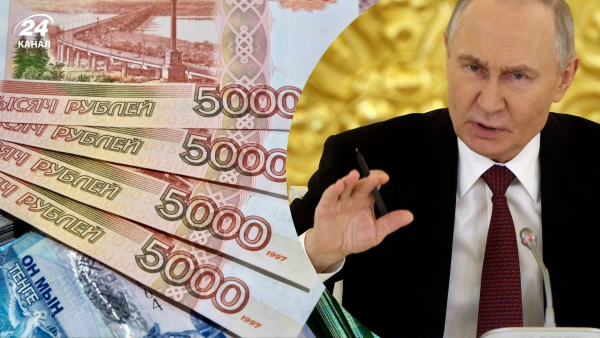
Companies in Russia have invented salary fraud / Collage by Channel 24, photo by Getty Images, Russian media
In Russia, companies may be checked for possible wage collusion. This is a situation where employers allegedly agree among themselves not to lure workers and to restrain wage growth.
What is happening to salaries in Russia?
We may be talking about informal agreements between employers that actually limit competition for specialists, writes The Moscow Times.
The essence of such agreements is as follows:
- companies do not lure employees from each other;
- artificially restrain wage growth;
- limit the ability of employees to change jobs.
The impetus for the appeal was information published by RBC. According to sources, similar agreements may exist in several industries at once:
- IT sector;
- banking sector;
- pharmaceutical companies;
- oil and gas industry;
- large industry.
According to journalists, companies can exchange data on employee salaries and bonuses to keep them at approximately the same level.
Other tools are also used:
- restrictions on working for competitors after dismissal (for 1-3 years) are added to employment contracts;
- use non-disclosure agreements to deter employee transition;
- “tie” employees through bonuses, mortgage programs, or corporate pensions.
If such arrangements do exist, it could mean that wages are rising more slowly than they would in a competitive environment.
What is happening with the Russian labor market?
In the fourth quarter of 2025, the number of officially laid-off employees reached 32.6 thousand people, as reported by the Foreign Intelligence Service.
This is 59% more than a year earlier. And the most affected were:
- public administration and security (4.9 thousand);
- healthcare (4.6 thousand);
- education (3.8 thousand);
- manufacturing industry (3.9 thousand).
Simply put, it is precisely those industries that are fed by the state budget that
– explained in the investigation.
At the same time, private business in Russia massively avoids official dismissal procedures. So how do employers act? They simply “ask” people to write a statement of their own free will. That's why the statistics look better than they really are.
Business problems in Russia
-
Russian authorities are conducting mass inspections of marketplaces such as Ozon and Wildberries to identify illegal workers. The Federal Tax Service is inspecting order fulfillment centers and services that pay the self-employed for suspected tax evasion.
-
Every third small business owner in Russia is considering closing due to the growing tax burden and worsening economic situation.
-
“Pipe Metallurgical Company” is shutting down one of its pipe rolling plants due to low demand for products. Russia's metallurgical industry is experiencing a crisis, with a decline in steel production and an increase in the share of imports.
-
AvtoVAZ sales in January fell by almost 29% compared to last year, to 19.7 thousand cars. The company reduced prices on some models, but at the same time raised prices on the most popular cars.