
Main points
- Large chains in Russia, including Lime and Melon Fashion Group, are switching to compact store formats due to cost savings and changing shopping behavior.
- Small stores respond to new customer demands for quick purchases without unnecessary time in the shopping center, while M.Video focuses on delivery and order pickup points.
Russian retail giants massively change format due to economy / Russian media
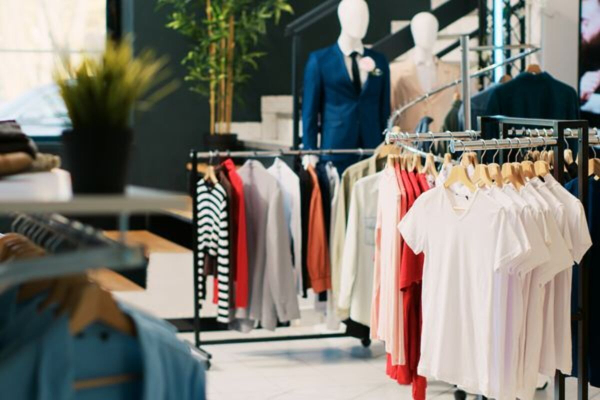
Large clothing and electronics chains in Russia have begun to review the format of their stores and are betting on compact outlets. The reason is quite simple: customers are increasingly saving, which forces businesses to look for ways to reduce costs.
What is known about new formats of clothing and electronics stores in Russia?
According to consultants in the retail real estate market, several major players are already preparing for the changes. Among them are Lime, Melon Fashion Group (which unites Love Republic, Zarina, Sela and other brands), as well as “Dityachy Svit” and “M.Video”, writes The Moscow Times.
- For example, Lime is working on a small-store format for regions where income levels are significantly lower than in Moscow. A smaller space means not only a more modest assortment, but also significant savings on repairs, design, and rent.
- Melon Fashion Group is also testing new approaches. The Sela brand, for example, has opened a new type of concept store – with clothing, home goods, and even a cafe.
- “Dityachy Svit” has long been developing a compact format in the regions – under the “Detmir mini” brand. Such stores are much cheaper to open and pay for themselves faster.
- M.Video has taken a different path: instead of large retail stores, the company focuses on order pick-up points and home delivery. That is, the store is gradually turning into a point of delivery rather than a place of choice.
Why is this happening and what does it mean for Russians?
Experts explain: all this is a reaction to changing consumer behavior. People have become more careful with their spending, compare prices more often, and are not ready to spend too much, says Yevgenia Khakberdieva from NF Group.
At the same time, businesses are facing additional pressures – rising credit costs, rising taxes, and rising costs for building and maintaining stores. In such circumstances, downsizing is one of the easiest ways to maintain profitability.
In addition, small stores better meet the new customer demand: to quickly buy what you need “here and now”, without spending too much time walking around shopping malls.
So, the move to mini-formats is not a temporary reaction, but a new retail model. Businesses are adapting to a reality where shoppers are spending more cautiously and the efficiency of every square meter is becoming critically important.
What else do Russians save on?
Putin's policies have forced Russians to save not only on luxury purchases but also on basic goods like food. Data from Sberbank showed that the drop in the number of catering establishments in January was the largest since 2021, and restaurant spending hit a three-year low in November-early December 2025, Reuters reports.
Real consumer spending growth fell to zero in February for the first time in two years. Russia forecasts economic growth of 1.3% this year after 1% in 2025, 4.9% in 2024 and 4.1% in 2023. The International Monetary Fund forecasts growth of 0.8% in 2026.
A central bank study found that across Russia's 11 time zones, people are looking for cheaper options: eating at fast food or supermarkets instead of restaurants, discounted food at supermarkets, car repairs instead of new purchases, and a cooling housing market.
The number of cafe and restaurant closures in the capital in 2025 increased compared to 2024, while the number of takeaway coffee outlets continues to grow,
– the Central Bank of Russia reported.
How is Russia's budget deficit growing despite additional revenues?
Economist Oleg Getman told Channel 24 that for a certain period of time – about a month or so – Russia could receive additional income from oil sales against the backdrop of events in the Middle East. And now it will continue to earn from this for some time.
Oleg Getman,
Coordinator of expert groups of the Economic Expert Platform
But against the background of the overall budget deficit, in particular for the period January-March 2026, which has already exceeded 4.5 trillion rubles, this is a drop in the ocean.
That is, even if the Russians receive an additional $5-10 billion, they will spend much more.
Therefore, it is worth understanding that if the conflict in the Middle East “declines” in the coming weeks and months, Russia will be able to receive a small amount from the sale of oil, which will not affect the economic situation in the country in any way.
– explains Hetman.
Problems of business and economy in Russia
-
Russia faces a large budget deficit, which could reach 5 trillion rubles, making it difficult to finance social benefits, including pensions. Economic problems have led to staff cuts and workweeks, and businessmen have spoken out about the state's significant spending on the war in Ukraine, a topic that had previously been taboo.
-
Tax hikes in Russia have left 50% of companies operating at a loss, with the Chamber of Commerce and Industry putting the figure at 65%. Changes in tax legislation, including an increase in VAT from 20% to 22% and a reduction in the income threshold for the simplified system, have had a negative impact on business, reducing tax revenues by 16% in the first quarter.