
Main points
- In Kyiv, about 400 coffee shops and fast food restaurants have closed in a few months, accounting for 13-14% of the catering market.
- The main reasons for the closures include high electricity costs, power outages, dismantling of MAFs, market oversaturation, and declining customer solvency.
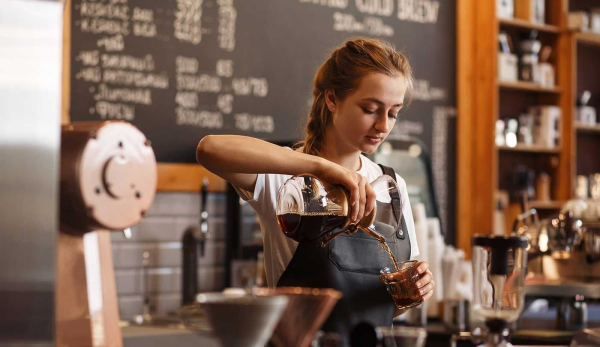
Almost 400 coffee shops and fast food restaurants closed in Kyiv / engage.org.ua
In the capital, a whole wave of establishments has disappeared in just a few months – the Kyiv catering market has noticeably “sagged”. During this time, about 400 outlets have closed, and the lion's share of them are small businesses: coffee shops, fast food, and street food.
Why are establishments closing en masse in Kyiv?
In the past few months, about 13-14% of establishments in the entire restaurant market in the capital have closed down. Expert Olga Nasonova said this, RBC-Ukraine reports.
At the same time, according to her, this is not a complete collapse of the industry, but rather a targeted blow – the smallest players have suffered the most:
- About 75% of all closures are small coffee shops, bakeries, fast food outlets, and shawarmas.
- Large restaurants survived this period much easier and did not disappear en masse.
Another alarming signal is the sharp increase in the number of ready-made businesses being put up for sale. This means that some owners simply see no point in continuing their work.
Among the main reasons are the cost of electricity and survival during the difficult winter. Due to power outages, entrepreneurs had to invest in generators, and even small points spent tens of thousands of hryvnias just for backup power. For many, this became a critical point.
The situation was further complicated by other factors:
- active dismantling of MAFs in the capital;
- oversaturation of the market with coffee shops;
- decrease in customer solvency;
- population outflow;
- the impact of mobilization on the flow of visitors.
The behavior of consumers themselves has also changed. Coffee “on the go” for 80-90 hryvnias no longer looks so attractive – people either choose more convenient formats or generally save on such expenses.
Against this background, large chains and premium establishments are holding their own much more confidently. According to Nasonova, not a single restaurant in the expensive segment has closed during this time – moreover, new ones have appeared.
The stability of chains is explained simply: they have well-established purchases, recognition, and can “tighten” weaker points at the expense of stronger ones. Separately, the expert talks about the so-called “golden league” – these are unique establishments with a clear concept, a strong audience, or owners who are a brand themselves.
Why is it difficult for entrepreneurs to adapt now?
For Anastasiya Yamelinets, a client expert, told Channel 24 that business closures occur mainly due to the accumulation of various changes.
The expert speaks of a significant increase in financial burden, such as costs for logistics, rent, personnel, energy, etc. In addition, consumer behavior has changed noticeably.
For example, according to the marketing company Kantar, purchases are becoming more rational: people compare alternatives more often, reduce the frequency of purchases, and are more sensitive to price.

Anastasia Yamelynets
Client Partner at Kantar
Businesses that fail to adapt to these changes or continue to operate in a “business as usual” model and do not support their decisions with up-to-date data quickly lose their sustainability.
And given the situation in the country, one of the main factors for closure is war risks. Businesses may suffer from disruptions in work, customer migration, and supply instability.
No less important is the psychological factor: uncertainty, pent-up demand, and reduced willingness to invest.
In research, we see not only the direct impact of war, but also a change in consumer psychology: shorter planning horizons, greater caution in spending, reassessment of priorities. If the product does not have a clear value or the brand does not meet new expectations, the risk of closure increases much faster,
– remarks Ms. Anastasia.
It's easier to grow your business if you have your own car that matches your lifestyle. Yes, the best-selling Škoda Octavia is a balance of comfort and functionality. Nothing superfluous, only the best solutions to make your daily business routine easier. Matrix headlights, wireless phone connection, Front Assist and Cruise Control, three-zone air conditioning and driving mode selection are far from a complete list of “chips” that will allow you to enjoy every trip.
-
Ukrainian business news
-
Ukrzaliznytsia retained first place among employers, despite a 5% staff reduction over the past year. Silpo rose to fourth place, overtaking Ukrposhta, increasing its staff by 3% over the year, although the total reduction since 2021 is 23%.
-
Ukraine has confiscated 25.0717% of the shares of the Kryukiv Carriage Building Plant, previously owned by Russian businessman Stanislav Gamzalov. The confiscation was made possible by a decision of the Supreme Court of Ukraine, which was based on Gamzalov's connections to the Russian military-industrial complex.
-
Vodafone believes that mobile tariffs at the level of 400 hryvnias per month are justified due to the large amount of services provided, including unlimited voice and “Roaming like at home”. The company is forced to constantly invest over 33% of its revenues in network support and development, which explains the current level of tariffs.