
Main points
- Philip Morris is facing a scandal over its “I am Marlboro” campaign, which has been criticized for targeting youth, despite the company's claims of abandoning cigarettes.
- Activists and experts say Marlboro's advertising attempts to connect young people with cigarettes through self-expression, which contradicts the company's efforts toward smoke-free products.
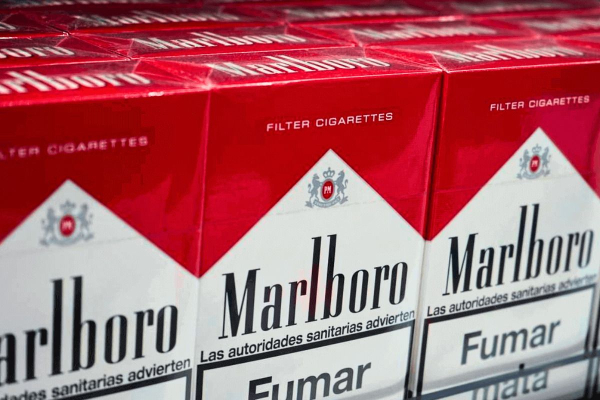
Philip Morris found itself at the center of a scandal over its Marlboro advertising / Shutterstock
Tobacco giant Philip Morris is at the center of a new scandal over its global “I am Marlboro” advertising campaign. Activists and anti-smoking experts say the brand is actually trying to appeal to young people, despite the company's public statements about wanting to “give up cigarettes.”
What is known about the Marlboro scandal and “exploitation of youth”?
The “I am Marlboro” campaign, which tobacco industry experts say was designed to attract young people, includes billboards, television ads and online content, The Guardian writes.
In some countries, the advertisement provoked a real scandal:
- In the Philippines, Marlboro sellers even hold contests where you can win scooters and branded gifts for buying cigarettes.
- In Indonesia, advertisements show young people traveling, playing in a rock band, and leading an active lifestyle.
Experts believe that this presentation directly appeals to a young audience and forms an association of cigarettes with self-expression, freedom, and lifestyle.

You can't argue that cigarettes should be in a museum, while simultaneously launching a global campaign to make Marlboro cigarettes a key part of how young people see themselves. The campaign capitalizes on young people's search for identity, belonging and self-expression and connects this to Marlboro cigarettes,
– says Mark Hurley, vice president of the Campaign for Tobacco-Free Kids.
Activists recall that a few years ago, PMI CEO Jacek Olczak stated that “cigarettes should be in museums,” and the company is allegedly switching to smokeless alternatives – vapes and tobacco heating systems.
However, critics believe that the new Marlboro campaign contradicts these statements.
Let's face it: if a company was serious about stopping selling cigarettes, it wouldn't advertise cigarettes,
– said Jorge Aldei, director of the Stop organization at Vital Strategies.
Of particular concern is the campaign's activity on social media platforms such as YouTube, Instagram and TikTok, which have a huge youth audience. At the same time, Philip Morris assures that the marketing is aimed exclusively at adult smokers and complies with legal requirements.
The company emphasized that:
- 43% of PMI's revenue already comes from smoke-free products;
- over the past 10 years, the company has sold 240 billion fewer cigarettes;
- The advertisement is supposedly not aimed at young people.
What does this mean?
The Marlboro scandal demonstrates that major tobacco corporations continue to balance between:
- statements about a “future without cigarettes”;
- real promotion of tobacco brands;
- the fight for a new audience.
What's the forecast? Amid criticism, restrictions on tobacco advertising may be tightened in a number of countries, anti-tobacco organizations will continue to pressure Philip Morris, and regulators may examine the campaign for hidden marketing to youth.
Note! The story with the “I am Marlboro” campaign has once again cast doubt on Philip Morris's statements about a gradual abandonment of the cigarette business. Despite the development of smokeless products, the company continues to actively promote the Marlboro brand, and experts see the new advertising as an attempt to attract the younger generation of consumers to tobacco products.
What is known about the collapse of the cigarette market in Europe?
The decline in the tobacco market in Europe accelerated in the fourth quarter of last year, Interfax-Ukraine writes.
Overall, the market lost 3.5% over the year, Philip Morris International reported:
- a significant drop in sales in the fourth quarter of last year was recorded in Poland – by 15.4%;
- less significant in France – by 9.4%;
- they were partially offset by an increase in sales in Bulgaria – by 8.3%;
- Germany – by 1.7%;
- Serbia – by 6.4%.
It is known that the decline was caused by a 5% reduction in cigarette sales , while sales of heated tobacco (HTU) systems continued to grow.
Overall, over the past year, Philip Morris managed to increase global sales by 1.4% due to an increase in smokeless products by 12.8%, including HTU by 11.0%, while cigarette sales decreased by 1.5%.
The health trend has taken hold: why are people starting to give up cigarettes?
The trend for a healthy lifestyle has long ceased to be a “fashionable wave” – it is gradually turning into a social norm. And increasingly, this applies not only to nutrition or sports, but also to quitting smoking.
During the OPEN SCIENCE online conference, experts from the tobacco industry and nicotine products discussed how attitudes towards smoking are changing among adult consumers. Among the key factors influencing quitting cigarettes:
- strengthening scientific evidence on the harms of tobacco smoke;
- increasing awareness of passive smoking;
- social pressure and changing behavioral norms in cities;
- development of smoke-free alternatives.
As the panelists noted, access to scientifically based information about alternatives is becoming a key factor for those trying to reduce their risks but not ready to give up nicotine completely.
What do experts say about the risks and alternatives?
Representatives of the tobacco industry and research areas emphasize that the main factor of harm is cigarette smoke.
We can see how the dynamics of smoking-related diseases are changing in countries where there is a transition to alternative products,
– says Gisele Baker.
She cites the example of Japan, where, according to her, after 2017, changes have been recorded in requests for exacerbations of lung diseases.
Experts also explain the principle of smokeless systems:
- Their tobacco does not burn, but heats up;
- this reduces the formation of a large number of toxic substances;
- The health risks, according to them, are lower compared to traditional cigarettes.
At the same time, they emphasize: there are no completely safe nicotine products, because addiction remains.
A separate block of discussion concerned the harm reduction approach – reducing harm instead of complete refusal “here and now”. Experts also emphasize that research is ongoing, in particular on:
- long-term exposure to tobacco heating systems;
- changes in smokers' health after switching;
- comparison of the toxicity of different formats of nicotine consumption.
A person who has smoked for 20 years has suffered a lot of damage to their body, and even if we see a reduction in this damage, we need to figure out what was caused by genetics and what by smoking. What were the changes, what is the connection between them. Such studies are conducted among large groups of people and take time,
– explained Gisele Baker.
What is the situation with the cigarette market in Ukraine?
The legal cigarette market in Ukraine has been shrinking by 10-15% annually for the past two years.
What has been happening in the last two years? Because the illegal market is growing, the rate of decline in the legal market is simply incredible: it has never happened in Ukraine that the legal cigarette market has shrunk by 10-15% per year,
– says Maxim Barabash, CEO of Philip Morris Ukraine.
According to him, consumers choose the illegal market because the difference in price between legal and illegal products has increased significantly due to the increase in excise taxes.