
Main points
- Mobilized individual entrepreneurs and self-employed individuals are exempt from paying taxes and filing reports for the period of military service, starting from February 24, 2022.
- To receive the benefit, you must submit a copy of your military ID or service contract to the tax office if the data is not yet in the registers.
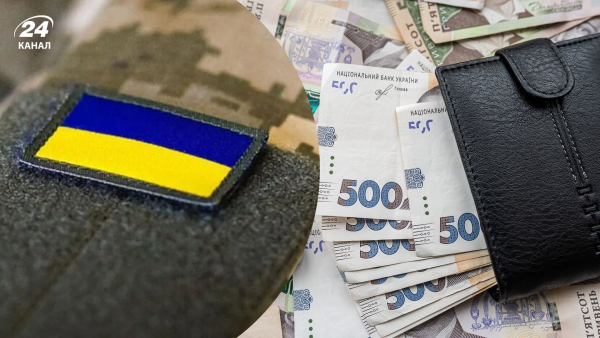
When an individual entrepreneur may not pay taxes / Collage of Channel 24, photo Shutterstock
Individual entrepreneurs and self-employed Ukrainians who defended the country during mobilization or signed a contract for military service may benefit from certain benefits. In particular, they may be allowed to avoid paying taxes.
What can a mobilized individual entrepreneur not pay for?
These are entrepreneurs who were already registered as individual entrepreneurs or engaged in independent professional activities before the moment of conscription or conclusion of a contract, the State Tax Service reported.
The benefit applies to entrepreneurs who were called up during general mobilization or who signed a contract for military service. For the entire period of military service (but not earlier than February 24, 2022), such entrepreneurs may not pay:
- personal income tax;
- single tax;
- military service;
- the only social contribution for yourself.
They are also exempt from the obligation to file reports on these taxes. The exemption begins on the first day of the month in which mobilization or signing of the contract took place and lasts until the last day of the month of demobilization or discharge from service.
How to apply for a benefit?
To exercise the right to exemption, you must submit to the tax office at the place of registration:
- a copy of a military ID card or mobilization document;
- or a copy of the military service contract (if the tax office does not yet have the data).
In cases where the information is already in state registers, the tax authority may apply the benefit automatically, but in practice, additional confirmation from the payer himself is often required.
What does this mean?
This mechanism actually changes the state's approach to mobilized entrepreneurs.
First, the sole proprietor is no longer forced to choose between service and “keeping the business on paper.” Taxes do not accrue, even if the activity is temporarily not conducted.
Secondly, it reduces the number of “hidden debtors” in the system – people who formally remained entrepreneurs but physically could not fulfill their tax obligations.
Thirdly, the state takes on the risk of simplified administration – that is, it recognizes that in times of war, the priority is not fiscal control, but the stability of the socially active part of the population.
The introduced benefit partially offsets this effect and allows the business structure to be preserved until the owner returns from service.
Note! Tax exemption for mobilized individual entrepreneurs is not just a technical norm, but a tool for preserving small businesses in wartime. It reduces financial pressure on entrepreneurs and allows you to avoid debt problems during service. At the same time, the effectiveness of this system directly depends on how quickly the state can make it more automated and less dependent on manual paperwork.
Can a mobilized individual entrepreneur continue to conduct business?
Entrepreneurs found themselves in a situation where they simultaneously have to fulfill military duty and figure out what is happening with their business and taxes. Lawyers explain: not all mobilized individual entrepreneurs automatically lose the right to conduct business activities. Expert Maria Ganina told this, writes “RBK-Ukraine”.
According to her, the law does not directly cancel the status of an individual entrepreneur in the event of mobilization. According to Part 3 of Article 39 of the Law of Ukraine “On Military Duty and Military Service”, registration of entrepreneurial activity is not terminated for citizens who:
- are undergoing basic military service;
- mobilized during a special period;
- serve under contract.
This means that formally a person remains an entrepreneur even during service.

Maria Ganina
Attorney at AB Romana Satsyk
In the event of a crisis situation that threatens national security, the announcement of a decision to carry out mobilization and (or) the introduction of martial law – for a period until the end of the special period or until the announcement of a decision to demobilize
In fact, the ability to continue entrepreneurial activity depends on the type of service and functions of the military serviceman.
In general, an individual entrepreneur can maintain business activity if there are no direct prohibitions based on the position and the activity does not conflict with military duties.
Who is subject to the ban?
There are exceptions for some military personnel. The law specifically restricts military officials who:
- perform organizational and managerial or administrative and economic functions;
- or specifically authorized for such duties.
They are prohibited from engaging in entrepreneurship and any other paid activity.
Therefore, the law does not prohibit an individual entrepreneur from remaining an entrepreneur during mobilization, but the actual opportunity to run a business depends on the specific role in the military.
What else do individual entrepreneurs in Ukraine need to know?
-
Different groups of sole proprietorships have specific restrictions – regarding employees, annual income, type of clients, etc. They also differ in the single tax rate on the simplified system; and Group III is considered the most universal.
-
For activities without registration as an individual entrepreneur, a fine of 340 hryvnia is provided, and for economic activities without registration – from 17 to 34 thousand hryvnia with confiscation. In case of repeated violation, the fine is from 34 to 85 thousand hryvnia with confiscation, and improper record-keeping can lead to a fine of 51 to 136 hryvnia.
-
Incorrect wording in the purpose of the payment may lead to the loss of the status of a single tax payer for an individual entrepreneur.