
Main points
- The Russian government has decided to cut costs for the development of new drugs, funding only “breakthrough” drugs without analogues.
- Pharmaceutical companies face problems due to insufficient government support, as the development of innovative drugs costs over 5 billion rubles.
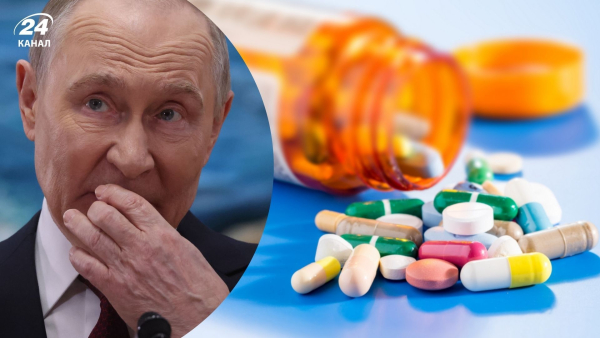
Putin cuts spending on drug development / Collage by Channel 24, photo Getty Images, Shutterstock
The Russian government has decided to cut spending on developing new drugs due to budget constraints. The state is now only willing to fund the creation of first-in-class drugs, meaning drugs that have no analogues in the world.
What will change for Russian pharmaceutical companies?
Previously, the Russian authorities also promised to support the development of best-in-class drugs – improved versions of existing drugs that are more effective or safer. However, this idea was effectively abandoned, writes the Russian media outlet Kommersant.
The new rules were announced by Deputy Head of the Ministry of Industry and Trade of Russia, Ekaterina Priezzheva, during a pharmaceutical forum in St. Petersburg. According to her:
- the state will only compensate for the third phase of clinical trials;
- only “breakthrough” drugs will receive support;
- The maximum amount of funding will be 2.5 billion per drug.
The decision was made after a meeting with Deputy Prime Minister Tatyana Golikova. Representatives of major Russian pharmaceutical companies, including Generium, Biocad, and R-Pharm, participated in the meeting.

Why is this a problem for drug manufacturers?
Developing first-in-class drugs is considered one of the most expensive in the pharmaceutical industry. To bring such a drug to market, it usually requires:
- At least seven years of work experience;
- Billion-dollar investments;
- Large-scale clinical trials.
Drug manufacturers emphasize that even state support covers only a part of the costs. According to the head of Pharmasynthes, Vikram Punia, the creation of one innovative drug costs more than 5 billion rubles.
Innovation requires large investments, especially in the later stages of clinical trials,
– confirms the director of health economics at R-Pharm, Alexander Bykov.
What does this mean?
The reduction in funding indicates growing pressure on the Russian budget. Even strategic areas, such as pharmaceuticals and medical development, are beginning to feel the effects of state budget cuts. For the pharmaceutical industry, this means:
- fewer opportunities to launch new drugs;
- more difficult to attract investment;
- increasing risks for private developers;
- slowing down the development of innovations in medicine.
Note! The Russian government's decision to cut funding for drug development is yet another signal of the Russian economy's problems and budget deficit. Despite claims of support for the pharmaceutical industry, the state is actually narrowing the range of projects that can count on assistance.
What is the reason for the funding cut and what is the situation with the budget deficit?
The reduction in state support for drug development comes against the backdrop of a sharp increase in the federal budget deficit, writes The Moscow Times.
According to the Ministry of Finance, in the first four months of this year, the “hole” in the treasury reached 5.877 trillion rubles – this is already 1.6 times more than the plan for the whole year (3.786 trillion).
Economist Oleg Getman told Channel 24 that for a certain period of time – about a month or so – Russia could receive additional income from oil sales against the backdrop of events in the Middle East. And now it will continue to earn from this for some time.
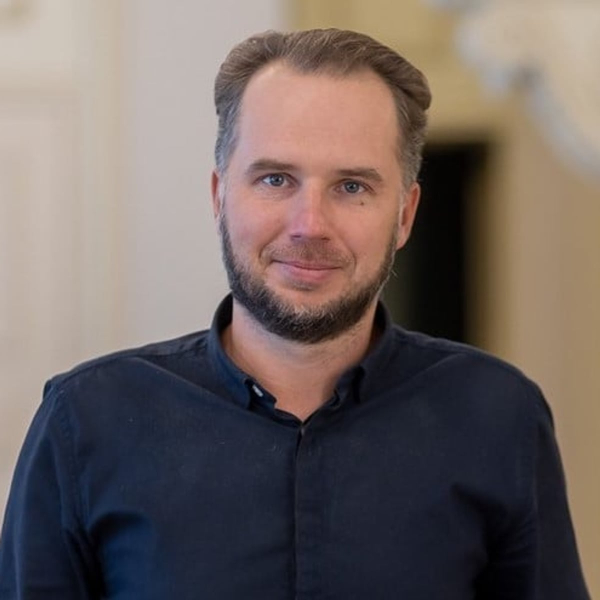
Oleg Getman
Coordinator of expert groups of the Economic Expert Platform
But against the background of the overall budget deficit, in particular for the period January-March 2026, which has already exceeded 4.5 trillion rubles, this is a drop in the ocean.
That is, even if the Russians receive an additional $5-10 billion, they will spend much more.
Therefore, it is worth understanding that if the conflict in the Middle East “declines” in the coming weeks and months, Russia will be able to receive a small amount from the sale of oil, which will not affect the economic situation in the country in any way.
– explains Hetman.
That is why it is important for Ukraine that the conflict in the Middle East does not drag on and last a year or more. Otherwise, it could save the Russian budget due to the increase in the price of oil, which could then reach about $100 per barrel.
And if everything ends soon, then oil, on the contrary, will fall to $70 per barrel, and sanctions on Russian oil will return,
– says the economist.
What is happening with medicine prices in Russia?
Moscow actively promotes the enrichment of the pharmaceutical business. The financial burden is transferred to the population. In particular, the key driver of the growth of the sector last year was government procurement, the volume of which increased by 22.7%, writes the Foreign Intelligence Service.
Example: Budget money allowed the co-owner of Promomed, Petr Belom, to become a billionaire. He is the fifth person in Russia to make a fortune in pharmaceuticals. Previously, this status was achieved by:
- Viktor Kharitonov;
- Yegor Kulkov;
- Alexey Repik;
- Vikram Punia.
The pharmaceutical boom is taking place against a backdrop of rapidly rising prices for the population,
– explained in the investigation.
In the last five years alone, the average cost of a package of medicines in the country has doubled – from 207 to 416 rubles (although some medicines have risen in price even more sharply, for example, “Corvalol” – by 2.3 times). And this exceeds the total inflation rate for this period – 52.55%.
It is known that last year the most popular medicines among the population increased in price as follows:
- Ketorol (analgesic and anti-inflammatory) – increased in price by 30%, to 55 rubles for a pack of 10 tablets;
- Naphazoline (nose drops) – +25%, now costs 62 rubles for a 15-milliliter bottle;
- Drotaverine (No-shpa) – +15%, the cost of a package of 100 tablets increased to 462 rubles;
- Corvalol (25 ml) – +14%, up to 53 rubles;
- Analgin – +13%, now 39 rubles for 10 tablets;
- Enalapril (antihypertensive) – +13%, up to 27 rubles per pack;
- Ibuprofen and Citramon (painkillers) – +12%, 51 and 42 rubles, respectively;
- Activated carbon — +10%, up to 20 rubles.
At the same time, the price increase is taking place against the backdrop of the ruble strengthening by almost 40% against major currencies. This should reduce the price of imported raw materials and cost. By the way, pharmacists assess the effectiveness of a significant part of these drugs as low.
Even the dominance of “generics”, which currently occupy up to 62% of the market, does not make the situation easier,
– stated in the message.
What other problems does Russian business have?
-
The financial performance of Russian companies deteriorated sharply in early 2026, with a combined net profit of 3.4 trillion rubles, down 33.1% from the previous year. Revenues from small businesses and the self-employed fell to approximately $7.5 billion in the first quarter of 2026.