
Main points
- The Belarusian authorities are trying to retain workers through measures such as forced distribution of young specialists and attracting students to work under the guise of internships.
- The shortage of personnel is explained by demographic problems and the mass flight of Belarusians abroad, but the authorities do not recognize the political reasons for this.
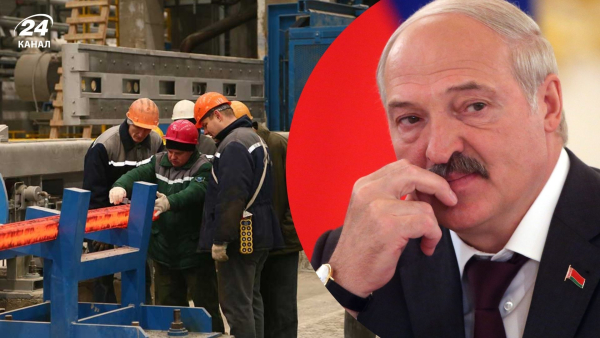
Belarus has figured out how to deal with the shortage of personnel without unnecessary costs / Collage by Channel 24, photo by Getty Images, SZRU
85% of Belarusian companies are effectively left without employees. For example, in order to retain staff, they have started to attract students under the guise of “acquiring practical skills.”
Almost labor slavery in Belarus
Belarusian business is on the verge of survival due to a critical shortage of personnel, writes SZRU.
The authorities explain this by demographics and population aging, but do not mention the main reason – the mass flight of Belarusians abroad from the Lukashenko regime.
To solve the problems, they implemented a set of measures to link those who have not yet had time to leave:
- mechanisms to protect companies from “poaching” employees;
- strengthening the system of forced distribution of young specialists;
- mass involvement of students in work under the guise of internships.
In fact, Minsk is moving towards the legislative fixation of workers with enterprises – a classic Soviet practice, which in the civilized world is called forced labor. For the generation that did not have time or could not leave, the Belarusian state is conscientiously building a cage and calling it labor market reform,
– they write in the intelligence.
Who does Lukashenko blame for the crisis?
A decline in industry, a sharp decline in exports, and inflation. Leading sectors of the Belarusian economy are in recession, Lukashenko stated, FREEDOM writes.
Lukashenko considers the economic crisis in Russia to be the main cause of the country's problems.
Gross domestic product grew by less than 2% in eight months. The growth rate of agriculture failed to approach the level of last year,
– he complained.
According to Pavel Latushko, deputy head of the United Transitional Cabinet of Belarus and head of the People's Anti-Crisis Management, it will only get worse. The crisis in the industrial sector could become systemic.
Prime Minister Turchyn's report to Lukashenko only confirmed the obvious. A systemic industrial crisis is brewing in the country, and foreign economic cooperation with Russia is no longer saving, but only worsening the situation. Well, let's supply oil to the Russian Federation, petroleum products, I apologize again, supply petroleum products to the Russian Federation. Well, so what? This will improve the situation of Belarusians. And what will happen to prices on the domestic market, with petroleum products?
– he says.
What is happening to the economy of Belarus?
-
Belarus has failed to meet a five-year cooperation plan with China, widening its trade deficit to $4.5 billion. Belarus's dependence on Russia is also growing, as Moscow finances the construction of the BelAES power unit and supplies gas.
-
Inflation in Belarus for 2025 was 6.8%, which exceeds the planned figure of 5%. The country is experiencing a crisis: a shortage of workers, forcing employers to raise wages, but GDP is barely growing.
-
Overall, Belarus' economy is showing signs of serious weakness under Russian influence. The International Monetary Fund (IMF) has lowered its GDP growth forecast for the country for 2025 and 2026 to 2.1% and 1.4%, respectively, significantly worse than previous estimates.
-
The country's regions are suffering from a decline in industrial production. Belarusian industry is experiencing difficulties due to reduced demand on the Russian market, the closure of the Polish border, and restrictions on exports to the EU.