
Main points
- In Russia, there is a growing trend of involving young people in vocational education and work in production, particularly in the defense sector, with the aim of quickly entering the labor market.
- University education is becoming less accessible due to rising costs and a decrease in budget places, which contributes to the formation of a cheap labor force.

What is happening with the labor market in Russia / SZRU
Russia is massively promoting a new trend in the labor market – “higher education is not required.” Immediately after the 9th grade, young people are actively involved in technical areas, in particular the production of unmanned systems, so teenagers go to work in factories.
What is the trend in the Russian labor market?
In the 2025-2026 academic year, only 42.7% of students in Russia will choose to continue their studies in higher grades after the 9th grade, writes the SZRU.
This dynamic indicates a change in educational priorities: the authorities are purposefully directing teenagers to the vocational education system. There, they master practical skills faster and enter the labor market earlier. At the same time, access to universities is becoming more limited – the cost of contract education is increasing, and the number of budget places is decreasing.
- Experts are increasingly considering such a model as a tool for forming a mass segment of inexpensive labor with a minimal level of theoretical training and critical thinking.
- The emphasis is not on the long-term development of human potential, but on the prompt closing of the personnel shortage.
Particular attention is paid to the defense sector. In early 2026, Russian social media actively promoted opportunities for studying and working in the Alabuga special economic zone in Tatarstan.
The teenagers talked about studying at the Alabuga Polytechnic College and working at drone factories with salaries of up to 150,000 rubles for one or two years. At the same time, the bloggers received significant fees – from 250,000 to 1.5 million rubles – for distributing such materials, which indicates the organized nature of the information campaign.
What is the situation in the Russian economy and what is known about the budget deficit?
Russia's budget deficit in the first 2 months of 2026 widened to 3.45 trillion rubles, or 1.5% of GDP, almost reaching the annual forecast, The Moscow Times reports.
Interestingly, economist Ivan Us told Channel 24 that late last year the Russian government reported that the budget deficit was supposedly 5.7 trillion rubles. However, the former first deputy head of the Central Bank of Russia stated that the real deficit was actually somewhere around 8 trillion.
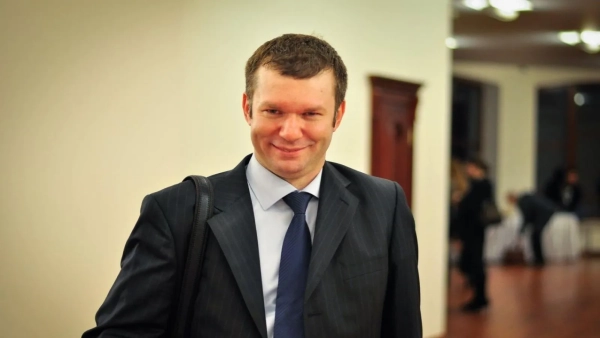
Ivan Us
Chief Consultant, Center for Foreign Policy Studies, National Institute for Strategic Studies
The thing is that the Russians postponed certain expenses from 2025 to 2026. And such a significant deficit in 2 months of 2026 is the reason for this.
Us explains that the Russians believed they could cover the deficit with oil and gas revenues. In addition, Us names another factor that negatively affects Russia's deficit coverage. This is the strong ruble exchange rate.
Economist Oleg Getman adds for Channel 24 that the most critical factor for their deficit both this year and last year is the price of energy resources, and primarily oil.

Oleg Getman
Coordinator of expert groups of the Economic Expert Platform
For two months of 2026, the world price of Brent crude oil was at $60 per barrel, and accordingly, the Russian Urals brand could be around $40 per barrel, which is quite close to the cost price. And if this situation had lasted until the end of the year, the consequences for Russia would have been critical.
Putin's rating is falling
-
The trust rating for Putin and government institutions in Russia is declining due to the financial crisis and the continuation of the war.
-
The Russian government maintains formally high ratings, but its social support base is narrowing, making the Kremlin vulnerable to economic crises.