
Main points
- From May 12, Kyivstar is expanding the list of countries for international calls to 19, including Europe, the USA, Canada, and India.
- Updating tariffs allows you to use minutes for international calls, automatically changes the package to 300 minutes and combines them for flexible use.

A famous operator rewrote the rules for Ukrainians / Pexels
Starting May 12, mobile operator Kyivstar is introducing updates for subscribers of the “All Together” tariff plan and line. The main change is expanding the possibilities for international calls at no additional cost.
What changes is Kyivstar introducing?
The list of available countries will be expanded in tariffs that already include minutes for calls abroad, the company reported.
From now on, there will be 19 of them . Subscribers will be able to use the tariff minutes or Superpowers for calls, in particular, to European countries, as well as to the USA, Canada and India. Among the available destinations: Poland, Germany, Italy, France, Spain, Czech Republic, Sweden, Ireland, Portugal, Slovakia and others.
The update will also affect the “Kyivstar Comfort” and “Kyivstar Comfort 2018” tariffs. If previously the minutes in them were valid only within Ukraine, now they can also be used for international calls.
Separate changes concern the additional service “The World is Waiting”. For users who have it activated together with the new tariff features, the option will be automatically disabled. At the same time, it will remain active for other subscribers.
It is important to note that not all destinations will remain in the package. Calls to Uzbekistan, Israel, and China are no longer included in the tariff minutes – they will be paid separately according to standard terms.
The operator is also changing the terms of the so-called Superpowers. If previously some subscribers used a 100-minute package, now it will be automatically replaced with a Superpower with 300 minutes. At the same time, the new package will be valid for calls both within Ukraine and abroad.
For some users, different types of minutes will also be combined into a single package, which will allow them to be used more flexibly – without dividing them into domestic and international calls.
The updated terms will come into effect after the next tariff payment, which will take place after May 12. The operator will additionally notify subscribers affected by the changes via SMS.
Why these changes?
Such changes are part of a trend among mobile operators who are adapting tariffs to the growing number of Ukrainians abroad. The main goals are:
- simplify communication between countries
- make tariffs more universal
- reduce the need for additional services
At the same time, the exclusion of individual directions may indicate the optimization of the operator's costs.
Please note! The tariff update makes international calls more accessible to a wide range of users. At the same time, the changes are not necessarily beneficial for everyone – some subscribers may lose convenient destinations or change their communication costs.
What are the rules for calling abroad for Ukrainians?
From January 1, 2026, Ukrainians can use mobile communications in 27 EU countries at their home tariff – without additional costs for calls, SMS and Internet, writes “European Pravda”.
Ukraine became the first country outside the European Economic Area to gain access to the EU's internal roaming market. This became possible after the full adaptation of Ukrainian legislation to EU telecommunications standards.
What exactly has changed?
- calls, SMS and mobile internet will work as at home
- no need to connect separate roaming packages
- tariffs remain the same as in Ukraine
- one communication zone: Ukraine + EU
In 2026, the situation changes fundamentally: by joining “Roaming like at home”, Ukraine becomes an integral part of the EU internal roaming market, where uniform rules apply. It provides that while staying in the EU, your home tariff applies, not an unlimited one,
– says Lilia Malion, head of the National Committee for the Protection of the Environment.
What will happen to Kyivstar tariffs?
Mobile tariffs are regularly increasing, and telecom companies are “hunting” for subscribers who want to switch from their operator to another with lower tariffs. 24 Channel asked Oleksandr Komarov how the price increase affects the customer base and what subscribers can expect in the coming months.
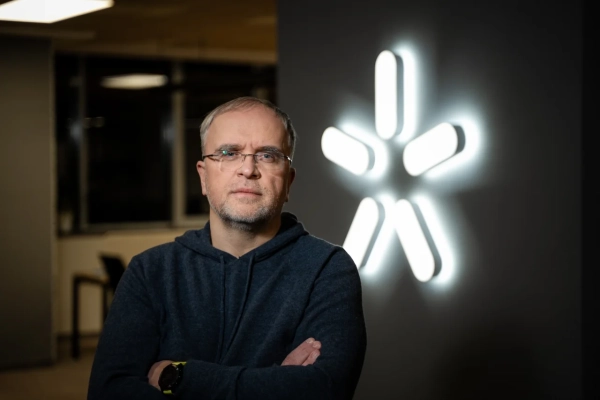
Alexander Komarov
CEO of Kyivstar
Tariffs will increase. It's very simple – the country has double-digit official inflation. We are a subject of this country's economy.
Komarov names two key factors that put pressure on the economics of any business.
The first is inflation.
- In a number of expense items that are critical for the operator, the real growth significantly exceeds the official 12%.
- During peak load periods – mornings and evenings – commercial electricity prices have increased by about 60% over the past year.
- Payments for radio frequency spectrum increased by 23%, and labor costs also increased by more than 20%.
The second is devaluation.
- According to Komarov, the hryvnia exchange rate has fallen by 6-7% year-on-year. This is even better than the pessimistic figures the company had budgeted, but it still creates additional pressure.
- The company reinvests approximately 30% of its revenue into the network, and the lion's share of these investments is in foreign currency: batteries, generators, radio equipment, licensed software (Ericsson, Nokia, etc.) are not purchased for hryvnia. Rather, “pillars and part of services” remain in the national currency.
Why are mobile phone tariffs increasing in Ukraine and Europe?
Market participants explain that this is not only a commercial decision, but also an issue of infrastructure stability in conditions of war and economic pressure. According to economist and telecom market expert Anatoly Amelin, Ukrainian mobile communications today demonstrate a quality that often exceeds the performance of European and even American operators.

Anatoly Amelin
Telecom market expert
Ukrainian mobile Internet and communication are head and shoulders above European and even more so American! Seriously. In Berlin, I caught 4G intermittently. In the city center! In Washington, the speed sometimes made me nervously refresh the page.
At the same time, the price of mobile communications in Ukraine remains one of the lowest in the world. As of the beginning of 2026, the average cost of tariffs with a mobile Internet package of 20-40 GB is about 7-8.5 euros per month. For comparison: in Germany, similar services cost 30-40 euros, in France – about 20 euros, in Poland – 10-12 euros.
International studies also confirm this difference: the cost of 1 GB of mobile Internet in Ukraine is about $0.27, while in Germany it is over $2, and in Switzerland it is over $7. According to this indicator, Ukraine is among the ten countries with the cheapest mobile Internet in the world.
Starting a new business means constant movement, multiple tasks and continuous communication. That is why it is so important that the car in which you spend a significant part of your working day promotes productivity. Understanding this, the Škoda Octavia offers modern driving assistants, an increased level of protection, a modern multimedia system, wireless phone connection and a number of other options that expand the usual capabilities of the C-class. This car provides confidence both on the road and in business processes.
Mobile operator news
-
Vodafone is switching to a bundled pricing model for international calls from May 1, 2026, which means higher prices for short calls. Prices for SMS in roaming will increase to 6 hryvnias per message, up from 3 hryvnias for 10 messages.
-
Mobile operator lifecell has increased prices for some tariff lines from April 15, 2026. This primarily concerns business tariffs and the “Digital Office” line, as well as some special offers. The price increase is due to the need to maintain the stability of the infrastructure, which during the war demonstrates high quality compared to European and American operators.