
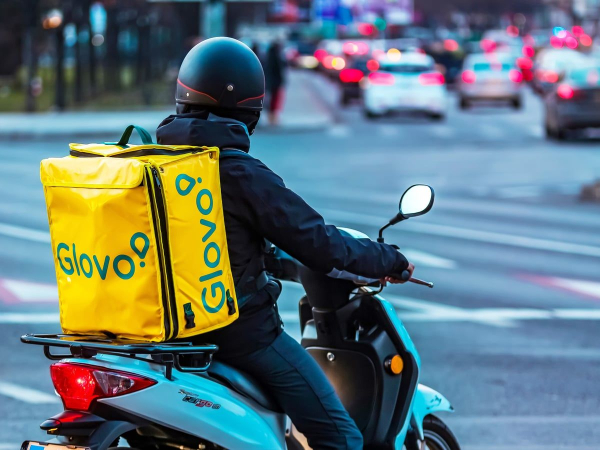
Glovo complains about a shortage of couriers / forbes.ua
Food delivery service Glovo is struggling to fulfill some of its orders due to a shortage of couriers. The problem lies not only in Ukraine's labor market, but also in tax regulations.
What is the situation with the shortage of Glovo couriers?
The company says that at certain times, due to staff shortages, they cannot process up to 20% of all user orders. This was stated by Glovo's GR Director for Eastern Europe and Central Asia Taras Shevchenko, NV writes.
They hope to improve the situation after the adoption of the bill on the so-called “OLX tax.”
As of now, Glovo cannot process sometimes up to 20% of our users' orders due to the physical absence of couriers… In very simple words, what taxi drivers want, what couriers want – they want to receive taxable income on their cards. This is the only model according to which this system of digital platforms will develop in Ukraine,
– says Shevchenko.

Why do some couriers not want to register as an individual entrepreneur?
According to him, a similar situation exists not only with Glovo, but also with other companies on the market, for example Bolt Food – many couriers refuse to register as sole proprietors. Currently, the structure is as follows:
- about 70% of couriers work as sole proprietors;
- another 30% are ordinary individuals.
Under the latter, the company is forced to pay personal income tax and military duty. Instead, bill No. 15111-d, as reported, provides for a single tax rate of 10% and grants digital platform operators the status of tax agent.
Why is this important:
- 90% of the company's 12,000 partners are small and medium-sized businesses, with about 30% of their revenue coming from delivery services.
- A similar system has already been implemented in Kazakhstan, where Glovo operates, so the company has relevant experience in its implementation.
- The coalition of companies in the market has the technical readiness to implement this bill in three months from scratch.
What does this mean for the market?
The situation shows that the Ukrainian delivery market is increasingly dependent on:
- tax rules;
- shortage of workers;
- flexible collaboration models.
And digital platforms themselves are trying to adapt to new conditions so as not to lose couriers and orders.
What do the platforms themselves say about the new tax?
-
The OLX platform called for the bill to be revised, drawing attention to a number of controversial provisions. In particular, it is concerned about the idea of giving digital platforms the status of tax agents, which would make them responsible for withholding and remitting taxes on behalf of users. The company also highlighted the risks associated with the requirement for mandatory full identification of all sellers.
-
At the same time, other market participants, including Uklon, Bolt, and Glovo, generally welcomed the initiative. The companies believe that the new rules can make the market more transparent and understandable for both business and the state.
-
Glovo emphasized the importance of correct technical implementation of the law, because for business it is important that the process is dynamic and transparent and does not drag on for a long time.