
Main points
- The supermarket chains “Arsen”, “Fresh”, “Soyuz” and “Kvartal” will be closed, despite the increase in revenue, due to unprofitability and the owner's desire to focus on new projects.
- Competition with large chains such as ATB and Silpo makes it difficult for regional chains to survive, leading to the need to adapt to new market conditions.
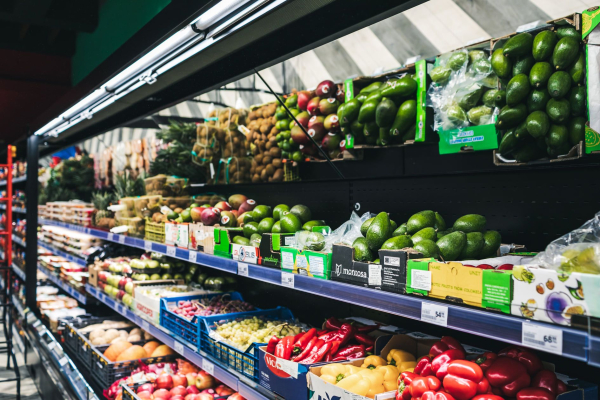
The Arsen network is leaving forever after 25 years of operation: why there is no chance and who will take its place / rau.ua
Lviv-based Eurotek Group has decided to close the Arsen, Fresh, Soyuz, and Kvartal supermarket chains. The chain's owner has revealed the real reason for the decision and what the retail giants Silpo and ATB have to do with it.
How did Arsene develop?
The first Arsen supermarket was opened in Lviv back in 2002. The founder of the chain was businessman Roman Shlapak, writes Forbes.
In 2009, the Intermarket company went bankrupt, after which the assets were transferred to the Eurotech group of Mikhail Veselsky. At the time of the change of ownership, the chain had:
- seven supermarkets;
- Arsen shopping center in Ivano-Frankivsk;
- logistics center in Lviv.
Veselsky then took on the company's large debts:

- 880 million hryvnias to banks;
- 145 million hryvnias to suppliers;
- another 200 million hryvnias to contractors.
He received the funds to purchase the business after selling two factories of the Stozhar trademark to Kernel in 2006. Veselsky's partner in Eurotek was Vasyl Yanitsky, but in 2014 he left the business due to political activities.
Under the management of “Eurotek”, the chain expanded actively. By 2015, it already had 64 stores under the brands “Arsen”, “Fresh”, “Soyuz” and “Kvartal”. Over time, the number of stores began to decrease.
As of last year, there were at least six Arsen stores remaining in Lviv. The chain operated in the format of large district shopping centers with an area of 1,500 to 13,000 square meters.
Why did the company close the network?
Mykhailo Veselsky calls the exit from the market “planned” and “controlled”.
- Despite the fact that Alliance Market LLC's revenue grew by 21.2% last year – to 3 billion hryvnias – the company remained unprofitable.
- According to YouControl, the network's loss increased by another 27.6% and reached 73 million.
At the same time, Veselsky assures that the company remains financially stable.
We have sufficient resources to fulfill all obligations to partners, suppliers and employees in accordance with the terms and conditions. We have made sure that the best operators on the Ukrainian market come to our locations,
– he noted.
According to him, they are already looking for new tenants for the retail space. He also explained that the decision to close was made after a detailed market analysis and the desire to focus on new development projects and social initiatives.
Are ATB and Silpo really displacing smaller chains?
According to GT Partners, last year “Arsen” ranked seventh among retailers in Lviv and the region in terms of store area – about 10,500 square meters. CEO of IDNT Mykola Chumak believes that the chain was unable to adapt to new market conditions.
It was a “dinosaur” that had been in decline for a long time: it had chronic underinvestment in store formats, equipment, and marketing,
– he says.
Experts note that it is now increasingly difficult for regional networks to compete with large players like ATB or Silpo.
GT Partners Director Igor Guglia assumes that the premises of “Arsen” are unlikely to be transferred to one operator – they can be divided between different retailers. In his opinion, either large national chains or local brands with a clear specialization – for example, on farm or niche products – can survive in the market.
What does this mean?
The closure of Arsen shows how difficult it is for regional chains to survive in the face of aggressive competition from large national players. The grocery retail market in Ukraine is increasingly concentrated around a few large chains that have:
- strong logistics systems;
- large budgets;
- the ability to quickly update stores;
- large-scale loyalty programs.
Note! The story of “Arsen” is an example of how even a large and well-known regional chain can lose its position without constant investments and adaptation to new market realities. Despite almost 25 years of operation, the chain could not withstand competition from national retailers.
Why are businesses in Ukraine closing?
As marketing expert Natalia Holovachko notes for Channel 24 , business closures have now become a mass phenomenon, not isolated cases.
Statistics show that 11% more entrepreneurs closed their businesses last year than the year before. This wave affects different regions: in Kyiv, about 120 restaurants closed over the year, in Lviv – about 50. Over a third of all closures are in retail trade.
The expert explains that among the reasons for such mass closures are both a drop in demand and solvency, and a shortage of personnel.

Natalia Holovachko
Founder of Marketing Club Lviv
Due to the war and inflation, people are saving significantly, there are fewer customers in establishments. In addition, tariffs, rent, and taxes have increased.
And another influencing factor is that due to mobilization and migration, businesses are experiencing a shortage of workers.
For Channel 24, client expert Anastasia Yamelinets adds that business closures are mainly due to the accumulation of various changes. The expert also speaks of a significant increase in financial burdens, such as costs for logistics, rent, personnel, energy, etc. In addition, consumer behavior has changed noticeably.
For example, according to the marketing company Kantar, purchases are becoming more rational: people compare alternatives more often, reduce the frequency of purchases, and are more sensitive to price.

Anastasia Yamelynets
Client Partner at Kantar
Businesses that fail to adapt to these changes or continue to operate in a “business as usual” model and do not support their decisions with up-to-date data quickly lose their sustainability.
And given the situation in the country, one of the main factors for closure is war risks. Businesses may suffer from disruptions in work, customer migration, and supply instability.
No less important is the psychological factor: uncertainty, pent-up demand, and reduced willingness to invest.
What is known about Arsen's exit from the market?
- The Arsen supermarket chain is closing all its stores in Ukraine from June 1 due to a strategic exit from the market.
- The owner of the chain, Mykhailo Veselsky, assured that the company's financial condition is stable, and some employees will be able to find jobs in new stores.