
Main points
- The cold spring in Ukraine will delay the vegetable harvest, which will lead to an increase in prices in May – early June.
- Despite the weather conditions, a catastrophic crop failure is not expected, although vegetable prices will increase.
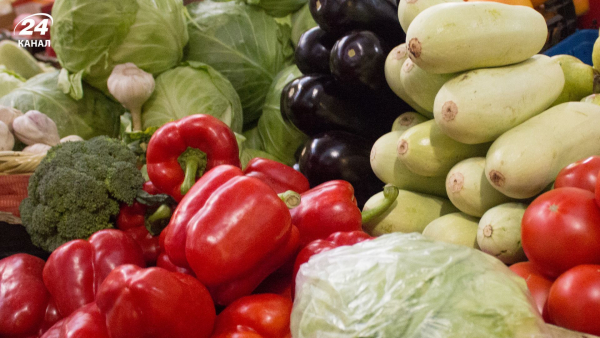
How the spring cold snap will affect vegetable prices in Ukraine / Illustration / 24 Channel
The cold spring is delaying and complicating the growing of a new crop of vegetables in Ukraine. Given this, we should expect a noticeable increase in prices for early cabbage, zucchini, and radishes in the coming months.
How does the cold spring affect vegetable growing in Ukraine?
Due to the cold weather this spring, the mass harvest of vegetables will take place later than usual. The cold and economic factors will lead to an increase in prices in May – early June. This was stated by Viktoriya Rud, a scientist at the Institute of Vegetable and Melon Growing of the NAAS, in a commentary for Channel 24 .
According to the expert, cold spring weather has the greatest impact on early crops in the East and Center of Ukraine. At the same time, such conditions are less critical for onions, carrots, early varieties of cabbage and peas, although they will develop more slowly.
As Viktoriya Rud explains, the cold spring significantly affects the technological cycle of growing vegetables:
- low temperatures (especially at night) force us to postpone the dates of mass planting of seedlings in open ground and sowing of heat-loving crops: tomatoes, peppers, cucumbers by 10-14 days; this automatically postpones mass harvesting;
- Temperature fluctuations cause stress in crops , causing the green parts of the plant to grow slowly and the root system to be suppressed.
Under such conditions, plants need high-quality nutrition and protection.
Please note! Cold weather in late April was established due to the arrival of Arctic air. However, warming is possible in Ukraine in the first days of May. According to the forecast, the situation will stabilize somewhat, and daytime highs will partially increase.
What increase in vegetable prices can we expect in 2026?
Scientist Viktoriya Rud notes that this year, an increase in the price of early vegetables is expected, which will occur under the influence of weather, institutional, and economic factors.

Victoria Rud
Candidate of Economic Sciences, Senior Research Fellow at the Institute of Vegetable and Melon Growing of the National Academy of Agrarian Sciences
During peak times for early produce (May – early June), prices can be 15 – 25% higher than during the same period last year. This is especially true for early cabbage, zucchini, and radishes.
Vegetable prices will be pushed up by:
- Supply shortage at the start of the season due to delayed outdoor harvest. The market will be dominated for a longer period by greenhouse and imported vegetables, whose cost price is higher due to the costs of heating greenhouses on cold spring nights.
- Additional logistical costs. Southern Ukraine, as a traditional leader in early vegetables, continues to operate under martial law and destroyed irrigation. Given this, the burden falls on logistics from the center and west of Ukraine.
Important! According to the expert, losses in industrial production in the southern regions of Ukraine are estimated at 30-35% . However, while the vegetable growing industry is gradually recovering, the melon growing and greenhouse farms in the region are in deep crisis.
Victoria Rud says that even despite the temperature challenges, there is no talk of a catastrophic crop failure this year . The domestic market will be able to be supplied by compensating for delays in one zone with intensity in another, as well as by using scientific approaches to breeding.
At the same time, the price of borscht and early vegetables will remain under pressure from production costs and cold weather at the beginning of the season.
How are vegetable prices changing in Ukraine?
In Ukraine, the price dynamics for vegetables remain mixed. Old crops are becoming more expensive due to shortages, particularly carrots and white cabbage.
Meanwhile, the new harvest is becoming cheaper due to increased supply. Prices for early cabbage and new season table beets are falling.
The negative price trend continues in the greenhouse vegetable segment. Cucumbers and sweet peppers are getting cheaper. On the other hand, tomatoes have become more expensive.