
Main points
- Lawyers recommend that farmers record violations through geodetic measurements and document the use of their land by third parties.
- Landowners have the right to demand the return of the plot and compensation for damages, but violators cannot claim compensation for their expenses.
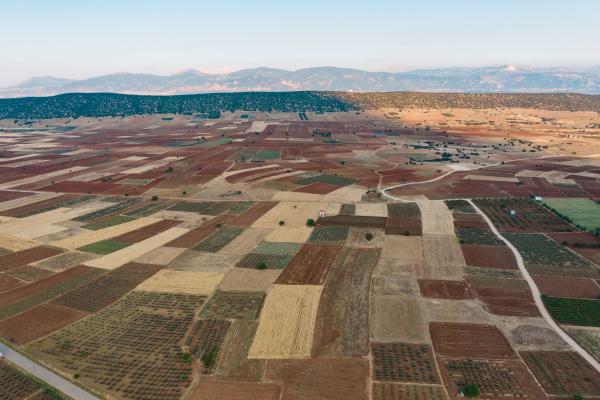
How to return a plot / Photo by Magnific
During the sowing season, conflicts often arise between farmers due to unauthorized use of other people's land. Lawyers explain how to correctly record violations, protect your rights, and demand compensation for damages.
Why do land disputes arise between farmers?
Lawyer Iryna Zakvatska told Channel 24 that in practice, agrarian disputes regarding the seizure of part of a field or the cultivation of someone else's land arise quite often, especially during the sowing campaign. Judicial practice in such disputes is quite widespread, and the Supreme Court has repeatedly expressed legal positions regarding the unauthorized occupation of land plots.

Iryna Zakvatska
Legal Assistant at the law firm “Maxim Boyarchukov and Partners”
Unauthorized use of part of someone else's land plot is a violation of the right of ownership or use of land. In such cases, the owner has the right to demand the termination of illegal use, the removal of obstacles to the use of the land plot, and compensation for the damages caused.
At the same time, according to her, in practice it is worth distinguishing between unauthorized use of someone else's land and disputes over incorrect determination of land boundaries in documentation or the State Land Cadastre, since the methods of protection in such cases may differ.
How to correctly record violations?
First of all, according to Iryna Zakvatska, it is important to properly record the fact of the violation. Even if the owner is sure where the boundary of the plot passes, the official results of geodetic measurements are of key importance for the court. For this, it is worth involving a certified land surveyor who will restore the boundaries of the land plot in kind (on the ground). Based on the results, a corresponding act is drawn up with the fixation of boundary marks.

This document may later become one of the main pieces of evidence that part of the land plot is actually used by another person,
– emphasizes the lawyer.
Additionally, in her opinion, it is advisable to record the fact of land cultivation: take photo and video recordings, if necessary, call the police to record the fact of the presence of people and equipment on the land plot, and also contact the territorial body of the State Geocadastre to verify compliance with land legislation. In the event of a dispute regarding the actual passage of boundaries, the court may order a land technical examination.
Practical steps for the land owner:
- to restore the boundaries of the land plot through a certified land surveyor;
- record the use of land by a third party;
- contact the territorial body of the State Geocadastre or the body authorized to exercise state control over the use and protection of lands;
- collect documents confirming ownership or use of the land plot;
- in case of refusal to voluntarily vacate the land, go to court.
What rights does the land owner have?
According to Article 212 of the Land Code of Ukraine, illegally occupied land plots are subject to return to the owners or legal users without reimbursement of expenses incurred by the violator during the illegal use of the land .
That is, a person who illegally sowed or cultivated someone else's land cannot demand compensation for the costs of seeds, fertilizers, or field work. In addition, the owner has the right to demand compensation for damages, in particular lost profits – income that he could actually receive under normal circumstances if his right had not been violated. Such a right is provided for by Articles 22 and 1166 of the Civil Code of Ukraine,
– says Iryna Zakvatska.
The Supreme Court emphasizes in its practice: to recover lost profits, it is necessary to prove not only the theoretical possibility of receiving income, but also that the person took specific measures to receive it – for example, planned sowing, concluded contracts, or carried out economic activities.
Judicial practice also assumes that the appropriate method of protection in such disputes may be:
- a lawsuit to remove obstacles to the use of a land plot;
- recovery of damages caused by illegal use of land;
- in some cases – reclaiming a land plot from someone else's illegal possession.
The lawyer emphasizes that the Grand Chamber of the Supreme Court has repeatedly noted that the unauthorized occupation of a land plot does not deprive the owner of the right to own it, and therefore an effective method of protection is a negative lawsuit.
Important! Iryna Zakvatska also warns that land owners should remember that any use of a land plot without a properly executed ownership or lease is illegal, even if the boundaries are not fenced or there are no boundary signs on the ground. At the same time, the main legal significance is the information and coordinates entered in the State Land Cadastre, unless otherwise established by the results of the study of technical documentation or forensic examination.
If you want land at the edge of a field: how to legally exchange a share in 2026?
At the same time, very often people start cultivating someone else's land by accident, confusing the boundaries. This happens especially often when your plot of land is in the middle of a field. To reduce the likelihood that you will touch someone else's plot or someone will climb into yours, it is better to move your plot to the edge of the field by exchanging it.
-
Land exchange is possible only between legal owners with registered property rights and without legal encumbrances.
-
The exchange procedure includes checking documents, agreeing on terms, concluding an exchange agreement with a notary, and registering ownership.
Land exchange in Ukraine is a completely legal procedure that allows citizens to manage their property more efficiently. However, the successful implementation of such a transaction depends on proper compliance with all legislative requirements and proper preparation of documents.