
Main points
- The US is pressuring Ukraine to ease restrictions on the import of Belarusian potash fertilizers and convince European countries to do the same.
- The European Union does not plan to change the sanctions course, and the Lithuanian authorities consider this issue to be theoretical discussions without political influence.
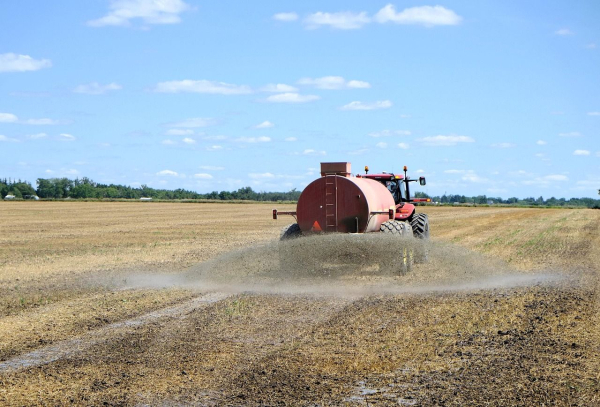
Belarusian potash fertilizers / Photo by Pexels
The US is urging Ukraine to ease restrictions on the import of potash fertilizers from Belarus and to persuade European countries to do the same. The issue is related not only to the agricultural market, but also to complex geopolitics and sanctions policy towards Minsk.
The US raised the issue of Belarusian fertilizers
The United States, according to sources, is discussing with Ukraine the possibility of easing restrictions on the import of potash fertilizers from Belarus, Bloomberg reports. In addition, Kyiv is allegedly being asked to convey the corresponding position to its European partners.
Potash fertilizers remain one of the key resources for increasing yields, and before the introduction of Western sanctions, their export was one of the main sources of foreign exchange earnings for the Belarusian economy.
Washington believes that a certain softening of approaches could create distance between Minsk and Moscow and improve dialogue with the Belarusian authorities. This is the argument, according to the interlocutors, that is being made during the non-public negotiations.

EU sanctions remain the main obstacle
At the beginning of the year, the US had already partially eased its own restrictions on Belarusian fertilizers as part of agreements that were accompanied by the release of hundreds of political prisoners by the regime of Alexander Lukashenko.
However, without similar steps from the European Union, the effect of such decisions remains limited. After the sanctions, Belarus lost traditional logistics routes through the Baltic Sea and is increasingly dependent on Russian ports and railways.
A special role in this issue is played by Poland and Lithuania, through which fertilizer transit used to take place. In particular, the Lithuanian port of Klaipeda has long been the main export hub for Belarusian potash.
Lithuanian Foreign Minister Kęstutis Budris acknowledged that there has been additional activity on the topic from the US. At the same time, Vilnius stressed that these are more theoretical discussions than political pressure.
Europe is in no hurry to change course
The Lithuanian authorities say they have no plans to change the ban on the transit of Belarusian fertilizers, citing both national security considerations and the current EU sanctions regime.
Lithuanian President Gitanas Nauseda publicly supported the idea of extending the sanctions, stressing that the Lukashenko regime has not changed its behavior and continues to support Russia. It was through the territory of Belarus that Russian troops invaded Ukraine in 2022.
Against this backdrop, Ukrainian President Volodymyr Zelensky has warned of the risk of Minsk being drawn deeper into the war and the possible use of Belarusian territory for new threats. Belarus' decision to hold joint surprise nuclear exercises with Russia is also creating additional tension.
After the sanctions against Belaruskali in 2021, Belarus reoriented potash sales through Russia, which only increased Minsk's economic dependence on the Kremlin. That is why even a partial easing of American restrictions is unlikely to radically change the situation without relevant decisions from the European Union, and there are currently no signs of the EU's readiness to reconsider its position.
The EU is preparing emergency aid for its farmers due to the sharp rise in fertilizer prices
Meanwhile, the European Union is considering creating fertilizer reserves and providing additional support to farmers as prices soar, fueled by rising energy prices and unstable supplies amid the Middle East conflict.
-
The EU is considering the possibility of creating fertilizer reserves and providing financial assistance to farmers due to rising fertilizer prices caused by rising energy prices and unstable supplies.
-
The European Commission plans to present a draft new fertilizer strategy, which includes market monitoring, the creation of strategic reserves, and the use of organic alternatives.
The EU could also review the rules of the emissions trading system to support fertilizer producers. Options include a slower phasing out of free allowances for companies that produce organic or low-carbon fertilizers.