
Main points
- In the Black Sea near Odessa, water pollution with fats and oils exceeding permissible standards has been detected.
- The incident may be related to the events of December 2025, when an attack on port infrastructure resulted in significant amounts of sunflower oil spilling into the water.
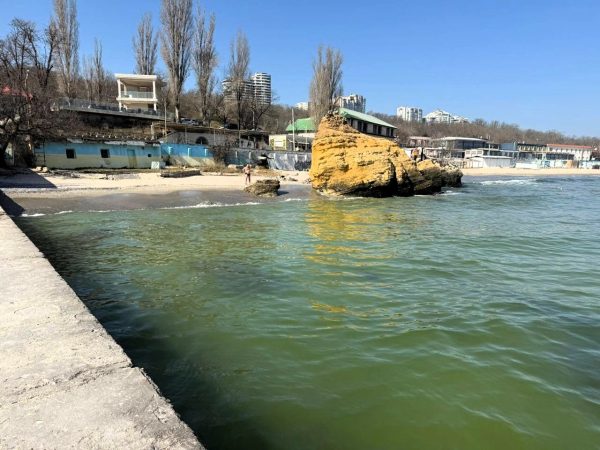
Oil on the beaches / Photo State Ecological Inspectorate of the South-Western District
Water pollution exceeding permissible standards has been detected in the Black Sea near Odessa. Experts suggest that this may be a consequence of previous incidents at the port infrastructure.
Where does the oil come from on the beaches of Odessa?
Water pollution with fats and oils has been recorded in the coastal zone of the Black Sea near Odessa, the State Ecological Inspectorate of the South-Western District reported.
During an inspection on March 12 in the area of the “Vidrada” and “Langeron” beaches, specialists discovered characteristic spots of yellow and yellow-gray color with a smell similar to sunflower oil.
Important! Laboratory analysis of the samples taken confirmed that the indicators were exceeded : the content of fats and oils in the water was 49.8 milligrams per cubic decimeter, which indicates the presence of pollution.
According to preliminary estimates, the incident may be related to the events of December 2025, when, as a result of an attack on port infrastructure, significant amounts of sunflower oil entered the Adzhaliysky estuary. Subsequently, the pollutants could have spread throughout the Black Sea.
Currently, the relevant services have been informed and are working to eliminate the consequences. Ecological monitoring of the water condition in the area is ongoing.
Smaller harvest and infrastructure damage: UCAB explains rise in sunflower oil prices
-
Sunflower oil prices have increased due to reduced seed yields, reduced exports, and infrastructure destruction.
-
Ukraine is trying to compensate for losses by producing soybean and rapeseed oil, but their volumes are still insufficient to fully cover the deficit.