
Main points
- Egypt has launched a massive agricultural project, the New Delta, to transform deserts into fertile fields and increase food independence.
- The project includes the creation of an “artificial river” for water supply and investments of over $15 billion for infrastructure development and job creation.
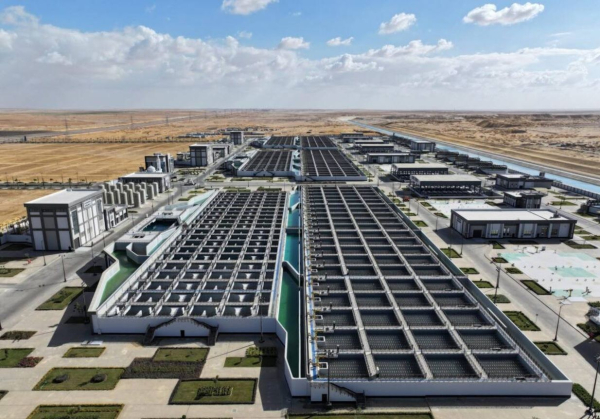
Buildings of “New Delta” / Photo by Hasan Allam holding
Egypt has officially opened one of the largest agricultural projects in its history, the New Delta. The country plans to transform desert areas into new fields and significantly increase food production.
Egypt opens country's largest agricultural project
Egyptian President Abdel Fattah al-Sisi officially launched the large-scale agricultural project New Delta, UkrAgroConsult reports. The grand opening took place during the 2026 wheat harvest in new fields created west of the Nile Delta.
According to government estimates, this project has become the largest land reclamation program in the history of the state. Its main goal is to bring significant areas of desert territories into agricultural use and strengthen the country's food independence.
In the future, the New Delta will cover an area of 2.2 million feddans, or approximately 9,000 square kilometers. Thanks to this, Egypt plans to increase the area of cultivated land by approximately 15%.

Wheat and export crops will be grown on the new lands
The government is betting not only on food crops, but also on products for foreign markets. The new lands are planned to grow wheat, corn and vegetables, as well as olives and figs, which have high export potential.
The project has already required significant investment, with the total investment reaching 800 billion Egyptian pounds, or over 15 billion US dollars.
The funds were used to prepare the soil, build granaries, create industrial zones, and develop transport infrastructure. New roads are to connect desert areas with the Nile Valley and seaports.
The authorities also expect a significant socio-economic impact. According to preliminary estimates, the New Delta could provide over two million new jobs.
The “artificial river” became the heart of the project
A key component of the New Delta is a large-scale water supply system, which in Egypt is already called an “artificial river.” It is this system that allows for the provision of water to areas previously considered unsuitable for agriculture.
The system is powered by water from drainage canals in the western part of the Nile Delta. The flows are fed to the El Hammam treatment complex on the Mediterranean coast, where up to 7.5 million cubic meters of water are treated daily.
After purification, the water is transported via a 170-kilometer canal through 13 pumping stations directly to new agricultural areas.
Egyptian authorities call the New Delta a strategic response to food security challenges that have intensified after the COVID-19 pandemic and military conflicts. At the same time, the project is controversial: environmentalists and human rights activists draw attention to the system's high energy intensity, the scale of state spending, and the concentration of management in structures linked to the military.
Mice attack fields: Australia urgently saves crops from large-scale rodent invasion
Quite often, people find it quite difficult to overcome nature and elemental forces: whether it's the desert in Egypt or flocks of mice in Australia.
-
Australia has authorized the use of a powerful poison to combat a mouse infestation that is threatening crops.
-
The problem has spread to several regions, where rodents cause significant economic losses by eating grain and damaging equipment.
Economic losses from mouse infestations can be massive. Rodents eat away at ladders, contaminate grain in storage facilities, and damage equipment by gnawing through cables and other infrastructure.