
Main points
- In March 2026, changes in food prices are expected due to military risks, logistics, and rising electricity tariffs; in particular, an increase in the price of tropical fruits and a decrease in the price of borscht vegetable sets.
- Prices for meat and dairy products are also subject to change: chicken has become cheaper, while beef goulash has become more expensive, and dairy products may increase in price due to economic factors and weather conditions.
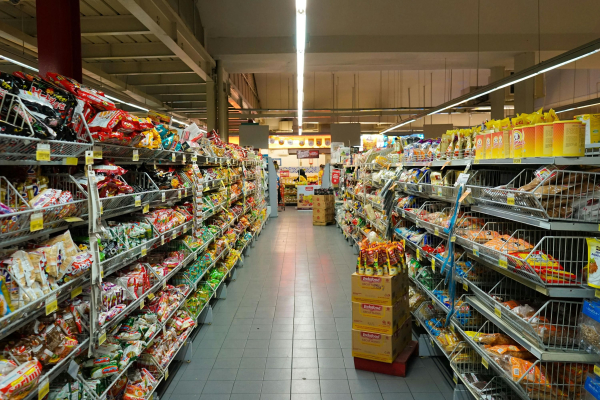
What will be the prices of vegetables / Photo Unsplash
Currently, quite a few factors affect the cost of the products we buy in stores, including logistics, shelling of the power system, and other military risks. However, in March, prices will not change as clearly and linearly as one might imagine.
What will happen to food prices in March?
Usually, food prices, like other goods, should go down in March, but this year the war is once again making adjustments to pricing policy. Experts from the Institute of Agrarian Economics told Channel 24 how food prices may change in March.
Prices for vegetables and fruits, like market supply, will depend on supply volumes, storage conditions and costs, and logistics, says scientist Inna Salo. Increased electricity tariffs for industrial producers and fuel prices also have an impact.

Inna Salo,
Doctor of Economic Sciences, Chief Researcher of the Department of Agrarian Market and International Integration of the Institute of Agrarian Economics
Due to additional storage costs, a seasonal gradual increase in the price of fruit and vegetable products is expected in March 2026: vegetables – up to 7%, fruits – up to 10% compared to current prices.
According to the data provided by the scientist from the Ministry of Finance of Ukraine, as of February 24, compared to the end of January 2026 , prices for vegetables used in borscht have decreased : beets, cabbage, onions, potatoes. Apples have also become slightly cheaper (by 5.4%). However, bananas, tangerines, and oranges, which are imported into Ukraine, have become more expensive.
Interesting! In Ukraine, private farms grow about 88% of vegetables (up to 7.5 million tons) and 80% of fruits (up to 1.5 million tons).
How will meat prices change?
The situation with meat prices in Ukraine has been affected by the full-scale war unleashed by Russia and its consequences for four years in a row. As noted by researcher Natalia Kopytets, this year, due to the prolonged lack of electricity due to the attacks, grocery supermarkets were forced to reduce retail prices of meat.

Natalia Kopytets,
Candidate of Economic Sciences, Leading Researcher of the Department of Agrarian Market and International Integration of the Institute of Agrarian Economics
According to estimates by scientists at the Institute of Agrarian Economics, no increase in retail prices for the main types of meat – beef, pork, and chicken – is expected in March 2026. Prices will remain at the level of February 2026.
The situation on the market is also exacerbated by a decrease in demand from end consumers . Due to prolonged power outages, people bought less raw meat, as they had difficulties with its preparation and storage.
According to the data provided by the scientist, since the beginning of 2026, as of February 25, the prices of the main types of meat have decreased by 3 – 30.42 hryvnias per kilogram . The prices of chicken have decreased the most:
- carcass – 101 hryvnia per kilogram (-13.5%);
- fillet – 207.97 hryvnias per kilogram (-12.8%);
- thighs – 140.67 hryvnias per kilogram (-3.9%);
- drumsticks – 101.50 hryvnias per kilogram (-5.4%).
Beef goulash, on the other hand, rose in price by 3.4% to 399 hryvnias per kilogram. Ribs fell slightly in price to 269.55 hryvnias per kilogram (-2.2%). Pork fell by 1.3–2.9%, and the prices of salted and homemade lard remained unchanged.
What will happen to milk prices in March?
The dairy market in 2026 experienced significant fluctuations due to weather conditions and economic factors, says scientist Ivan Svinous. The situation in the industry is also complicated by the reduction in the number of cows in agricultural enterprises and households.
Additional pressure on costs is caused by rising costs of fuel, veterinary drugs, equipment, as well as the introduction of new requirements for animal husbandry. Producers' costs are also increasing due to the use of diesel generators due to power outages.

Ivan Svinous,
Doctor of Economics, Leading Researcher of the Department of Agrarian Market and International Integration of the Institute of Agrarian Economics
Under the influence of negative global trends, a slight decrease in purchase prices for exchange-traded dairy products was observed at the beginning of the month. However, already in the middle of the period, the market demonstrated the opposite dynamics, which caused their growth. The positive growth trend may persist in March 2026, despite the traditional seasonal factor of increasing milk supply.
According to forecasts by scientists at the Institute of Agrarian Economics, in March 2026, the purchase prices for milk after the increase will be:
- extra grade – up to 18.53 hryvnias per kilogram (+6.5%);
- higher – up to 17.58 hryvnias per kilogram (+5.3%);
- the first – up to 16.90 hryvnia per kilogram (+4.2%).
Retail prices may also increase:
- pasteurized milk – by 2.5% to 44.70 hryvnias per kilogram (+3.1%);
- hard cheese (by 50%) – up to 315.30 hryvnia per kilogram (+1.9%);
- sour cream 20% – up to approximately 145 hryvnias per kilogram (+4.3%).
At the same time, price increases are held back by the low purchasing power of the population . Therefore, the increase in costs of producers and processors cannot be fully transferred to the end consumer.
The psychological limit has been crossed: quality apples in Ukraine cost about 70 hryvnias per kilogram
-
Prices for varietal apples in Ukraine have risen to 70 hryvnias per kilogram due to rising production and storage costs.
-
Despite a good harvest in 2025, prices remain high due to inflationary pressures and damage to orchards by winter frosts.