
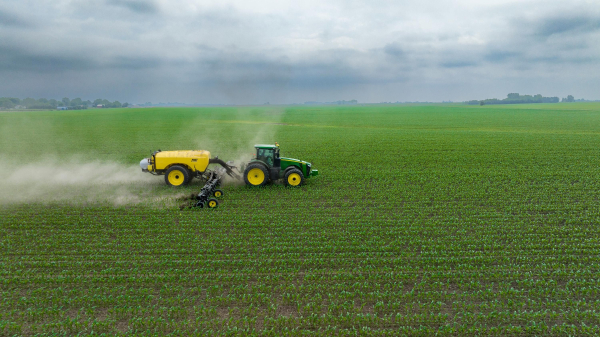
Fertilizers for the EU / Photo Unsplash
The European Union has decided to temporarily lift tariffs on key nitrogen fertilizers used in agriculture, in a move that Brussels hopes will help lower farmers' costs while reducing their dependence on supplies from Russia and Belarus.
EU opens access to cheaper fertilizers
The Council of the EU has decided to suspend for one year duties on a number of nitrogen fertilizers and components for their production, in particular urea and ammonia, the European Council website reported. These substances are the basis for the production of nitrogen fertilizers, which are widely used by European farmers.
The European Union hopes that this move will reduce the financial pressure on farmers and fertilizer producers. According to the European Commission, the savings on import duties could amount to around €60 million.
Cyprus Finance Minister Makis Keravnos stressed that the decision is of strategic importance for the agricultural sector. “Today's decision gives European farmers better access to affordable and reliable supplies of fertilizers. At the same time, we accelerate the transition away from Russian and Belarusian products.”

Russian and Belarusian fertilizers except
Despite the general easing of trade conditions, the new regime will not apply to products from Russia and Belarus. The EU explained this by Russia's war against Ukraine and Minsk's support for Moscow.
The mechanism will also have certain limitations. Duty-free import will only apply to those goods that are not supplied to the European Union under existing preferential conditions.
To avoid pressure on domestic producers, Brussels has set quotas equal to most-favored-nation imports in 2024 plus 20% of last year's supplies from Russia and Belarus.
Why the fertilizer issue has become critical
The EU reminds us that the fertilizer market has been under pressure since 2021. The increase in product prices has directly affected the cost of growing crops and, as a result, food prices.
Last year, the EU imported around 2 million tonnes of ammonia and 5.9 million tonnes of urea, as well as 6.7 million tonnes of nitrogen fertilizers and mixtures. Some of these supplies already arrive duty-free from countries with preferential access to the EU market, but significant volumes were still subject to duties of 5.5-6.5%.
The new mechanism will enter into force the day after its publication in the Official Journal of the EU and will be in force for one year. If necessary, the European Commission may propose an extension or adjustment of this policy.
The EU is preparing emergency aid for its farmers due to the sharp rise in fertilizer prices
The European Union is considering creating fertilizer reserves and providing additional support to farmers as prices soar, fueled by rising energy prices and supply disruptions amid the Middle East conflict.
- The European Commission plans to present a draft new fertilizer strategy, which includes market monitoring, the creation of strategic reserves, and the use of organic alternatives.