
Main points
- In 2023, there were 9.4 million bee colonies in the EU, 16% more than in 2020.
- Italy became the leader in the number of bee colonies, while Hungary and Spain saw significant declines.
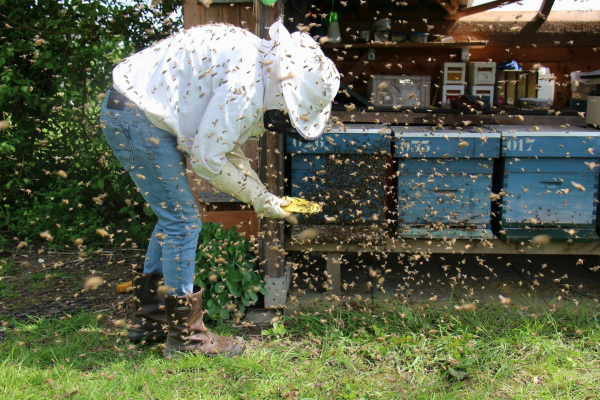
Bees have increased in the EU / Photo Unsplash
The number of bee colonies on farms in the European Union has increased significantly in recent years, but the trend has been uneven. Some countries are expanding their apiaries at record rates, while others are recording significant declines.
The number of bee colonies in the EU has increased significantly
In 2023, there were 9.4 million bee colonies on farms in the European Union, Eurostat reported. This is 1.3 million, or 16%, more than in 2020, when the figure was 8.1 million.
This only concerns bee colonies registered on farms, as the agricultural structure statistics do not cover all apiaries in Europe. Nevertheless, the data show a clear trend towards growth in the beekeeping sector.
The positive dynamics reflect the importance of the industry for agricultural production, as bees play a key role in pollinating a significant portion of crops.

Italy has become a leader, while some countries are reducing apiaries
The largest number of bee colonies among EU countries in 2023 was recorded in Italy – almost 1.9 million. It was followed by Romania with 1.7 million, Greece with 1.2 million, and Bulgaria, which has about 1 million bee colonies.
Italy has shown particularly notable growth. In three years, the country has added more than 822,000 bee colonies, an increase of almost 79%.
However, the overall European picture is not clear. Among the countries for which data are available, an increase in the number of apiaries was recorded in 12 countries, while a decrease was recorded in 10 countries. The largest losses were observed in Hungary, where the number of bee colonies decreased by 34%, and in Spain, where the number of bee colonies decreased by 14%.
Why do bees remain critically important to the agricultural sector?
Bees provide pollination for a wide range of crops in both warm and cool climates. Their ability to overwinter in hives and use honey reserves allows them to survive even in low temperatures.
With pollinator populations in Europe declining, protecting them is becoming increasingly important. This is what World Bee Day is all about, drawing attention to the role of bees in food security and ecosystem conservation.
In 2023, the European Commission presented a renewed program to support pollinators – A New Deal for Pollinators . The initiative provides for a set of measures aimed at halting the decline of wild pollinator populations by 2030 and complements the European biodiversity strategy.
“95% of the apiary has been destroyed”: what is happening to the bees in western Ukraine?
Despite the fact that Ukraine has one of the strongest beekeeping industries, stronger than that of EU countries, this year's cold weather has not spared many bee colonies.
-
In the Chernivtsi region, beekeepers report a mass death of bees that began after fields were treated with agrochemicals.
-
The death of flying bees threatens the existence of hives.
Experts emphasize that such incidents can have long-term consequences not only for beekeepers, but also for the agricultural sector as a whole, as bees play a key role in crop pollination.