
Main points
- Russia uses Iskander-M and Iskander-K missiles to attack Ukraine, including from border regions and occupied Crimea.
- The Iskander-M is a ballistic missile, while the Iskander-K is a cruise missile, with the former being more difficult to shoot down due to its high speed and maneuverability.
- 1 Recent Iskander attacks on Ukraine
- 2 What is the difference between “Iskander-K” and “Iskander-M”
- 3 “Iskander-K” or “Iskander-M”: which missile is harder to shoot down?
- 4 Iskander-K in short supply: why Russia rarely uses this missile
- 5 There are only a few minutes to rescue: why it is important to be in cover during an Iskander attack
- 1 Recent Iskander attacks on Ukraine
- 2 What is the difference between “Iskander-K” and “Iskander-M”
- 3 “Iskander-K” or “Iskander-M”: which missile is harder to shoot down?
- 4 Iskander-K in short supply: why Russia rarely uses this missile
- 5 There are only a few minutes to rescue: why it is important to be in cover during an Iskander attack
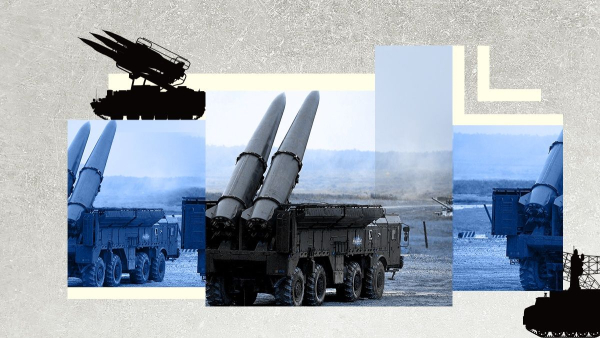
To launch missile strikes on Ukraine, the Russians use almost the entire arsenal: cruise, ballistic or aeroballistic missiles, land-based or sea-based, etc. Among them are the ballistic Iskander-M and the cruise Iskander-K.
In general, what kind of missiles are these and how Ukrainian air defense can counter them – read the material of Channel 24 .
Recent Iskander attacks on Ukraine
- On the night of March 24, 2026, the air defense was able to shoot down 18 Kh-101 cruise missiles and 5 Iskander-K cruise missiles, that is, all of the cruise missiles launched against Ukraine. But none of the 7 Iskander-M/S-400 ballistic missiles were shot down.
- On the night of February 3, 2026, after the end of the so-called “energy truce”, the Russians launched a massive strike on the energy sector, in particular, using 32 Iskander-M/S-300 ballistic missiles and 28 Iskander-K/X-101 cruise missiles. Air defense forces destroyed 11 ballistic missiles and 20 cruise missiles.
- On the night of January 20, 2026, the enemy used 18 Iskander-M/S-300 ballistic missiles to attack Ukraine. The main direction of the attacks was Kyiv and the Kyiv region. The launches were carried out from the Bryansk and Rostov regions. 14 missiles were intercepted by air defense forces.
- On the night of November 14, the Russians used 6 cruise missiles, including Iskander-K, launched from occupied Crimea. These missiles were destroyed by air defense forces. The Russians also used 9 Iskander-M/KN-23 ballistic missiles from the Bryansk region. 6 missiles were shot down.
- Russian forces used 9 Iskander-M ballistic missiles from Rostov and Kursk regions in the attack on October 25. According to the Air Force, 4 ballistic missiles were shot down.
- During the combined attack on September 10, 2025, the Russians used 1 ballistic missile. It was probably an Iskander-M or a KN-23, launched from the Voronezh region.
- On the night of August 30, Russian forces launched 8 Iskander-M/KN-23 ballistic missiles from Rostov Oblast and Krasnodar Krai. In addition, the enemy used Iskander-K missiles.
- On the morning of August 18, the Russians struck Zaporizhia twice – previously with Iskander missiles from Crimea.
- On the night of June 22, the Russians attacked Ukraine with two Iskander-M/KN-23 ballistic missiles from Voronezh and Rostov regions.
- On the night of June 21, Russia attacked Kremenchuk with Iskander-K missiles from the Belgorod region.
- On the night of May 25, the Russians attacked Ukraine using 9 Iskander-M/KN-23 ballistic missiles. The enemy launched air targets from the Kursk region of Russia.
- On the night of May 24, the enemy launched a strike on Ukraine using 14 Iskander-M/KN-23 ballistic missiles from the Taganrog, Yeysk, Bryansk, and Crimea regions. The missiles attacked Kyiv, Dnipropetrovsk, Odessa, and Zaporizhia regions. 6 Iskanders were shot down.
- On May 3, Russian forces attacked with two Iskander-M ballistic missiles. The enemy launched air targets from the Rostov region of Russia and Crimea.
- On April 24, in a combined missile and drone attack, the Russians used 11 Iskander-M/KN-23 ballistic missiles launched from the Bryansk, Voronezh, and Kursk regions of Russia. Air defense forces intercepted 7 ballistic missiles. In addition, the Russians launched 6 Iskander-K cruise missiles from the Donetsk region. Unfortunately, they were not intercepted.
- On April 18, Kharkiv was previously hit by three Iskander missiles. One of them exploded in the air right next to the windows of a 16-story residential building in the Osnovyanskyi district. Igor Terekhov reported that the strikes were carried out by ballistic missiles with cluster munitions.
- On April 13, the Russians launched two Iskander-M/KN-23 ballistic missiles. The enemy killed 35 people.
- On April 6, the enemy launched 6 Iskander-M ballistic missiles from the Bryansk region. Air defense shot down one.
- On the evening of April 4, Russian forces struck Kryvyi Rih with an Iskander cluster missile. Russia killed 21 people, including 9 children. 75 people were injured.
- The Russian army launched an Iskander strike on the Novomoskovsk training ground in the Dnipropetrovsk region on March 1. The General Staff of the Armed Forces of Ukraine officially confirmed that there were casualties and injuries as a result of the strike.
- On the night of February 12, Russian forces attacked Kyiv with missiles. In the Obolonsky district, 1 person was killed and 4 others were injured. Among the injured was a 9-year-old girl. 2 office buildings were partially destroyed, and a fire broke out in one of them from the 7th to the 1st floor.
- At around 9:00 PM on February 11, Russian missiles hit Kryvyi Rih. 10 apartment buildings and private homes were damaged, as well as educational institutions, business facilities, a hotel, a gas station, and about 30 cars. There were no injuries or casualties.
- On the morning of February 4, Russian troops fired an Iskander-M missile at Izyum in the Kharkiv region. Five people were killed and 50 people were injured to varying degrees, including children.
- On the evening of January 31, the Russians attacked Odessa with 3 Iskander-M ballistic missiles, causing damage and at least 7 injuries. Throughout the day, Russia launched 7 Iskander-M/KN-23 ballistic missiles and 7 Iskander-K cruise missiles.
- On the morning of January 18, Russian forces were able to strike Kyiv and Zaporizhia with 4 Iskander-M ballistic missiles. 2 enemy air targets were shot down.
- On the night of February 22, the occupiers launched two Iskander-K cruise missiles from the Kursk region at peaceful Ukrainian cities. The Ukrainian Air Force reported the successful downing of both enemy targets.
What is the difference between “Iskander-K” and “Iskander-M”?
The use of Iskander operational-tactical missile systems (OTRK) allows for simultaneous strikes with Iskander-K and Iskander-M missiles.
The fundamental difference between the Iskander-K and the Iskander-M is as follows: the Iskander-K is a cruise missile, and the Iskander-M is ballistic.
To make it easier to understand the difference between the missiles, it is worth citing the explanation given by former spokesman for the Air Force of the Armed Forces of Ukraine Yuriy Ignat. According to him, the Iskander-K is an analogue of the Russian Kalibr missile, but ground-based.
The Iskander-M is a ballistic missile that rises almost into the stratosphere, from where it returns at high speed.
What do these two missiles have in common? As Ignat said, their warhead weighs about 500 kilograms, like the Kinzhal, and their range is 500-600 kilometers. In the event of a hit, these missiles cause damage within a radius of 60 meters.
Attention! “Iskander” are land-based missiles. For example, X-101, X-555 and “Dagger” are air-based missiles that Russia launches from aircraft. The same “Caliber” is a sea-based missile that Russia attacks from ships in the Black Sea.
“Iskander-K” or “Iskander-M”: which missile is harder to shoot down?
Both missiles carry a large warhead. Their threat can be assessed by considering which missile is more difficult to shoot down.
The Iskander-K missile is not hypersonic, meaning it travels at a speed lower than the speed of sound. It was the Iskander-K that the Russians used during the attack on Mykolaiv on April 27, 2023.
At that time, the former spokesman for the Air Force of the Armed Forces of Ukraine, Yuriy Ignat, emphasized that such missiles were shot down by our air defense. At the same time, the difficulty of shooting down a missile lies in the fact that the missile flies very low. Therefore, it is difficult to detect and finally shoot down.
In addition, the Iskander-M has increased speed characteristics compared to the previous version, the Iskander-K. Although exact data on the speed of the Iskander-M is not disclosed, a number of sources and experts believe that it is hypersonic.
The Iskander-M has an improved control system, which allows for more precise targeting and ensures high accuracy of the strike. The Iskander-M also has greater maneuverability and the ability to evade air defense systems.
Important! Currently, Ukraine is able to shoot down the Iskander-M only thanks to Patriot, and will also be able to do so when it receives FSAF SAMP/T. It is worth noting: in order for the Patriot SAM to shoot down the Iskander-M, the missile must enter the SAM's range.
However, Ukraine has more means to shoot down Iskander-K missiles. Even Igla or Stinger MANPADS can be effective against Iskander-K.
“Iskander-K” in short supply: why Russia rarely uses this missile
The military portal Defense Express clarifies that “Iskander-K” is a generalized name for cruise missiles that the Russians can use as part of the Iskander OTRK. This refers to the 9M728 (also known as the R-500) and 9M729 missiles.
Interestingly, as of February 23, 2022, the portal reported, the Russian army had only 100 missiles of both types in stock – 9M728 and 9M729. During the first 10 months of the full-scale invasion, the Russian military-industrial complex was able to produce only 20 missiles of both types, with an average rate of two cruise missiles per month. The Russians are replenishing their Kinzhal stockpiles at about the same rate.
Defense Express believes that Russia's inability to quickly replenish its missile reserves determined that the occupiers rarely used Iskander-K to shell Ukraine.
Please note : According to Forbes, one Iskander missile, without specifying the type, costs Russia $3 million.
There are only a few minutes to rescue: why it is important to be in cover during an Iskander attack
The enemy launches Iskanders from border regions (Belgorod, Voronezh, Rostov, Kursk or Bryansk) or from temporarily occupied Crimea. Ballistic missiles have a fairly high speed, so people have literally minutes to take cover. Similarly, the Patriot air defense system has only a few minutes to detect and destroy a target. That is why it is much more difficult to destroy the Iskander-M, because it flies much faster and on a ballistic trajectory.
But even the destruction of a missile does not mean that there are no threats to civilians, because missile fragments fall to the ground. One such tragic incident was the fall of fragments in the Desnyanskyi district of Kyiv in June 2023. Then, unfortunately, three people died.
Consequences of the missile attack on Kyiv on June 1, 2023 / Photo by the State Emergency Service


According to local residents, the debris fell 10 minutes after the alarm was raised. The fact that the shelter was closed probably contributed to the tragic consequences.
The threat from falling debris is not only that pieces of the missile can cause injuries of varying degrees or even destruction. It is also about the warhead of the missile, which may not explode in the air after being destroyed by an air defense missile. That is, there is a threat that the warhead will explode after the debris falls to the ground.
Therefore, the debris poses a huge danger to the civilian population.