
Main points
- In 2026, entrepreneurs often face exceeding income limits, losing the status of a single tax payer, etc.
- You can get fines for some violations.
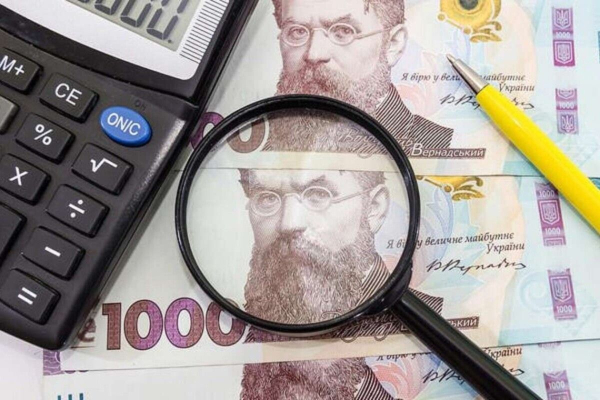
The most popular mistakes of sole proprietors in 2026 / Depositphotos
Many entrepreneurs face a situation where a seemingly minor mistake turns into problems with the tax office. In 2026, such situations are not uncommon, but commonplace: they exceeded the limit, forgot to submit a “zero” report, or received payment on a personal card.
What are the most common mistakes made by self-employed individuals?
Most of these errors can be found independently. In practice, about 14 typical errors can be identified. They are conditionally divided into several categories, writes the YANKIV editorial team.
Errors with limits and tax status:
- Exceeding the income limit. Each group has its own maximum. Often, entrepreneurs do not keep regular records and notice the excess after the fact, which can cost a simplified system.
- They didn't choose a single tax when registering. A common story among newcomers: they didn't submit an application – they automatically ended up in a different taxation system.
- You have lost your status as a single tax payer. The reasons are various: debts, violation of conditions, untimely payments. It is important to regularly check your compliance with the requirements.
- You missed VAT registration. In certain cases, it is mandatory. Ignoring it is a direct path to fines.
Errors in reporting and documents:
- They did not file a report without income. Myth: “no income – no need to report.” In fact, reporting is always mandatory.
- There are no primary documents. Acts, invoices, and invoices are your “armor” during an audit. Without them, it is difficult to prove the reality of transactions.
- They did not submit Form 4-DF. A typical mistake when interacting with other individual entrepreneurs – and it can affect both parties.
- Ignoring RPO/PRPO. Not everyone is required to use them, but if necessary, then avoiding them will not be possible without consequences.
Operational and financial errors:
- Payments do not correspond to the KVEDs. If you receive money for activities that are not in the KVEDs, this raises questions for the tax authorities.
- A group 2 individual entrepreneur works with “general rules”. There are restrictions on clients: violating them often becomes a problem.
- Paying taxes with incorrect details. It would seem like a small thing, but the payment will not be credited, and the debt will remain.
- Income on a personal card. Mixing up finances is a classic mistake that creates risks during audits.
- Undocumented workers with disabilities. There are separate requirements that must be followed.
- Incorrect closure of a sole proprietorship. This is not just an application. There is a procedure, and errors can “emerge” even after closure.
What do you need to know about taxes and running a sole proprietorship in Ukraine?
-
You can open an individual entrepreneur in Ukraine yourself online through the Diya portal, choosing the taxation system and KVEDs. Experts advise registering KVEDs “with a margin”, and for small businesses – a simplified taxation system.
-
Individual entrepreneurs on the simplified taxation system must follow annual income limits that differ for each group. Exceeding the income limit results in a 15% tax on the excess, which can be transferred to another group or the general system.
-
Sole proprietors can be fined 10 minimum wages for each unregistered employee upon the first inspection. In case of repeated violation within a year, the fine increases to 30 minimum wages, which is equal to 259,410 hryvnias in 2026.