
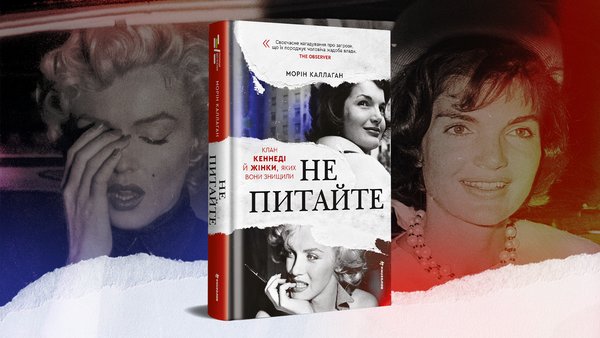
Americans' attitudes towards the former president's dynasty have undergone several stages of change: from romanticization and misleading nostalgia to gradual disillusionment at the end of the twentieth century, which later grew into a wave of systemic criticism and revaluation of the family's legacy. The latest cycle of controversy flared up after the publication of journalist Maureen Callaghan's book “Don't Ask. The Kennedy Clan and the Women They Destroyed.”
John F. Kennedy has gone from being an icon to a figure increasingly seen without a mythological halo, and his descendants have become controversial figures in American political history, sometimes rightly called antiheroes. Callaghan has had to go through a long journey of investigative journalism to piece together previously ignored facts. She poses an important question for readers: why was the fate of the Kennedy women kept quiet for so long?
Author: Leonid Skripal
Why the “family empire” caused admiration
After the assassination of John F. Kennedy in 1963, his administration began to be called “Camelot”, referring to the famous cycle of legends about King Arthur. With the support of Jacqueline Kennedy-Onassis, this image of idyllic rule spread rapidly, and the former president himself was perceived as a hero and martyr. It was during this period that the myth of “America's lost innocence” took hold. The feeling of respect and tragic admiration was strengthened by the second assassination in the history of the dynasty – after winning the primary in 1968, John's younger brother Robert Francis Kennedy became the victim of a shooting.
 US First Lady Jacqueline Kennedy and US President John F. Kennedy (left in frame) welcome Ethiopian Emperor Haile Selassie at Union Station. Getty Images
In the 1990s, despite the revelation of numerous scandals, later described in Maureen Callaghan's book, Kennedy's influence was colossal. Criticism coexisted with respect for the political legacy, as American liberals still considered John a symbol of progressive politics and placed him at the head of their pantheon. After the failure of Nixon and the conservative America of Reagan, identification with the Kennedy dynasty was a breath of fresh air.
Bill Clinton, at the beginning of his career, directly positioned himself as the heir to the style of the 35th president – he was young and charismatic, used progressive rhetoric and played the saxophone. The Kennedys gave American politics a new image model: they were media-savvy, stylish and sociable, organized social parties and skillfully combined cultural charm with political branding, which helped to push the scandalous background into the background.
Heredity instead of real actions
John F. Kennedy set a trend for decades — his attitude towards women was extremely toxic, but against the backdrop of patriarchal public discourse and with the support of the media, abuse of power and betrayal were presented as “charming antics,” “sexual adventures,” and “manifestations of charisma.” John's political descendants from his family circle were perceived in a similar way — their political contributions were less significant, and the scandals were sometimes louder, but the “shield of the Kennedy name” always came in handy.
The author of the investigative biography pays great attention to the fates of women who suffered at the hands of Kennedy. For example, she describes the car accident involving Ted that killed Mary Jo Kopechne. Despite the obvious guilt, Ted Kennedy maintained his enormous influence in the Senate for decades, and the tragedy itself was lost in the piles of his political biography.
 Mary Jo Kopechne. Getty Images
The modern apogee of replacing real political contribution with a famous name can be considered the activities of Robert Kennedy Jr., the current US Secretary of Health and Human Services. His path into politics was made possible solely by his name, but in the end he turned his back even on the liberal values that his predecessors defended.
Robert is a conspiracy theorist, anti-vaccine and Trump supporter, but Maureen Callaghan also presents him as a terrible husband. She cites evidence of his humiliating behavior in marriage and his systematic control over his wife. As a teenager, Robert kept a diary with the names of the women he cheated on Mary with. He financially restricted her for a long time and eventually (it is said) contributed to Mary Kennedy’s suicide in 2012.
Emotional involvement in the Kennedy topic
The #MeToo movement has radically changed the tone of conversations about the “descendants of Camelot.” Instead of nostalgia, there is an awareness of the systemic abuse of power, the exploitation of women, and the culture of impunity that prevailed around Kennedy.
 John F. Kennedy Jr. and Carolyn Bessette Kennedy, Boston, May 23, 1999. Getty Images/Justin Ide
Despite this, there are still people who are ready to romanticize toxic relationships – an example is Ryan Murphy, known for his controversial artistic representations of mental disorders. His new series “American Love Story” is dedicated to John F. Kennedy Jr. and Carolyn Bessette. Their story is presented as an example of tragic love under the pressure of the media. Murphy's dose of glamour, as always, is too high, while Maureen Callaghan's documentary highlights the other side of these relationships: the imbalance of status, strict control and stifling family culture of the Kennedy dynasty.
The history of the ex-president's family has long been perceived through the prism of love and tragedy. The Kennedys successfully used the media to create a recognizable and emotionally charged image, and the responsibility for scandals was shifted to journalists. All the relationships of the Kennedy men were doomed to stardom – they turned into reality shows that hid the truth about the fate of the partners of famous politicians with a prominent surname.