
Main points
- Inverter refrigerators consume less energy and work better with uninterruptible power supplies.
- Setting the temperature correctly and avoiding frequent door openings helps preserve food during power outages.
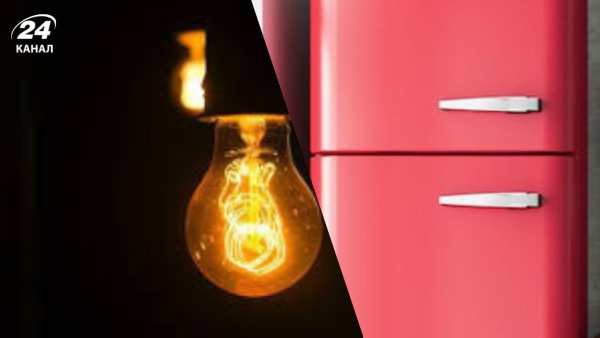
How to set up a refrigerator for power outage schedules / Collage 24 Channel
Due to shelling of energy infrastructure in Ukraine, the issue of stable operation of appliances has become critical. The refrigerator is one of the most important appliances in the home, and users are looking for ways to preserve food during power outages.
After regular Russian attacks on the power system, Ukrainians are forced to adapt their daily lives to the outage schedules. In such conditions, the refrigerator becomes a key device, because the safety of products depends on it. That is why many are considering buying an inverter model or using an uninterruptible power supply. This is reported by 24 Channel.
Will an inverter refrigerator help and how to use it correctly?
An inverter refrigerator differs from a conventional one in that its compressor operates smoothly, without abrupt starts. This means lower peak loads on the electrical network and lower energy consumption on average. This is important for operation from a UPS – standard refrigerators can consume several times more energy during start-up than in normal mode, which often overloads inexpensive uninterruptible power supplies.
As noted on the Ecoflow blog page, in the case of the inverter model, the load is more stable, so it is better suited to work from a UPS or an inverter with a battery. At the same time, this does not mean that any UPS will cope. For a refrigerator, models with the correct output voltage shape and sufficient power are required , otherwise the device may not work correctly or not start at all.
However, even without buying a new refrigerator, you can improve the situation through proper use. One of the key factors is preparation for outages. If you know the schedule, it is worth reducing the temperature in the freezer to a minimum in advance. This will allow you to accumulate cold and store food longer after the power goes out.
As reported on the Jackery page, it is also important to minimize door openings during shutdown. Each opening significantly increases the temperature inside. A well-filled refrigerator keeps cold longer, so it is worth avoiding half-empty shelves – you can use water bottles as an additional “cold accumulator”.
Another practical approach is to synchronize work with schedules. During periods when there is light, the refrigerator works more intensively and cools the chambers to lower temperatures. In some modern models, this can be set manually or through “super freezing”. This mode should be turned on a few hours before turning off.
For users with UPS or inverters, it is important to consider the battery capacity . The refrigerator does not necessarily have to run continuously during a power outage – it is enough to periodically turn it on to maintain the temperature. This allows you to significantly save battery power.
In conditions of unstable power supply, an inverter refrigerator can be a more efficient solution, but it is not a universal answer. Correct setting of operating modes and discipline of use play a significant role. The combination of these factors allows to minimize product losses even during long outages.