
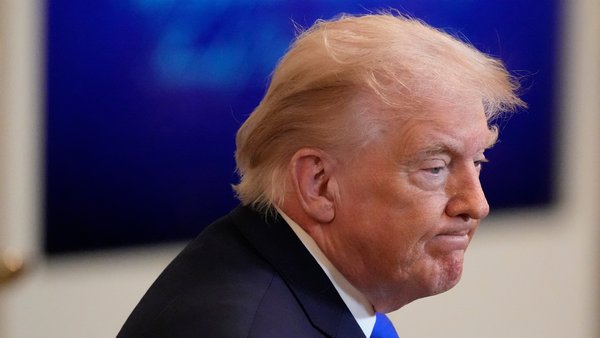
US President Donald Trump spoke with British Prime Minister Keir Starmer the day before and once again expressed disappointment with London's response to his call for European and Asian countries to send warships to protect shipping in the Strait of Hormuz.
He stated this in a telephone interview with the Financial Times.
He noted that he considers “Great Britain to be our number one ally and our oldest partner,” but when he asked to send ships to the Strait of Hormuz, “they (London — ed.) didn't want to.”
“And as soon as we had effectively destroyed Iran's dangerous capability, they said, 'Okay, we'll send two ships,' and I said, 'We need these ships before victory, not after victory,'” the White House chief said.
At the same time, Trump added that before calling for the dispatch of warships, he noted that any danger to allies in the strait would be minimal, since the US and Israel had destroyed Iran's military potential over the past two weeks.
“We have effectively destroyed Iran. They have no navy, no anti-aircraft systems, no air force, everything is gone. The only thing they can do is create a little problem by putting a mine in the water. It's a nuisance, but this nuisance can cause problems,” Trump added.
Recall that this is not the first time Trump has criticized Britain for allegedly not supporting the American operation against Iran. In particular, on March 8, he stated on the social network Truth Social that the United States “no longer needs” British aircraft carriers and will “remember” the behavior of its ally.
In general, relations between Washington and London have deteriorated since the start of a joint US-Israeli operation against Iran on February 28. Starmer initially refused the US use of British bases for strikes, but on March 1 he allowed their use for “limited defensive purposes.” Trump had previously said that Starmer was “not Winston Churchill” and expressed “great disappointment” with his position.
Starmer, in turn, said that Britain “does not believe in regime change from the sky” and that he acted in the interests of national security.