
- 1 Not everything works the first time
- 2 The court decision that changed everything
- 3 Suspended sentences instead of real ones
- 4 Your partner is an accomplice to the crime
- 5 Is the source of funds important?
- 6 What is behind the “absence” of sentences?
- 1 Not everything works out the first time
- 2 The court decision that changed everything
- 3 Suspended sentences instead of real ones
- 4 Your partner is an accomplice to the crime
- 5 Is the source of funds important?
- 6 What is behind the “absence” of sentences?
You know them and have seen them in the news more than once. So now the mystery is: what do the top SBU official, the head of the MSEK, the head of the Antimonopoly Committee, Yermak's deputy, and the Minister of Unity have in common?
We would like to say that it is conscientious performance of one's duties in the civil service, but we do not live in a dreamland. The answer: suspicion of illegal enrichment.
According to the investigation, the aforementioned officials acquired property for funds that may significantly exceed their official income. These include Vityuk, Krupa, Kyrylenko, Smirnov, Chernyshov, as well as many others whom NABU has suspected of corruption under the article on illicit enrichment in recent years.
Of course, it is worth waiting for court verdicts, but who guarantees that there will be any? Illusions are dispelled when you learn that in the last 6 years, since the Criminal Code was updated, exactly zero officials have received real punishment for their actions.
What is the problem: in the legislation, law enforcement, the judicial system, or is it not worth raising the alarm – everything is fine? How to make the institution of criminal liability for illicit enrichment finally start working? 24 Channel will try to answer these questions.
Not everything works the first time.
In the fall of 2019, a truly extraordinary event occurred. The updated Verkhovna Rada introduced Article 368-5 – “illicit enrichment” – into the Criminal Code of Ukraine. According to it, if an official suddenly has property or assets worth more than 3,000 subsistence minimums and questions arise about the presence of legal income, then this is illicit enrichment.
For example, the former Deputy Head of the Presidential Office, Andriy Smirnov, was suspected of illegal enrichment in May 2024. According to the investigation, from 2020 to 2022 he acquired:
- two cars (Mercedes-Benz, Volkswagen);
- two motorcycles (Honda, BMW);
- three parking spaces in Kyiv;
- an apartment in a prestigious residential complex in Lviv;
- a plot of land in Transcarpathia.
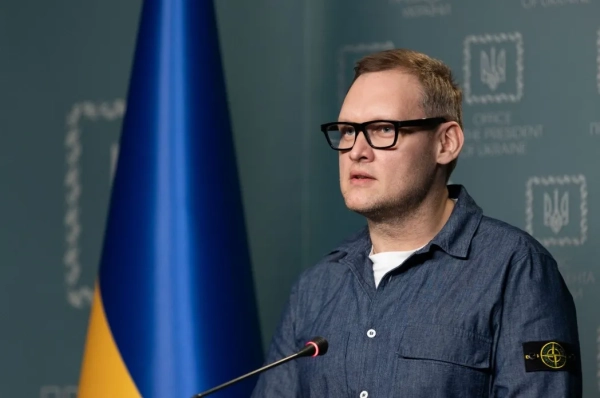
Andriy Smirnov as Deputy Head of the President's Office / Photo from the website president.gov.ua
The difference between the value of the property and the official income is 15.7 million hryvnias, which significantly exceeds 3 thousand subsistence minimums (about 10 million). In fact, the official's official income was only 1.3 million.
A year later, in April 2025, NABU and SAPO reported a new suspicion of Smirnov. In addition to illegal enrichment, articles on money laundering and receiving a bribe were added. On February 24, 2026, it became known that law enforcement officers had sent the case to court.
However, the history of the article on illicit enrichment did not begin in 2019. It was first attempted to be introduced ten years earlier under number 368-1. According to experts, the first version of the article duplicated such a crime as “receiving a bribe”, because it sounded like this: “receiving an illegal benefit by an official or transferring such benefit to his close relatives.”
That is, it is likely that in 2009, Ukrainian lawmakers did not understand how bribery differed from illicit enrichment. Or they simply lacked the political will to acquire such knowledge.
In any case, this does not play a significant role, because, as noted by TI Ukraine Senior Legal Advisor Pavlo Demchuk , the first version of the article on illicit enrichment never worked.
The entry into force of the article has been repeatedly postponed under the pretext of “eliminating shortcomings” and “improving legislation.”
In general, Ukrainian deputies adopted many progressive anti-corruption bills in 2009. It is not known whether they themselves really wanted this, because the main motive was international obligations – primarily the adopted UN Convention against Corruption.
However, again, as Demchuk notes, the relevant initiatives were never destined to work to their full potential.
The draft laws were never enacted. When Yanukovych became president, he once again postponed their entry into force. They were eventually repealed in December 2010, under the pretext of adopting another law that would regulate the prevention and fight against corruption. It was severely criticized by experts.
The aforementioned international obligations led to the fact that in 2011, deputies had to reintroduce the article on illicit enrichment into the Criminal Code under number 368-2. But only after the Revolution of Dignity did it work in a wording that truly describes illicit enrichment, not bribery.
At the same time, after the Maidan, when the anti-corruption bodies NABU and SAPO were created, the announcement of suspicions under Article 368-2 began. The most famous pioneers were such high-ranking officials as the head of the State Audit Service Gavrylova, the deputy head of the SBU Demchyna, People's Deputy Deydey, and others.
Whether they were guilty – we will never know, because on February 26, 2019, the Constitutional Court made a fateful decision for Ukraine, recognizing Article 368-2 “illegal enrichment” as unconstitutional. What caused this and how it benefited the alleged corrupt officials – in a little more detail below.
The court decision that changed everything
What unites the Gauleiter of the Zaporizhzhia region, Balytsky, and the current Ombudsman, Lubinets? Or, how about this pair: the traitor Korolevskaya and the previous Commissioner for the Protection of the Ukrainian Language, Kremin?
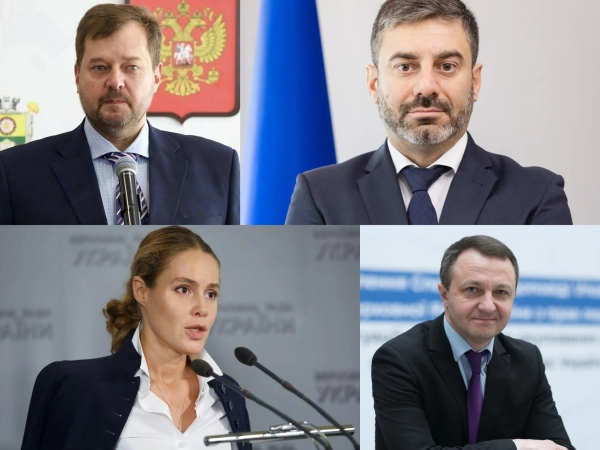
What unites these people in the context of illicit enrichment / Collage of Channel 24
Why else would such a company gather if not to go to the Constitutional Court?
The aforementioned individuals, when they were People's Deputies of the 8th convocation, signed a petition in a group of 59 People's Deputies to repeal the article “illegal enrichment.” At the end of winter 2019, as already mentioned, their request was granted – the court repealed the article.
Reputable anti-corruption organizations, such as Transparency International Ukraine , called this decision an “amnesty for corrupt officials.” According to NABU, it led to the closure of 65 criminal proceedings. Among those involved were top officials, judges, prosecutors, and people's deputies.
At stake was over 500 million hryvnias of dubious origin.
Officially, the Constitutional Court justified its decision as follows: the problem is not in the fight against corruption as such, but in how the legislator described the crime.
The judges concluded that the wording of the article allowed a person to be found guilty simply because of the lack of proof of the legality of the assets, effectively shifting the burden of proof from the prosecution to the suspect. This, they said, allowed for accusations based on assumptions and created legal uncertainty, which contradicted the principle of the rule of law, the presumption of innocence and the right not to incriminate oneself.
To be fair, it should be said that there was no unanimity within the Constitutional Court. Senior Legal Advisor of TI Ukraine Pavlo Demchuk draws attention to the separate opinion of Judge Vasyl Lemak, published together with the decision: in it, the judge notes that his colleagues could have made mistakes by ignoring a number of nuances.
First of all, about the “vagueness of the norm.” In his opinion, the “vagueness” could have been eliminated by detailed interpretation, rather than cutting it off from the shoulder – that is, repealing the law in its entirety.
Furthermore, in his opinion, Article 368-2 did not violate the presumption of innocence, as it only applied to officials with special status. The failure to explain the origin of the assets was only a reason to open an investigation, not proof of guilt.
And the last argument: the criminalization of illicit enrichment is directly provided for by the UN Convention against Corruption, ratified by the majority of states in the world, including Ukraine. Therefore, the abolition of the norm, according to Lemak's logic, did not protect human rights, but struck at the very architecture of the anti-corruption system.
Lawyer and anti-corruption expert Andriy Mazalov has a slightly different view, believing that the decision of the Constitutional Court cannot be called “erroneous”, even if it was extremely undesirable from the point of view of anti-corruption policy.
Political expediency and anti-corruption effectiveness do not always equal constitutionality. The court checks the compliance of the norm and its conclusion was logical, because for many years there was a situation when a person had to prove his innocence (and this contradicts the presumption of innocence, – 24 Channel).
No matter how much experts and judges debate, there is one thing you can't argue with: you can't go back in time – it's impossible to overturn the decision of the Constitutional Court and reopen old criminal proceedings.
But still, Ukraine was not left without an article on illicit enrichment. As we have already mentioned, the newly elected servants of the people in 2019 voted to return the article under the new number 368-5.
The homework was done. According to lawyer Mazalov, the new Article 368-5, which is still in effect, changed the focus: the burden of proof was clearly placed on law enforcement agencies – they must not simply state the fact of acquiring assets in a significant amount, but must also establish the excess of the value of the assets over the legal income.
The new article focuses on active behavior – acquisition – rather than on “lack of explanation.” This is a key difference: the legislator tried to move from “the person did not prove the legality of the origin of the assets” to “the state proved the illegality of their origin.”
However, the path through thorns to the stars is still ongoing. There has been no real verdict in 6 years. Although “something did happen” and more on that later.
Suspended sentences instead of real ones
Channel 24 journalists managed to find only two court decisions that could formally be called verdicts in cases of illicit enrichment. In both stories, no one ended up behind bars. Both cases are united by a plea bargain.
The first case is the verdict of Rivne Regional Council deputy Vitaliy Sukhovych. In May 2024, the Supreme Court of Criminal Appeals found him guilty of illicit enrichment. According to the investigation, he acquired assets worth almost 109 million, which exceeds his legal income by more than 98 million hryvnias, and did not reflect this in his declaration.
During the searches, law enforcement officers found the following cash on him:
- over 1.8 million dollars
- over 1 million euros
- more than 1.5 million hryvnias
In court, Sukhovych pleaded guilty and reached a plea deal with the SAPO prosecutor. In the end, instead of a potential five years in prison, he received a three-year probationary period. However, the state still confiscated 98 million hryvnias.
Search of Rivne regional council deputy / Photo by the State Bureau of Investigation


The second case is the case of former People's Deputy Iryna Kormyshkina. In March 2025, the Supreme Court of Criminal Appeals approved an agreement between the prosecutor and the Kormyshkin couple. The court found her guilty of illegal enrichment and false declaration, and her husband – of legalization of property and submission of false data.
The investigation believed that during 2021 and 2022, the People's Deputy acquired assets worth more than 20 million hryvnias in excess of official income.
To explain the origin of the funds, they tried to present these assets as a gift from their father. Later, the money was transferred to the husband as a loan, and he, through a controlled company, purchased a house in the Odessa region with an area of over 540 square meters. In the declaration for 2023, the couple did not indicate either the house itself or the land plots.
It is important that Kormyshkina resigned and, apparently, adapted to the new realities without any special losses: she currently works in a family business and heads the supervisory boards of two enterprises of the PAEK group.

The Kormyshkins / Photo from Facebook
Expert Demchuk explains the lack of prison sentences not as a failure of the system, but as the logic of the criminal process.
According to him, it is always a balance between the accused's interest in receiving a lighter sentence and society's request to receive something in return.
The public's request may be satisfied in various ways – through the transfer of important information for other investigations, confiscation of assets, or removal of the person from office. All of these may be the subject of negotiations between the parties, and ultimately assessed by the court.
Commenting on the case of Iryna Kormyshkina, Demchuk draws attention to the fact that the verdict itself is classified under the agreement, although the court currently has the tool to hide only sensitive parts of the decisions, such as the terms of cooperation with the investigation. At the same time, it is known from public statements by prosecutors that under the terms of the agreement, the court obliged her to transfer 20 million hryvnias to the state – an amount that corresponds to the amount of illegal enrichment – as well as another 2 million for the needs of the Armed Forces of Ukraine.
According to the expert, the true indicator of the effectiveness of the article will not be the number of convictions as such, but the consistency of the practice, when decisions for illicit enrichment are passed through all instances up to the Supreme Court. At the same time, the appearance of the first convictions based on agreements is a normal stage in the formation of practice, and not a sign of the system's failure: “Currently, the Supreme Court of Justice is hearing a number of cases under this article, and it will be extremely interesting to see how the judicial practice will develop,” he emphasizes.
Lawyer and anti-corruption expert Andriy Mazalov adds: measuring the effectiveness of an anti-corruption norm by the number of real terms is a simplification.
Real terms are only one possible indicator, but not the main indicator of effectiveness. Criminal law does not aim to imprison as many people as possible; the effectiveness of a norm is its ability to be applied without violating the Constitution and to create a preventive effect.
In other words, sometimes the fear of the real threat of criminal liability works stronger than dozens of high-profile verdicts.
Your partner is an accomplice in the crime
Let's look at a few cases of illicit enrichment and interesting nuances. As we recall, in the case of Iryna Kormyshkina, the husband of the People's Deputy was found guilty of money laundering. A similar situation arose around the family of the head of the Antimonopoly Committee, Pavlo Kyrylenko.
Expert Mazalov explains: In the Kyrylenko case, the prosecution claims that his wife took an active part in the acquisition of real estate and other property and was aware that the family's official income did not allow for such expenses. It was this role in property transactions that gave rise to the allegation of possible complicity.
However, bringing partners of officials to criminal liability is not an “automatic practice.” It is applied only when the investigation believes that the person was not a nominal owner, but an independent participant in financial decisions – signed contracts, made payments, registered property, and understood the real ratio of family income and expenses.
Criminal liability is possible only if intent is proven – awareness of the unlawful nature of the actions and the intention to promote illegal enrichment, and not simply participation in family property processes.
In addition, Mazalov draws attention to another illustrative case – the case of a high-ranking SBU official Ilya Vityuk. According to the investigation, the official purchased real estate with the difference between the market and contract prices and registered the ownership right for his wife. At the same time, the lack of suspicion of the partner, the expert says, is explained not by leniency, but by the standard of proof: “Aiding and abetting is not formal possession, but proven intent.”
The mere fact of registering property in the name of a family member, participating in a civil agreement, or even understating the contract price does not constitute criminal liability. To establish aiding and abetting, the prosecution must prove that the partner acted knowingly and purposefully to facilitate the illicit enrichment – that is, they understood the financial impropriety, acted within the framework of a common plan, and helped to conceal the assets.
Without such a complex of evidence, the expert emphasizes, it is impossible to win the case in court.
That is why, in practice, the investigation usually focuses on the official and is not in a hurry to expand the circle of suspects if the risk of not proving intent is high. This, Mazalov emphasizes, is not double standards, but pragmatic “procedural logic.”
Is the source of funds important?
Let's look at a few more illustrative cases – they well demonstrate how law enforcement officers combine different articles of the Criminal Code depending on what they manage to prove.
For example, former minister Oleksiy Chernyshov was also suspected of illicit enrichment. When choosing a preventive measure, the prosecutor stated that the defendants in the so-called “Mindich tapes” allegedly legalized over $1.2 million and 96,000 euros and transferred these funds to an official, and the source could be schemes at Energoatom.
A logical question arises here: if the origin of the money has already been roughly established, is it appropriate to incriminate illegal enrichment, rather than money laundering?
Pavlo Demchuk, Senior Legal Advisor at Transparency International Ukraine, explains the difference as follows: to be convicted under the article on money laundering, it is necessary to prove the criminal origin of the property, while the article on illicit enrichment punishes the very fact of acquiring assets that the official could not have obtained through legal means.
Therefore, proving illicit enrichment is simpler: it is not necessary to establish a specific crime that would explain the source of the money. That is why the two articles often do not compete, but work together.
A telling example is the case of the former head of the Khmelnytskyi MSEK, Tetyana Krupa. It involves both illicit enrichment and legalization of funds. According to the investigation, the total amount of unfounded assets is 157 million hryvnias – this is a qualification under the article on illicit enrichment.
Separately, they incriminate the episode of money laundering: about 18 million in cash was allegedly “passed” through a fictitious real estate purchase agreement, then converted into 444.5 thousand dollars, taken abroad and deposited into an account in a Polish bank. This fragment was singled out as money laundering, because the investigation believes that here it has evidence of criminal origin and masking actions.
MSEC head exposed for illegal enrichment: watch the SBI video
Demchuk explains the logic: if law enforcement officers catch an official in a specific scheme – for example, bribes from a tender – the article on money laundering works. If they see a fleet of cars, real estate and bills that cannot be explained by income, but they cannot prove a specific crime – then they apply the article on illicit enrichment.
The investigation into Krupa's case was completed in the fall of 2025, but the indictment has not yet been submitted to the court – the materials have been opened for the defense.
What is behind the “absence” of sentences?
The first conclusion that can be drawn from the analysis: the institution of criminal liability for illicit enrichment, despite all the nuances, has begun to work. It took about ten years for this to happen – that's how long it took for the corresponding article to appear in the Criminal Code, which is currently used by law enforcement officers.
Despite the lack of actual convictions, criminal proceedings are being opened, and their number is increasing every year. They concern officials at all levels – both top officials and civil servants in the regions.
Secondly, judicial practice is a thing, although it is acquired, but it takes time. Six years should seem to be a sufficient period for the appearance of real verdicts against officials, but it is worth considering the circumstances in which Ukraine found itself. Expert Pavlo Demchuk draws attention to the fact that after the start of the full-scale invasion, electronic declaration was suspended for a certain time.
It is the declarations of officials that are one of the pieces of evidence in this category of cases (about illicit enrichment – on Channel 24), since it is in this document that the official declares the sources of his income for a certain period,
– the expert notes.
In addition, the recognition of the previous article on illicit enrichment as unconstitutional could not but affect judicial practice. Lawyer Andriy Mazalov agrees that there is professional caution among prosecutors and judges regarding the current article 368-5.
It is perceived as a complex and potentially vulnerable instrument, especially after the Constitutional Court’s decision in 2019. Therefore, in practice, other categories of crimes with established judicial practice are often chosen. This is not a prejudice against the fight against corruption, but a desire to adopt sustainable decisions that are protected from reversal.
In general, the application of Article 368-5 is more difficult to prove than the articles on bribery, abuse of power and other related offenses. The latter have established practice, a clear evidentiary base and less room for constitutional doubts.
At the same time, there is a reasonable hope in the professional community that real convictions for illicit enrichment, in particular against top officials, will eventually appear. Currently, law enforcement agencies have all the necessary tools for this, so it is worth closely monitoring each case, their work, and the attempts of those involved to avoid responsibility.