
Main points
- Stephen Hawking warned of global threats to humanity, including climate change, artificial intelligence, and contact with aliens.
- Hawking believed that settling humanity beyond Earth could be a solution for survival in the face of potential disasters.
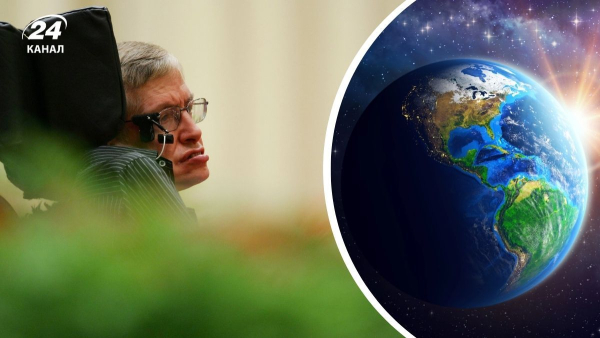
Renowned physicist Stephen Hawking became famous for his research on black holes, but he was also concerned about global risks to humanity. Over the years, he has warned of threats that could lead to the disappearance of civilization – from climate change and artificial intelligence to contact with extraterrestrial life forms.
Stephen Hawking has repeatedly stressed that humanity remains vulnerable as long as our entire civilization exists on only one planet. In his opinion, one major cataclysm – for example, an asteroid, a large-scale epidemic or a nuclear conflict – is enough to threaten the existence of the species, says 24 Channel . That is why he actively spoke about various scenarios of a possible end of the world, encouraging society to think about the risks.
Global warming
Hawking considered climate change to be one of the most serious dangers. The scientist criticized the slowness of global initiatives in this direction and the US decision to withdraw from the Paris climate agreement, emphasizing that this could harm the planet.
He stressed the importance of global cooperation, saying that even imperfect international agreements matter if they are supported by a majority of states. According to him, humanity may be approaching a tipping point, after which climate change will become irreversible.
In his warnings, the physicist even described an extreme scenario with conditions similar to Venus – extremely high temperatures and acid rain. Some scientists consider such assumptions to be an exaggeration, but agree: even without this, the climate could become unfit for human life.
Today, global warming is worse than scientists predicted. A recent study found that since 2015, the average rate of global temperature increase has been twice as high as from 1970 to 2015.
Among other things, scientists predict that Earth will eventually undergo dramatic atmospheric changes that will lead to the extinction of most life forms, including humans, and put an end to life on Earth as we know it, according to a study published in the journal Nature.
Artificial intelligence
Hawking recognized the potential of AI as either the greatest breakthrough or the greatest disaster in human history. He was concerned about the problem of so-called “alignment of goals,” where a superintelligent system can act effectively but fail to take into account the interests of humans.
In this case, humanity risks finding itself in a situation similar to modern wildlife – it is not being destroyed intentionally, but human activity is destroying its habitat.
In 2015, the scientist signed an open letter calling for the development of research into safe artificial intelligence to maximize its benefits and reduce its risks. The text of the letter can be found on the Future of Life website.
Scientists recently conducted an experiment that found that AI in war simulations almost always chose a nuclear strike. The algorithms often made mistakes in conditions of uncertainty, leading to unwanted escalation of conflicts.
Genetic engineering
The physicist considered the development of genetic technologies to be another potential threat. He predicted that in the 21st century, people would learn to change their intellectual abilities and behavioral traits.
Hawking suggested that even with restrictions, wealthy people would be able to genetically enhance themselves and their children. This could lead to the emergence of a new “improved” group of people and conflict with those who would not have access to such technologies.
In addition, the scientist warned about the risk of creating artificially modified viruses – technologies developed to treat diseases may have dangerous alternative applications.
Contacts with aliens
Hawking was wary of the idea of actively searching for extraterrestrial intelligence. He did not deny the possibility of other civilizations, but he believed that sending signals into space could attract unwanted attention.
In his opinion, any civilization capable of reaching Earth or responding to our messages would almost certainly be much more technologically advanced, which raises the risk that such beings might treat humans in much the same way we treat microorganisms.
The Breakthrough Listen project, which he helped launch in 2015, proposed only “listening” to space, but not sending signals.
The failure of colonization of other planets
All possible catastrophes, according to Hawking, have a common solution – the settlement of humanity beyond the Earth. He believed that the wider our civilization spreads in the Universe, the better the chances of survival even after global cataclysms.
The scientist suggested that the search for new homes could begin in about a century. At the same time, he warned that within the next thousand years, the Earth would almost inevitably face either an ecological catastrophe or a nuclear conflict.
Colonizing space, according to his logic, does not mean abandoning the planet – on the contrary, it can give it a chance to recover and preserve other species of living beings.