
Main points
- Chinese scientists have developed a method of using cyanobacteria to stabilize desert sand, which can transform it into a layer suitable for vegetation in 10-16 months.
- Cyanobacteria create a biological crust that reduces erosion, retains moisture, and promotes nutrient accumulation, which helps restore desert ecosystems.
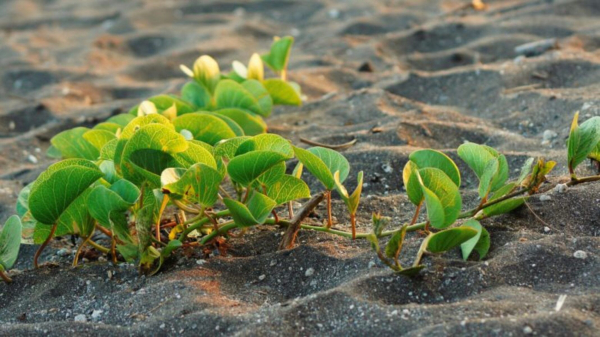
New method in China helps revive desert in less than a year / Mein
Chinese researchers have developed a technology that can transform shifting desert sand into a stable layer suitable for planting plants in 10 to 16 months. The method uses lab-grown cyanobacteria to form a biological crust and reduce erosion.
A team from the Chinese Academy of Sciences used lab-grown cyanobacteria to harden the surface of sand in northwest China. Straw mats laid out in a region near the Taklamakan Desert in Xinjiang developed a dark film after treatment. It remained intact even after seasonal dust storms, Earth.com reports.
How do microorganisms stop sandstorms?
The researchers monitored these areas in hot and cold conditions and found that the crust stabilized the sand over a period of 10–16 months . However, a fully mature, damage-resistant structure took about two to three years to form.
Cyanobacteria are some of the oldest organisms on the planet, having existed for about 3.5 billion years . They use sunlight for photosynthesis, absorb carbon dioxide, and release organic matter. In nutrient-poor soils, some species are able to fix nitrogen, converting it into compounds available to plants.
Under a microscope, a biological crust looks like a network of bacterial threads that wrap around grains of sand. The microorganisms secrete sticky sugars that harden to form a thin but strong layer. This structure holds the grains together and reduces the risk of wind erosion .
After the first year, the treated area began to accumulate nutrients in the topsoil instead of being blown away by the dust. Dead cells and organic exudates mixed with the mineral dust, forming organic matter that retained nitrogen and phosphorus . Over time, the microbial community became more stable.
The bark also helps retain moisture. After brief rains, the treated areas held water near the surface longer, while the exposed sand dried out quickly. The dark layer and porous structure reduce evaporation, giving grasses and shrubs a few extra days to establish roots.
Over time, lichens and small mosses join the microorganisms. Lichens strengthen the surface and better withstand strong winds and cold nights. Moss creates additional shade and retains moisture, making the system more stable, although slower to recover from damage.
According to Digg , in lab tests, the artificially formed crust reduced soil loss from wind by more than 90 % under controlled conditions. Less sand in the air means potentially fewer dust storms and better protection for infrastructure. However, the surface needs to be protected from traffic, livestock grazing, and heavy use.
The researchers emphasize that to scale up the technology, it is important to use local strains of microorganisms that are better adapted to heat, salinity and drought. In addition, the biological crust does not solve all the causes of desertification , such as overgrazing or improper water use.
A 59-year observation of desert restoration in China has shown that adding cyanobacteria reduces a process that previously took decades to just a few years. The rapid formation of a crust turns microbial growth into a practical tool for erosion control and lays the foundation for subsequent vegetation restoration.