

The right choice of crops is the key to success / Photo Shutterstock
Farmers are increasingly forced to make crop structure decisions in the face of volatile prices, weather risks, and unstable crop margins. The choice of what to plant directly affects the financial performance of the farm, so focusing only on “traditional” crops no longer always works.
Igor Kotsel, head of the Open Agri Club platform, noted that crop economics analysis and market forecasting help farmers form a more profitable crop structure, ZAXID.NET reports. According to him, club members, in addition to financing and support with resource procurement, receive consultations from Kernel experts and access to analytics, which allows them to choose crops with better economics.
Currently, according to Igor Kotsel, the most profitable crops in Ukraine are sunflower, corn, soybeans and rapeseed – their profitability often exceeds 40-50%. In the next 3-5 years, it is advisable for farmers to focus on oilseed crops, diversify risks through grain crops (in particular wheat) and develop seed production – this will help reduce the impact of climate fluctuations and ensure stable financial results.
Open Agri Club recommends that farmers plan a crop rotation of 5-6 crops and take into account not only global prices, but also weather risks and logistical factors.
Which crops, in the current environment, provide the optimal balance of costs and income for small and medium-sized farms?
For small and medium-sized farms, the best balance of costs and income is provided by crops with high added value – primarily rapeseed, sunflower, as well as niche areas (pumpkin, beans), although they require an active search for sales channels.
An important condition for profitability, according to Igor Kotsel, is optimizing costs for fertilizers and plant protection products and focusing on crops with export potential.
Why can focusing only on the market price of grain without taking into account the cost price lead to financial losses?
Focusing solely on selling price is one of the most common financial mistakes. A high price per ton does not in itself mean profitability. Profit = (Price − Cost) × Yield
Here are the main reasons why ignoring cost leads to losses:
The “corn trap” effect. Corn may command an attractive price, but requires significant drying and logistics costs.
- If the grain has high moisture content, gas costs or elevator services can “eat up” up to 30–40% of the crop cost.
- As a result, a lower-priced crop (such as soybeans) that does not require drying can yield a higher net profit.
Logistics overhead. For small farms, the cost of shipping to the port or processor is critical. If logistics costs around $40 per ton and the margin is only $30, the farm is operating in the red – even at a high market price.
Technological cost. Different crops require different costs for fertilizers and plant protection products .
- Growing high-protein food wheat requires significant amounts of nitrogen fertilizer.
- If fertilizer prices rise faster than grain prices, producing high-quality wheat may be less profitable than growing lower-cost feed wheat.
Break-even point . Without a clear understanding of the cost, the farmer cannot determine the minimum selling price ( break-even point ) that covers costs. This often leads to mistakes: the expectation of a “better” price is accompanied by storage costs, which ultimately makes the sale less profitable.
How will climate change in Ukraine affect crop choice and crop structure in the coming years?
Climate change has already become a daily reality for farmers. The shift of climatic zones by approximately 300-400 kilometers to the north is forcing us to reconsider traditional approaches. Here are the key trends in the impact of climate on crop structure :
Migration of “southern” crops to the north. Crops that were previously grown mainly in the south are now successfully spreading to the northern and western regions.
- Sunflower and corn have become staple crops for the northern regions.
- Soybeans have expanded their growing area, but have become more dependent on moisture during the flowering period.
Prioritize early crops (avoid peak heat) Farmers are increasingly choosing crops and hybrids that complete key development phases before the summer drought period.
- Winter rapeseed and winter wheat effectively use winter moisture.
- Switching to early hybrids (low FAO): for corn and sunflower, a shorter growing season is chosen to avoid critical temperatures above +35…+40 degrees Celsius.
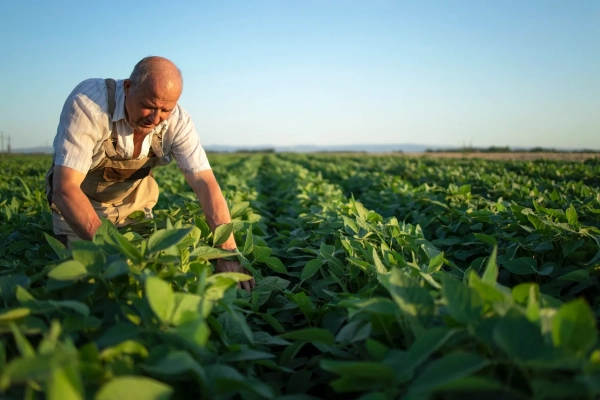
Choosing a culture is an important part of the activity / Photo Freepik
Growing interest in drought-tolerant crops. Even in traditionally wet regions, crops that are tolerant to water scarcity are being introduced into crop rotations.
- Sorghum is able to suspend development during drought and recover after rainfall, which makes it an alternative to corn in steppe conditions.
- Millet and chickpeas require minimal moisture and tolerate heat well.
Changing cultivation technologies (transition to moisture-saving technologies). Climate affects not only the choice of crops, but also the technologies for their cultivation.
- No-till: Switching to No-Till or Strip-Till technologies helps conserve soil moisture.
Important! Climate change increases the level of risk in agricultural production. One season can be extremely successful, and the next – critically difficult.
Which crops have stable demand and the best prospects for sale in domestic and foreign markets?
Today, stability is determined not only by price, but also by liquidity – the ability to quickly sell products. For Ukrainian farmers, the market is divided into domestic processing and export.
Soybean: one of the leaders in demand. Soybean has a strong position due to demand in both the domestic and foreign markets.
- Foreign market: European countries are actively purchasing Ukrainian non-genetically modified soybeans, which allows them to receive a premium for quality.
- Domestic market: developed processing makes it possible to sell products over a short distance.
Sunflower: a stable pillar of the domestic market. Ukraine is one of the leaders in the production of sunflower oil, so the demand for seeds is consistently high.
- Prospect: Even with complicated logistics, oil is easier to transport than grain.
- Tip: Growing high-oleic hybrids can provide an additional price premium.
Rapeseed: Focus on the European market. The crop has a stable demand in European countries due to its use in biofuel production.
- Stability: Sales occur early in the season, providing early cash flow.
What to pay attention to when choosing a culture:
- The presence of processing nearby: if there is a factory or mill within a radius of 100 kilometers, the corresponding culture becomes more attractive.
- European Union requirements: compliance with standards and the use of certified seeds opens up opportunities for direct contracts.
How do Open Agri Club specialists help farmers choose crops based on soil, region, and financial capabilities of the farm?
Open Agri Club specialists view crop selection as a systematic process based on analysis and financial calculations.
Deep soil analysis and a “digital passport” of the field. Instead of focusing on someone else's experience, a comprehensive agrochemical analysis is carried out. This allows:
- Determine the actual content of nutrients (nitrogen, phosphorus, potassium, acidity).
- Exclude crops with low potential for a particular field.
- Apply only the necessary fertilizers and reduce costs.
Regional adaptation. Specialists take into account the characteristics of the climate and region.
- They help to choose the optimal ripeness group of hybrids.
- Solutions are selected taking into account local diseases and pests.
Financial modeling and stress testing. This is a key feature of the approach.
- Affordable budget: selection of technology according to financial capabilities.
- Logistics leverage: calculating profit taking into account delivery.
- Break-even point: a clear understanding of the level of profitability.
Access to expert community and training. Participants get access to:
- Consultations with agronomists and financial experts.
- Sharing practical experience with colleagues.
- Support in finding sales markets.
Why is crop diversification becoming a key strategy for maintaining profitability over a 3-5 year horizon?
Diversification is not just about expanding the list of crops, but a strategy for risk management and long-term business sustainability. The 3-5 year horizon is the period during which a farm can either go bankrupt due to a single mistake or become financially independent.
Here are the main reasons why it is critical:
Insurance against climate “surprises”. Weather unpredictability is increasing.
- Solution: combining crops with different development periods helps reduce the risk of crop loss.
Managing price fluctuations. Markets remain volatile.
- Situation: Today, the price of wheat may fall due to a record harvest in Australia, but at the same time, the price of soybeans will rise due to demand in China.
- Strategy: Having multiple crops allows you to sell products during more profitable periods.
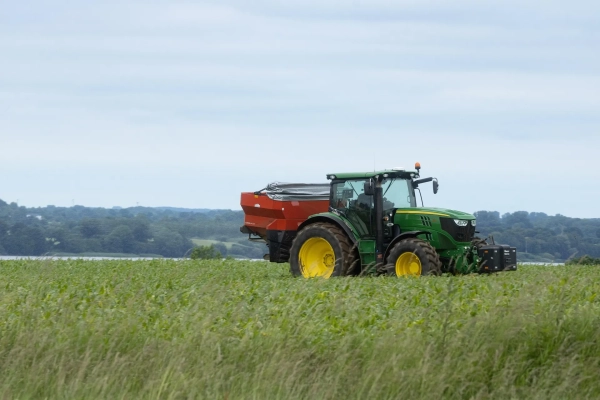
All activities should work in a complex / Photo Pixabay
Optimization of the use of equipment and resources. The distribution of work over time reduces the load on equipment and personnel.
- Technology: the need for peak power is reduced.
- People: the risk of mistakes due to haste is reduced.
Phytosanitary safety (soil health). Monoculture (for example, sunflower on sunflower, or wheat on wheat) leads to the accumulation of diseases, specific pests, and depletion of certain micronutrients.
- Savings: proper crop rotation reduces costs for protection products and fertilizers.
Improved cash flow : Different implementation timelines ensure cash flow throughout the year.
- July: receipts from early crops.
- September – October: receipts from late crops.
Pay attention! Diversification transforms agricultural production from a high-risk activity into a more predictable business, increasing the farm's resilience to weather, market, and economic fluctuations.
Farms that meet the criteria can become members of the club at any time and receive the benefits of mutually beneficial cooperation with Open Agri Club from the very first days. These include consultations on agronomic issues, soil analysis, legal and financial support.
Farms with land banks of up to 1,500 hectares that seek assistance in running their agribusiness can contact Open Agri Club by phone +380737510111 or by email [email protected]. Kernel specialists will be happy to advise partners and help resolve issues related to running a farm.