
Main points
- The Internet Archive is a unique non-profit library that systematically preserves the digital heritage of humanity and provides free open access to it.
- The Wayback Machine is an important tool for preserving the history of the Internet, allowing you to view archived versions of web pages and track their changes over time, making the archive an indispensable resource for researchers.
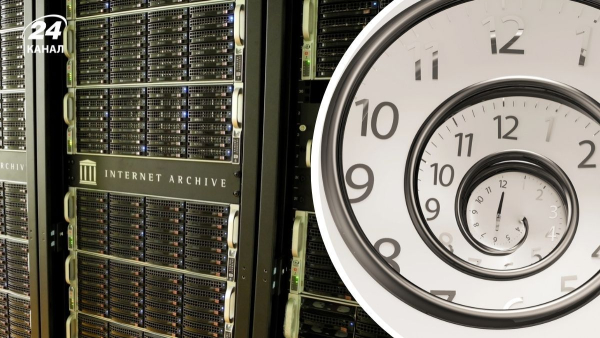
/ Collage of Channel 24 / Photo by Depositphotos / Ana Parejo Vadillo
When a familiar link suddenly leads to a blank page or gives an error message, it may seem that the material is lost forever. However, there is an Internet Archive on the Internet that stores copies of sites and allows you to view materials created more than twenty years ago. Read on to learn how this service came about and how to use it.
The Internet Archive (archive.org) is a non-profit digital library that stores copies of websites, books, audio, video, and software. Its goal is to preserve digital heritage and ensure open access to knowledge, Channel 24 reports. The organization is funded primarily by donations and collaborates with libraries, universities, and cultural institutions in different countries.
How did archive.org come about?
The project was founded in 1996 in San Francisco by American engineer and entrepreneur Brewster Kail, who has been inducted into the Internet Hall of Fame since 2012.
At that time, the Internet was developing rapidly, but its content was almost not systematically preserved. To solve this problem, Kale started the Wayback Machine , a web archiving service that later became the largest collection of preserved pages on the web.
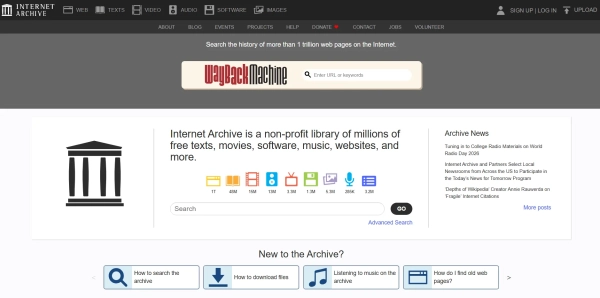
The Wayback Machine stores archived versions of pages from the Internet / Screenshot from Channel 24
Work on the archive began in 1995, and the service became open to the general public in 2001. At that time, the database contained about 10 billion pages .
In 2009, the number of archived pages exceeded 38 billion, and in October 2025, the team recorded the first trillion saved web pages .
Over the years, the Internet Archive has expanded significantly, adding new sections for various types of media, including digitized books, music, and television programs. Users have also been able to add pages to the archive themselves through the SavePageNow feature.
Why is archive.org important to the entire internet?
For the average user, the Internet Archive is a way to look back at the Internet of yesteryear: to see what the first versions of famous services, social networks, or personal websites of the early 2000s looked like. That is, to literally go back in time. In practice, the service is often used to restore lost materials or check old links.
The Wayback Machine is one of the most important tools for OSINT researchers . It allows you to record and analyze changes to web content, restore deleted materials, track the evolution of public statements, and verify information sources.
Thanks to the ability to compare different versions of pages, work with domains and archive copies of government websites, the service is widely used in investigations and analytical work.
The Internet Archive is also useful for verifying the veracity of claims and establishing the authorship of materials. It allows you to track how public discussion of certain topics has changed, find lost information, and restore the context of events.
This makes this service useful for human rights activists, historians, and journalists. But it can be used by anyone who wants to look into the past. For designers and developers, for example, the Internet Archive is interesting as a tool for analyzing the evolution of interfaces, layout, and navigation solutions in real projects.
How does it even work?
The Wayback Machine (web.archive.org) allows you to create snapshots of web pages at a specific point in time and return to them later. This allows you to capture changes on the Internet, where content is often edited or deleted entirely.
The Internet Archive consists of several large sections.
- The text library stores millions of digitized books, old journals, scientific papers, and documents , some of which are no longer published or unavailable from other sources.
- The audio archive contains recordings of concerts, radio broadcasts, podcasts, and public performances.
- Old movies, TV shows, and commercials are collected in the video section.
- The archive pays special attention to materials that have entered the public domain and can be freely used without copyright restrictions.
- There is also a collection of software, including old games and operating systems.
The ongoing digitization of print and visual materials is a key focus of the Internet Archive, and its collections are constantly growing. Today, the archive contains over 49 million texts and 28 million videos and audio recordings .
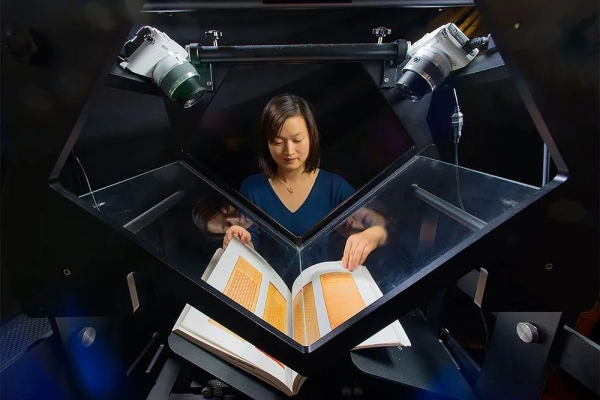
Digitizing books for archive.org / Photo by Ana Parejo Vadillo
The Internet Archive's activities have repeatedly been the subject of legal disputes. The most controversial issue has been copyright, particularly regarding the digitization and provision of access to books and media materials.
Publishers and rights holders have accused the archive of violating their rights, while the organization itself insists on the principle of fair use and the public value of access to knowledge.
How do I start using the Internet Archive?
The Internet Archive provides free access to its collections to all users, but registration is required to view certain materials.
An account is required if you want to borrow copyrighted e-books or upload your own materials. You can search for files by keyword in the relevant sections or browse collections by category.
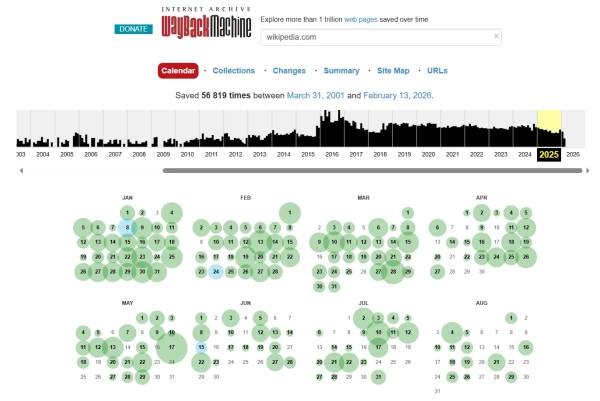
Wayback Machine timeline on archive.org / Screenshot of Channel 24
No registration is required to view web pages, so anyone can use the Wayback Machine. Simply enter the URL of the site you want into the search box on the home page.
The calendar that opens shows the days when the page was taken in blue (the darker the shade, the more versions were saved on that day). By selecting a specific time, you will have access to an archived copy of the site that will look almost exactly like the original at that time.
The most valuable thing on the internet in one place
The Internet Archive is an important resource for researchers who use it to check facts and find lost content: OSINT researchers, journalists, or historians, but it can also be useful for the average user who is interested in history or looking for materials from past years.
The Wayback Machine allows you to check what was previously published, even if the information has since been deleted or edited, and also allows you to analyze the evolution of media and online culture.