
Main points
- OpenAI has hired OpenClaw founder Peter Steinberger to join the Codex team to develop personal AI agents that can perform actions on their own.
- OpenClaw allows you to run AI agents integrated with popular messengers, making automation accessible to users without technical knowledge.
Personal assistants of the future are near / Collage of Channel 24
It seems that everyone has already understood that the future lies in AI agents, and OpenAI is betting on this direction. The company has hired the founder of the famous open source project OpenClaw, Peter Steinberger, to the Codex team. OpenClaw's approach and ease of use could significantly change the idea of what “personal AI” will be like for the mass user.
OpenAI sees personal agents as the next big step in the evolution of artificial intelligence – from chatbots that answer common questions to systems that can perform actions for us on their own. Sam Altman's company does not want to be somewhere behind its competitors – it seeks to be at the forefront and dictate changes, emphasizes 24 Kanal .
What OpenAI does today is shaping how we use chatbots tomorrow. Artificial intelligence expert Igor Matrofaylo told us why the company needed OpenClaw and what the future of ChatGPT could be.
Why did OpenAI hire the creator of OpenClaw and who is he anyway?
OpenAI recently announced the addition of Austrian developer Peter Steinberger, the creator of the open source project OpenClaw, to its team, the Financial Times reported. He will work on the Codex team and focus on developing personal AI agents that can perform actions on behalf of the user, rather than just respond to chat requests.
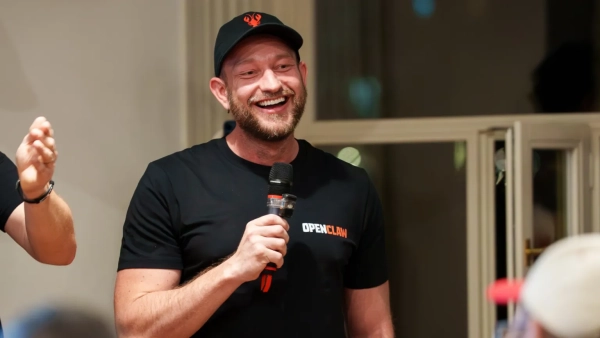
Peter Steinberger – creator of OpenClaw / Photo by Peter Steinberger
OpenAI CEO Sam Altman explained that Steinberger is involved in working on the “next generation of personal agents” – a direction that the company sees as one of the key components of its future products.
It is worth detailing here that we are talking about systems capable of taking on everyday digital tasks and acting in various environments on behalf of a person – this is what an agent is.
OpenClaw will retain its independent status and remain an open platform, while OpenAI plans to support its development and use Steinberger's work to build its own agent ecosystem.
It should also be added that Peter Steinberger was actually choosing between OpenAI and Meta. In an interview with podcaster Lex Friedman, Steinberger openly spoke about the different opportunities that opened up to him after the unexpected success of his project.
In the end, OpenAI satisfied all of Steinberger's wishes and he accepted their offer, as Trending Topics also reported.
What is OpenClaw?
OpenClaw has been attracting attention not only from industry experts but also from online users for several weeks. For professionals, it is primarily interesting due to its ease of use and open source approach: the platform allows you to run AI agents locally and integrate them with popular services and messengers, including WhatsApp, Slack, or iMessage.

Igor Matrofaylo
Delivery and Client Success Director at SoftServe, blogger
First of all, it is an agent, and not just any agent, but the first open source agent. Before that, we have seen other AgentPond agents from OpenAI, CloudCode or Cowork. These are all commercial agents from large commercial AI companies. OpenClaw is the first agent that anyone can put on a local or virtual machine and work with.
Igor explains that the key difference between AI agents and traditional chatbots is that the agent does not just answer questions, but performs specific actions. If a chat is an interface for dialogue, then an agent is a system that can independently plan steps, interact with services, collect data, and act on behalf of the user.
It is not surprising that in just a few weeks the project went viral – the number of active agents reached approximately 1.5 million , but maintaining the infrastructure cost the developer tens of thousands of dollars each month and still remained financially unprofitable.
What's so special about it?
The strength of OpenClaw, according to the expert, is its native integration with popular messengers and work tools, such as WhatsApp, Telegram, Slack, or Discord. As a result, the user can interact with the agent in a familiar chat: ask to check the calendar, process email, prepare material for the website, or even publish the result – all without writing a single line of code.
- Automations are set up through a regular dialogue – text or voice.
- The agent independently creates the necessary code, connects to services (with the user's consent), collects data, and then works offline.
It was this simplicity, according to Matrofile, that made OpenClaw go viral: people got a tool that allows them to build complex automations without a technical background.

Igor Matrofaylo
Delivery and Client Success Director at SoftServe, blogger
The agent will most likely ask for keys to your services (some access to data to have information) and will perform tasks. And the great thing is that all that is required to set up this automation, or perform some actions, is that it all happens by voice or text in the chat. That is, you don't need to write a single line of code. The agent itself inside, under the hood, writes the code, executes it, configures, configures, collects data. And it can then package everything in a convenient form for you and say “That's it, I'm ready to perform your tasks.”
In the future, Igor believes, this approach could become a new standard for interacting with digital systems – when a personal agent constantly works in the background and takes on routine work and household tasks.
Here's how it already works in practice
As an example, the expert told a story when one of the users – a biology teacher – connected an AI agent to her 3D printer and the learning platform the school uses.
She communicates with the agent by voice or chat and can simply ask him to print the necessary educational materials. At the same time, the agent independently checks the schedule and topics of the lessons: for example, if the study of human anatomy is planned for the week, the system determines which models are needed and starts printing the corresponding 3D objects at home .
Importantly, the user did not have to write code or manually configure complex scenarios. All logic – from curriculum analysis to equipment management – is generated during a regular dialogue with the agent.
It is precisely such examples, Matrofaylo emphasizes, that demonstrate the potential of AI agents as universal assistants capable of combining digital services with physical devices and relieving humans of routine without a technical barrier to entry.
How an agent approach can change ChatGPT
According to Igor, the appearance of OpenClaw in the OpenAI framework does not mean a radical transformation of ChatGPT “here and now”, but it opens up several possible scenarios for product development.
ChatGPT is already the company's flagship service, so OpenAI can either gradually integrate agent functionality directly into it, or launch a separate product like a standalone ChatGPT agent.
Matrofailo suggests that in such a model, ChatGPT will remain primarily a communication interface, a familiar entry point for users. Instead, an agent will work “under the hood” to perform actions: interact with calendars, mail, files, or external services.
At the same time, the agent itself can be available not only through the ChatGPT web interface, but also through messengers such as Telegram, Slack, or Discord – depending on the interaction format the user chooses.
The key difference of the future approach, according to the expert, is a simplified user experience . If today's agent systems often require technical settings, then OpenAI will likely focus on cloud infrastructure and a minimum entry threshold: the user simply explains what needs to be done, and the system itself decides how to implement it.
At the same time, Igor emphasizes that for now we are only talking about possible scenarios. OpenAI is already demonstrating new models and developing the Codex direction, which can become the basis for the first agent integrations – primarily in the field of engineering and development work.
Only time will tell what the final product will be and whether ChatGPT will become the “face” of a personal agent, but the general vector of development – from chats to agents – already looks obvious.
What will the artificial intelligence of the future be like?
Artificial intelligence is gradually moving beyond the “smart conversationalist” format and into the role of a full-fledged performer, and this will change everything . Agent AI is not about getting the best answer in a chat, but about delegating actions: planning, execution, control and interaction with other services without constant human participation.
In this model, the user's interaction with technology itself changes. Instead of dozens of applications, settings, and manual scripts, a person formulates an intention – by voice or text – and a personal agent decides how to implement it.
The interface becomes secondary, and trust in the system, its security, and its ability to work autonomously but predictably come to the fore.