
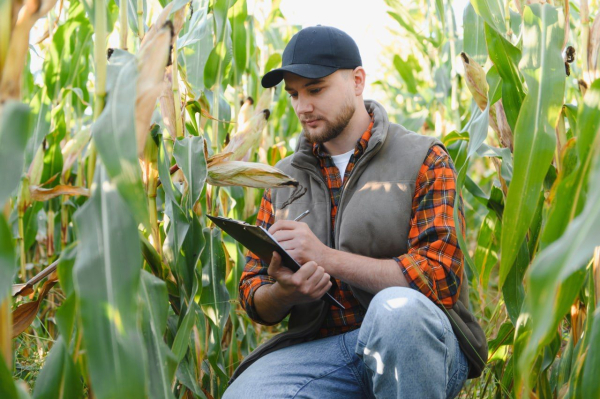
Agricultural planning is the key to a good harvest / Photo Shutterstock
Ukrainian farmers are increasingly working in realities where the success of the season depends not only on the weather, but also on how accurately costs, technologies and sales are forecasted. That is why seasonal planning is becoming a key risk management tool – at Open Agri Club, farmers receive systematic support to prepare for the season in advance and make decisions based on numbers.
The head of the Open Agri Club platform, Igor Kotsel, told journalists of Channel 24 that planning the agricultural season is a systematic preparation of the farm for a new production cycle, which usually begins 4-8 months before the start of the sowing campaign. It is not only about the choice of crops, but also about full-fledged business planning: calculating costs, assessing potential income, analyzing risks and determining ways to reduce them. In modern conditions – due to climatic fluctuations, market instability and rising costs – planning without clear calculations often leads to overspending, cash gaps or even losses.
Read also: Precision farming in Ukrainian: how Kernel's experience is changing the approach of small farms
Open Agri Club from Kernel is a free platform to support farmers with a land bank of up to 1,500 hectares. It provides access to the expertise of agronomists, financial specialists and lawyers, as well as tools for accurate calculations. Experts help to form a realistic agronomic and financial plan, predict yield, cost and profitability, and choose the best solutions for product sales. Let's consider the main aspects in more detail.
Where does seasonal agricultural planning begin and what data should be taken into account before the start of sowing?
Preparation for the season usually begins in the fall or winter. The first stage is to summarize the results of the previous year: an analysis of actual yields, real costs including losses, crop rotation structure, and soil condition (results of agrochemical studies and moisture levels).
Critically important data before sowing:
- productive moisture reserves in the soil (determined by measurements in a meter layer of soil or using meteorological data;
- agrochemical indicators of the field (acidity level, content of nitrogen, phosphorus, potassium, humus and available forms of nutrients), Open Agri Club partners can help with free soil analysis;
- forecast of weather conditions for the season (including risks of drought or excessive moisture);
- market expectations regarding prices for grains, oilseeds and resources (fertilizers, plant protection products, fuel, seeds);
- own financial capabilities and potential sources of financing or forward contracts;
- crop rotation restrictions and requirements for predecessors.
Without this information, a farmer may make a mistake in choosing a crop or use resources inefficiently.
What expenses do farmers most often underestimate during planning and what financial difficulties does this lead to during the season?
The following “hidden” costs are often overlooked:
- logistics and storage (elevator overloading, additional transportation, losses during drying);
- equipment wear and tear and repair costs;
- interest on loans or forward contracts (often not included in the cost price);
- additional costs for plant protection products due to weather risks;
- increased fuel consumption when changing technology or additional cultivation;
- losses on sales due to quality discounts.
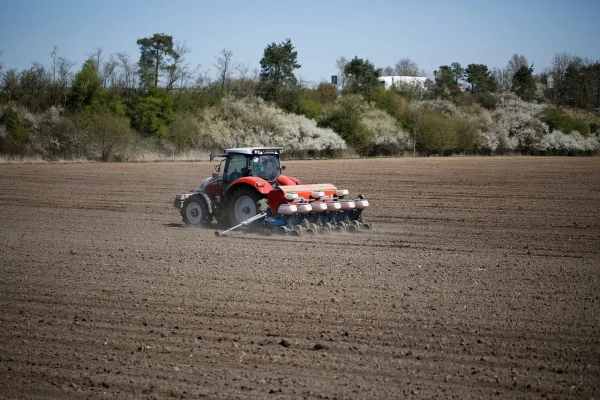
What are the most underestimated issues / Photo by Pexels
Important! As a result, in the middle of summer, a shortage of working capital arises, which forces you to take out expensive short-term loans or sell grain at unprofitable prices immediately after harvesting.
How does a yield forecast help not only estimate future income, but also optimize resource costs?
An accurate yield forecast, based on the analysis of soils, predecessors, weather conditions, hybrids and technology, allows:
- optimize fertilizer application rates – focusing on real needs and planned yield (savings of 15–30%);
- correctly plan the protection system – taking into account the phytosanitary condition of the field and technological capabilities, select drugs based on the principle of economic feasibility;
- accurately calculate the need for fuel and equipment (in particular, reduce the number of passes thanks to elements of precision agriculture);
- avoid unnecessary costs for expensive hybrids or seeds where the field's potential is limited by moisture.
As a result, instead of the “put in the maximum – got an average result” approach, the farmer receives the optimal ratio of costs and yields.
How do Open Agri Club experts help determine the real cost of production by crop?
Open Agri Club specialists conduct an individual analysis of the farm:
- collect information about fields, technical equipment and results of previous seasons;
- use current market prices for resources and yield forecasts;
- calculate the full cost (direct and indirect costs, depreciation, financial costs) for each crop and field;
- simulate several scenarios of events – from optimistic to conservative;
- help find opportunities for cost optimization (substitution of drugs, correction of norms, selection of suppliers).
This approach allows you to create a technological cultivation map with a clear understanding of profitability and abandon potentially unprofitable decisions before the start of the season.
How does seasonal planning help to fix a favorable price and organize sales?
When a farmer understands the projected yield and cost, he can:
- enter into forward contracts or fix the price at the elevator in advance – 3-6 months before delivery;
- plan the volumes and schedule of supplies according to the needs of processors or exporters;
- avoid a situation where, due to lack of funds, the crop has to be sold immediately after harvest at minimum prices.
Planning turns selling from a forced move into a thoughtful strategy for increasing revenue.
Why does systematic work with Open Agri Club help make data-based decisions and reduce financial risks?
Open Agri Club provides access to:
- expert support from Kernel and partners (agronomists, economists, lawyers);
- tools and approaches that were previously available mainly to large agribusinesses;
- free calculations and modeling without hidden fees or obligations;
- practical cases and regional data.
Decisions based on numbers can reduce fluctuations in financial results: instead of sudden changes in profit, it can be stabilized within predicted limits. This is especially important in conditions of military risks, climate instability, and price uncertainty.
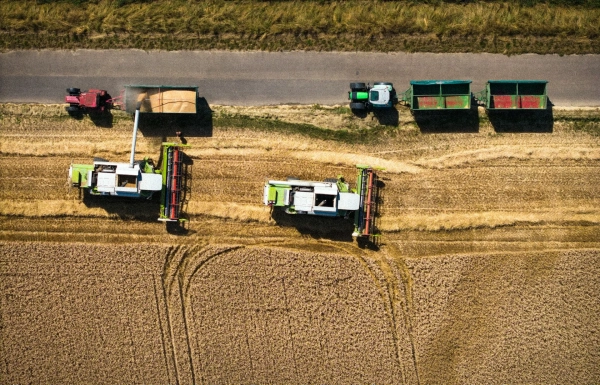
Agricultural planning saves from risks / Photo Unsplash
In short, seasonal planning with Open Agri Club is a transition from reactive management to systemic agribusiness. The farmer gains a clear understanding of development scenarios, optimizes costs, and increases sales efficiency.
Farms that meet the criteria can become members of the club at any time and receive the benefits of mutually beneficial cooperation with Open Agri Club from the very first days. This includes consultations on various issues and soil analysis, legal and financial support.
Farms with land banks of up to 1,500 hectares that seek assistance in running their agribusiness can contact Open Agri Club by phone +380737510111 or by email [email protected]. Kernel specialists will be happy to advise partners and help resolve issues related to running a farm.